
Bamsoet Urges Strengthening of Indonesia-Morocco Economic Cooperation
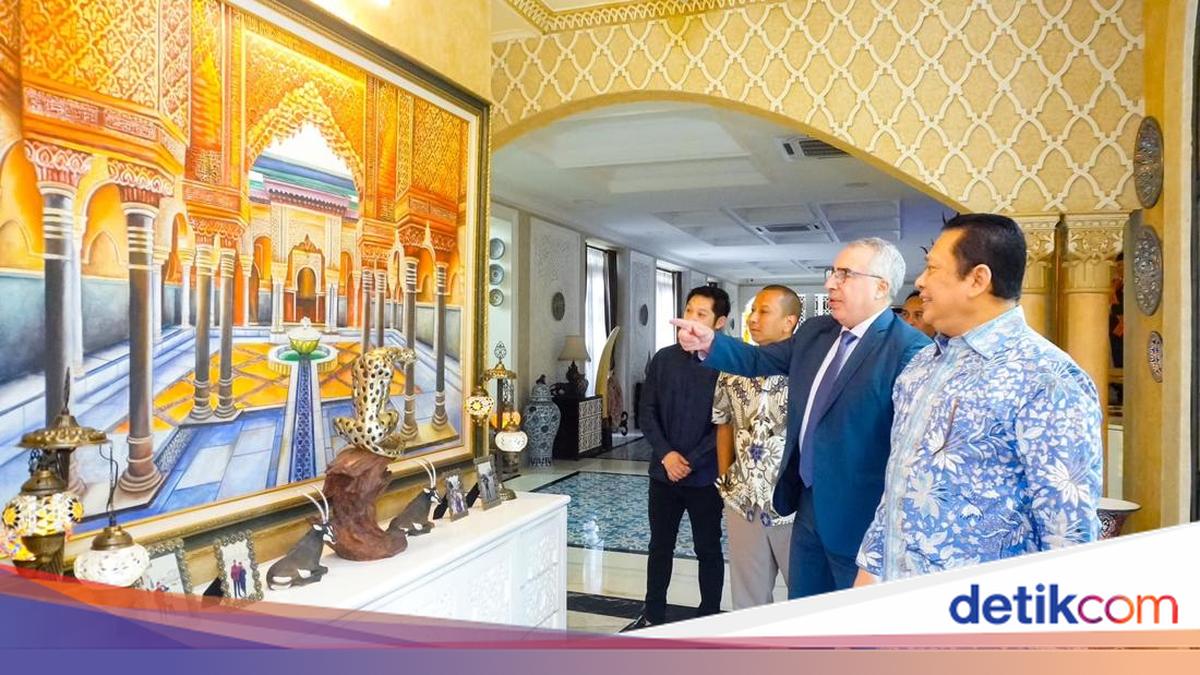
The 15th Speaker of the MPR RI and Deputy Chairman of the Indonesian Chamber of Commerce and Industry (KADIN), Bambang Soesatyo (Bamsoet), received a courtesy visit from the Moroccan Ambassador to Indonesia, Redouane Houssaini, in Jakarta on Tuesday (22/9). During the meeting, Bamsoet urged an increase in economic cooperation between Indonesia and Morocco to generate investment, boost exports, strengthen industries, facilitate technology transfer, and create domestic jobs.
These opportunities have become more accessible following the reactivation of Preferential Trade Agreement (PTA) negotiations between Indonesia and Morocco, which are targeted for comprehensive completion by 2027. Trade negotiations between the two nations had previously commenced in 2018 but experienced a hiatus.
Consequently, the reactivation of negotiations in 2026 must be utilised to achieve broader market access and reduce various trade barriers. Morocco holds a strategic position as a gateway to Africa, Europe, and the Mediterranean region, while Indonesia possesses access to the ASEAN market, which has a population of over 680 million people.
“The relationship between Indonesia and Morocco already possesses a strong diplomatic foundation. Now is the time to elevate that relationship into a strategic economic partnership. Diplomacy must result in business transactions, business transactions must evolve into investment, investment must strengthen industry, and ultimately create added value and employment for the Indonesian people,” Bamsoet stated in a written release on Wednesday (23/9/2026).
Bamsoat explained that data from the Ministry of Trade indicates significant potential for developing economic relations between the two nations. Indonesia-Morocco trade in 2025 was recorded at approximately US$235 million, with Indonesian exports at around US$154.9 million and imports from Morocco at approximately US$80.1 million.
Although Indonesia recorded a surplus of about US$74.8 million, this value remains relatively small compared to Indonesia’s economic capacity and the potential of the Moroccan market. Potential Indonesian products include vegetable oils and their derivatives, rubber and its derivatives, footwear, textiles, machinery and electrical equipment, coffee, tea, and spices. Conversely, Indonesia requires fertilisers, aluminium, and industrial raw materials from Morocco.
“The trade figure of around US$2 235 million should be viewed as a starting point. The potential is far greater. Indonesia has many competitive products, while Morocco possesses a very strategic geographical position. Therefore, we need to shift our mindset from merely selling goods to Morocco to building a shared business ecosystem. If Indonesian products can be produced, distributed, or developed in Morocco to enter the African market, the economic value will be much higher,” said Bamsoet.
Bamsoat noted that a concrete example of Morocco serving as a base for Indonesia’s regional expansion is the investment by PT Indofood Sukses Makmur through PT Salim Wazaran Maghribi in Tiflet. The instant noodle factory, which holds HACCP and halal certification from IMANOR, has been operating since 2010, employing approximately 400 workers, and its products are marketed in Morocco and several other countries, including Qatar, Tunisia, Mauritania, Lebanon, and Sierra Leone.
“Models like the Indofood factory in Morocco must be increased and developed. This is an example of how overseas investment can be part of an export strategy. Indonesian products are produced or developed in Morocco, then reach a wider market. Thus, we should not think narrowly that investment only means foreign capital entering Indonesia. Indonesian companies must also be brave enough to expand abroad, build markets, establish distribution networks, and bring national brands to regions that have not yet been maximised,” explained Bamsoat.
Bamsoat outlined that opportunities for cooperation are also wide open in value-added industrial sectors. In 2026, the Ministry of Industry identified opportunities for Indonesia-Morocco cooperation in the aerospace, halal industry, pharmaceutical, and renewable energy sectors.
Both countries also have complementary interests in the supply chain. Indonesia possesses a large manufacturing base and domestic market, whereas Morocco has geographical access to North Africa and the Mediterranean. Regarding raw materials, Morocco also possesses strategic commodities such as phosphates and aluminium that are required by industry.
“What we must pursue is value-added industry. We must not allow Indonesia to only export raw materials, only for the finished products to return at a much higher price. Cooperation with Morocco should be directed towards joint production, raw material processing, research, technology transfer, and supply chain development. The aerospace, pharmaceutical, renewable energy, food, halal cosmetics, and manufacturing sectors have opportunities for concrete development,” Bamsoat emphasised.
Bamsoat added that enhancing Indonesia-Morocco economic relations must involve business players directly. The government, KADINT, industry associations, banking, logistics companies, exporters, technology companies, and SMEs need to be placed within a single ecosystem so that every bilateral agreement has measurable follow-up.
Experience from the Indonesian trade mission to Morocco in 2024 shows that this potential is quite concrete. Nine Indonesian companies participating in the trade mission generated potential transactions of approximately US$16.98 million, or about Rp276 billion, from the processed fishery, food, spices, briquette, and coal sectors.
“This shows that when the government directly brings business players together with potential partners in Morocco, business opportunities emerge. Therefore, economic diplomacy must become more concrete. It must not stop at official meetings and the signing of memorandums of understanding. There must be regular business matching, exporter assistance, financing, market information, and ease of [access]…”
Source: jawawa.id (https://jawawa.id/newsitem/bamsoet-urges-strengthening-of-indonesia-morocco-economic-cooperation-1790146966)
Originally published by detikcom (https://news.detik.com/berita/d-8675458/bamsoet-dorong-penguatan-kerja-sama-ekonomi-indonesia-maroko), translated from Indonesian