
Bamsoet Urges Strengthening of Hospital Medicolegal Services to Protect Patients and Medical Personnel
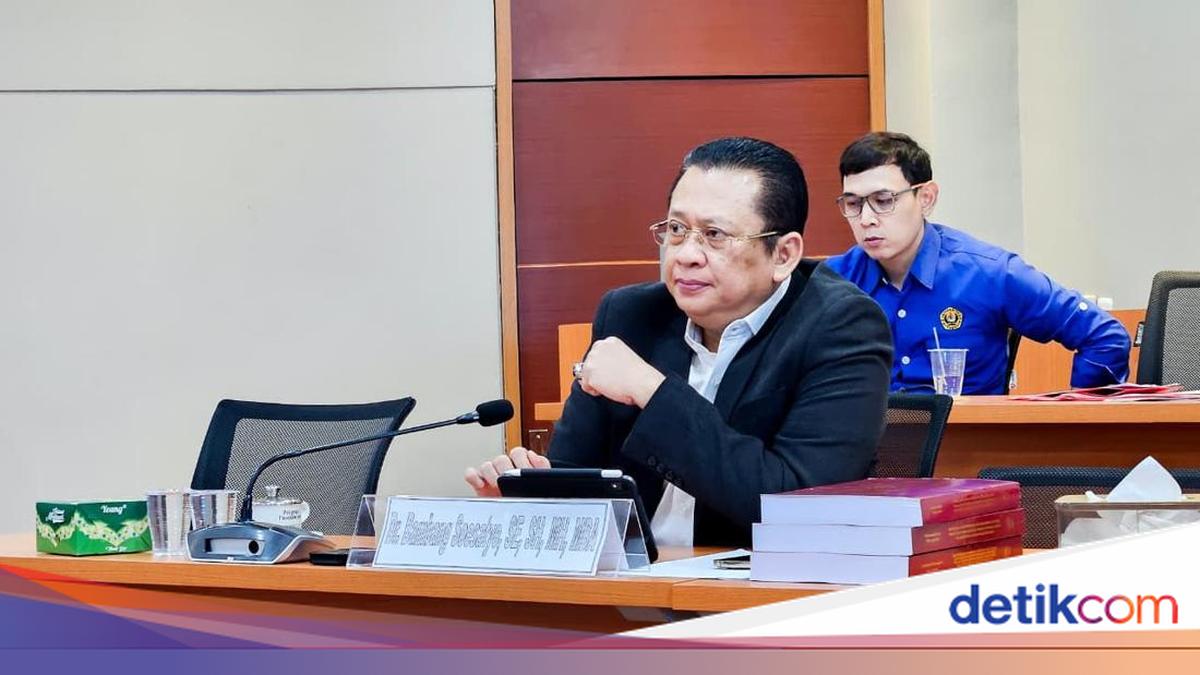
Bambang Soeslarjo (Bamsoet), a member of the Indonesian House of Representatives from the Golkar faction, is pushing for a comprehensive strengthening of medicolegal services in hospitals. This is intended to ensure that patients who suffer losses due to alleged misdiagnosis obtain legal certainty, protection, and justice. Bamsoet believes the urgency of this strengthening is increasing, as misdiagnosis is a globally recognised patient safety issue.
This was revealed by Bamsoet while serving as a co-promotor for a doctoral dissertation defence at the University of Borobudur on Monday (14/09/2026). The dissertation, presented by Dr Rommy Sebastian, focused on the formulation of medicolegal services in hospitals for victims of malpractice due to misdiagnosis to ensure legal certainty and justice.
“When an alleged misdiagnosis occurs, hospitals must be able to ensure what actually happened, who is responsible, whether negligence occurred, and how the patient can achieve recovery,” said Bamsoet.
He cited World Health Organisation (WHO) estimates that misdiagnosis occurs in approximately 5-20 per cent of doctor-patient interactions, which can manifest as delayed, missed, or incorrect diagnoses, or a failure to communicate diagnoses properly. The WHO also places improving diagnostic safety as a vital part of the global patient safety agenda.
He noted that on 17 September, the WHO would observe World Patient Safety Day with the theme ‘Safety of Care for Non-Communicable Diseases’.
“Misdiagnosis must be viewed objectively and carefully. A diagnosis that subsequently changes does not automatically constitute malpractice, as the medical field operates under conditions of uncertainty and based on clinical information available at the time of examination. However, if an error occurs because proper examinations were ignored, warning signs were overlooked, test results were not followed up, referrals were delayed, or professional and service standards were not met, then the matter must be seriously investigated from disciplinary, civil, administrative, and even criminal perspectives, provided the criminal elements are met,” Bamsoet stated.
The 15th Chairman of the MPR RI explained that one of the most important instruments in building legal certainty is medical records. In cases of alleged misdiagnosis, medical records must be able to explain the patient’s clinical journey in full, from initial complaints, physical examinations, working diagnoses, differential diagnoses, supporting tests, laboratory and radiology results, medication administration, medical procedures, communication with the patient, consultations, and referrals, to the progression of the patient’s condition.
“Medical records should not be treated merely as hospital administrative documents. Medical records are a vital part of patient safety and an instrument of evidence when disputes arise. If an alleged misdiagnosis occurs, it must be possible to trace what the doctor knew at that time, what examinations were performed, what results were available, what decisions were made, and why those decisions were made. This allows the law to assess the process objectively, rather than solely relying on the final outcome,” said Bamsolar.
The Deputy Chairman of the Golkar Party stated that hospitals need to strengthen diagnostic audit systems and functionally independent clinical reviews. Every serious incident, such as a delay in diagnosing a critical illness, medical actions that are inappropriate due to erroneous clinical information, or patients experiencing deterioration after receiving the same diagnosis multiple times, needs to be systematically evaluated.
Such evaluations must identify the root cause, whether it stems from individual competence, communication between healthcare workers, laboratory errors, radiology delays, referral system failures, workload, weak SOPs, or a combination of various factors.
“Do not build a hospital culture where every time an incident occurs, the immediate reaction is to find someone to blame. What must be sought first is the root cause. If a doctor is indeed negligent, there must be accountability. If the laboratory is at fault, the radiology system is problematic, inter-unit communication fails, or hospital management fails to provide necessary facilities, then responsibility must be traced accordingly. This approach is both fairer and more effective in preventing the same incidents from recurring,” said Bamsoet.
The Deputy Chairman of the Indonesian Chamber of Commerce and Industry (KADIN) added that hospital medicolegal services should ideally not only act when a patient has already filed a lawsuit. Medicolegal services should be an integral part of hospital governance from the moment an incident potentially harming a patient arises.
Hospitals need to establish mechanisms that connect medical committees, patient safety teams, legal units, risk management, relevant professionals, and patient complaint mechanisms. This ensures that issues can be investigated early and do not escalate into prolonged conflicts due to patients feeling they have not received an explanation.
“Medicolegal services should not be understood as a unit whose task is merely to face a patient’s lawyer or defend the hospital during a lawsuit. The function of medicolegal services must be expanded into a system of prevention, investigation, resolution, and learning. When an alleged misdiagnosis occurs, patients must receive an adequate explanation, the hospital must conduct an objective internal investigation, medical evidence integrity must be maintained, and if necessary, a second opinion or examination by an independent expert should be provided,” explained Bamsoet.
The Chairman of the Advisory Board of the University of Padjadjaran Law Alumni Association urged the government and hospitals to develop national standards for medicolegal services regarding alleged misdiagnosis cases, including reporting mechanisms and diagnostic audits.
Source: jawawa.id (https://jawawa.id/newsitem/bamsoet-urges-strengthening-of-hospital-medicolegal-services-to-protect-patients-and-medical-personnel-1789405058)
Originally published by detikcom (https://news.detik.com/berita/d-8662939/bamsoet-dorong-penguatan-medikolegal-rs-demi-lindungi-pasien-dan-tenaga-medis), translated from Indonesian