
Bamsoet Urges State Budget to Boost Purchasing Power and Create Jobs
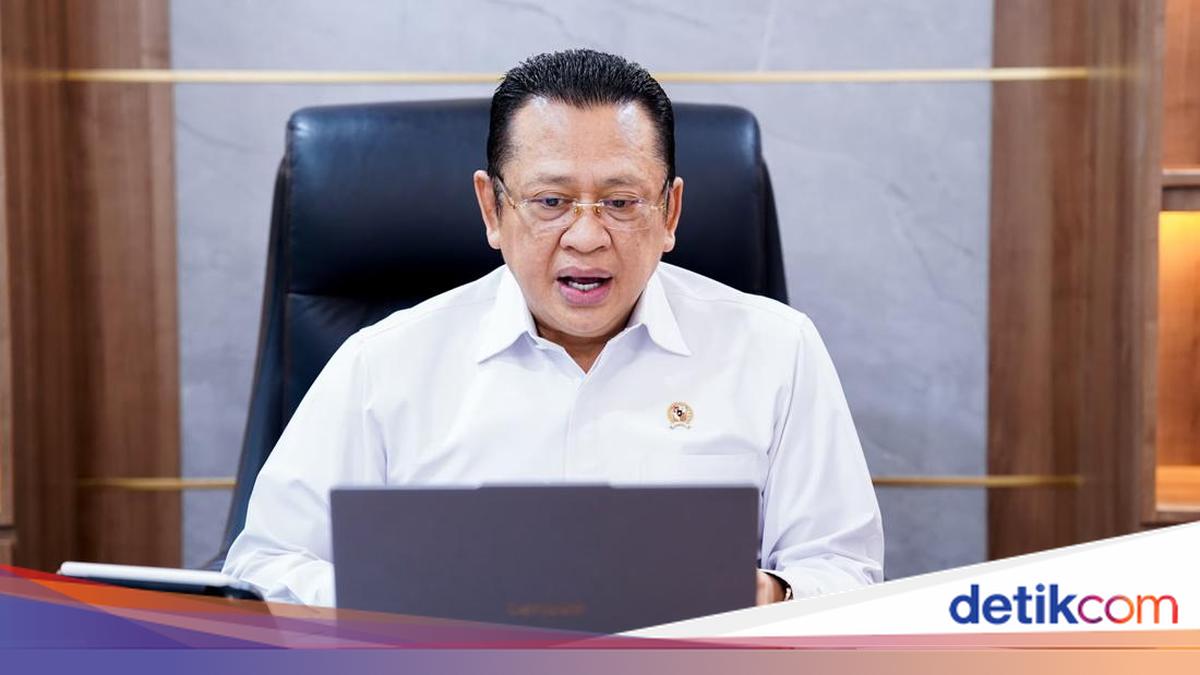
Presidential Advisory Council member Bambang Soesatyo (Bamsoet) said the state budget (APBN) should be used to strengthen people’s purchasing power and create jobs. He said government spending must deliver tangible benefits to the public.
Bamsoet made the remarks after attending the third plenary meeting of the Presidential Advisory Council with Finance Minister Suahasil Nazara at the State Secretariat Office in Jakarta on Thursday (22 October 2026). He said Indonesia’s economy continued to show resilience amid global uncertainty.
“From the Finance Minister’s presentation, we see that, despite the difficult global situation, the foundations of our national economy have not been significantly disrupted. Growth has remained steady, inflation is under control, industrial activity is expanding and confidence in Indonesia remains high. This is a major asset for President Prabowo Subianto’s administration as it accelerates development whose benefits are felt directly by all Indonesians,” Bamsoet said.
The Golkar Party deputy chairman said the state budget had a strategic role in translating economic strength into tangible improvements. He said it should be directed towards maintaining food price stability, raising household incomes, expanding employment opportunities and improving the quality of education and healthcare services.
By September 2026, state revenue had reached Rp2,341.7 trillion, up 25.5%. Tax revenue stood at Rp1,607.6 trillion, while non-tax state revenue reached Rp492.3 trillion.
State expenditure was recorded at Rp2,660.5 trillion, an increase of 19%. Bamsoet said the figure reflected the state’s growing capacity to finance the development agenda.
“Growth in state revenue must be sustained. This fiscal space should be used to accelerate productive development, strengthen the real sector and expand social protection. The state budget must provide a sense of security while opening up opportunities for people to progress,” Bamsoet said.
The former chairman of the People’s Consultative Assembly (MPR) said the projected state budget deficit of 2.85% of GDP pointed to sound fiscal management. The budget could remain a credible instrument, he said, through spending discipline and improved expenditure quality.
“The government is strongly committed to balancing the willingness to finance development with prudence in safeguarding fiscal health. This is important so Indonesia can continue to grow while remaining resilient in the face of global change,” Bamsoet said.
Bamsoet, who chairs the advisory board of the Padjadjaran University Alumni Association of Doctoral Law Graduates, also highlighted the importance of protecting purchasing power through energy subsidies and compensation. The projected total for energy subsidies and compensation in 2026 is Rp525.9 trillion.
He called on the government to improve beneficiary data and oversee the distribution of fuel and LPG so that assistance reaches the intended recipients.
“Energy subsidies must genuinely benefit those who need them, especially low-income groups and small businesses. The government needs to improve beneficiary data, plug distribution leakages and accelerate national energy self-sufficiency,” Bamsoet said.
He added that the national economic outlook was also supported by capital inflows of Rp149.3 trillion as of 16 October 2026. Bamsoet said this showed that Indonesia continued to be seen as having attractive economic fundamentals, a large domestic market and promising investment opportunities.
He also referred to MSCI’s consultation on a possible downgrade of Indonesia’s stock market classification, saying it should serve as an opportunity to improve share-ownership transparency and investor protection.
“Market confidence must continue to be strengthened through legal certainty, good governance and consistent policies. Indonesia has natural resources, a domestic market, a demographic dividend and a strategic position. With sustained reforms, Indonesia will be increasingly recognised as a global economic power,” Bamsoet said.
The Pemuda Pancasila deputy chairman said cooperation across ministries and government agencies should be strengthened. Fiscal, monetary, investment and industrialisation policies, he said, needed to move in the same direction.
“The direction of fiscal policy for 2027 must lay the foundation for a stronger, more self-reliant and more prosperous Indonesia. Our optimism is grounded in reality: the economy is growing, state revenue is rising, industry is active, investment continues to come in and the state is present to protect the people. Our task is to ensure all these strengths work for the prosperity of the Indonesian people,” Bamsoet said.