
Bamsoet Urges MPR to be More Assertive in Upholding Constitution and Democracy
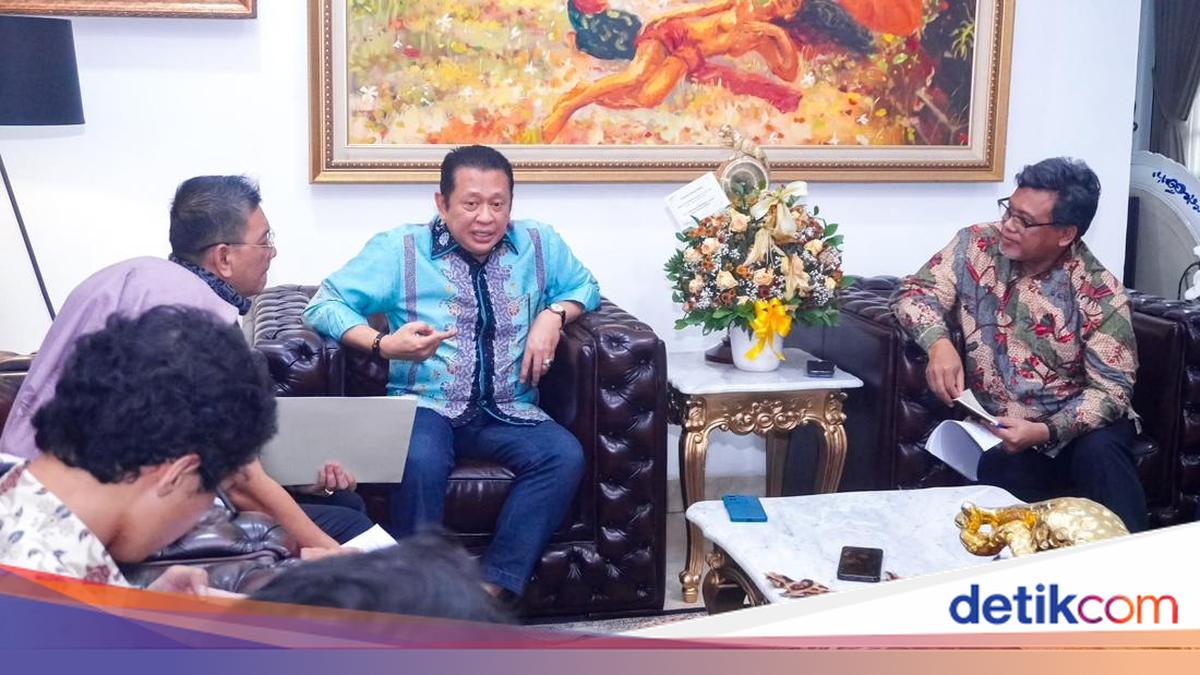
The 15th Chairman of the MPR RI, Bambang Soesatyo (Bamsoet), has asserted that the MPR must be more assertive in upholding the constitution and maintaining national consensus. This is due to the significant challenges the MPR faces in preserving democracy amidst political polarisation, the pandemic, technological shifts, and the need for long-term national development direction.
The MPR must continue to be strengthened as a venue for finding national common ground, while simultaneously acting as a guardian of strategic consensus to ensure that changes in government are not always followed by drastic shifts in development direction. This has been a vital part of the MPR leadership for the 2019-2024 period, including the emergence of the idea for the State Guidelines for National Development (PPHN), the World MPR Forum, and various national consolidation efforts.
“I view the MPR’s consolidation following the 2019 Election as a transition phase from competitive politics to deliberative politics. The hardening electoral polarisation demands a platform for reconsolidation at the state institution level. In this regard, the MPR is an institution that bears the function of reweaving people’s sovereignty within the constitutional framework,” Bamsoet stated in his remarks on Thursday (17/9/2026).
While receiving a writing team for the “History of the MPR” book from the MPR RI Secretariat-General and a research team from the University of Indonesia in Jakarta, Bamsoet explained that political polarisation remained strong in society following the 2019 Election. Consequently, the MPR implemented a national outreach approach, visiting former presidents and vice presidents, leaders of state institutions, political party chairpersons, religious leaders, community figures, and academics.
The objective was to rebuild communication between elites and establish the MPR as a “national home.” This approach was also used to gather perspectives on the future of democracy, the constitution, and the PPH and PPHN ideas.
“I want to return the MPR to its historical role as a national home, a place where various thoughts and interests can sit as equals. Therefore, I chose to visit directly, listen, and seek the views of national figures regarding strategic agendas such as the amendment of the 1945 Constitution, the strengthening of the democratic system, and the restructuring of national life following identity politics. For me, this is part of the process of re-binding the collective memory of national leadership with today’s constitutional challenges,” said Bamsoet.
Bamsoet also noted that other challenges arose when the Covid-19 pandemic forced the MPR to alter its working methods. Sessions, meetings, and socialisations had to adapt to physical restrictions and health protocols.
The MPR continued to perform its constitutional functions, including the Annual Sessions in 2020 and 2021, with limited physical presence and technological support. This experience accelerated the digitalisation of institutional work while demonstrating that technology has limitations when faced with political deliberation processes that require deep dialogue.
“Leading the MPR during the pandemic was a very different experience from what I initially imagined when I accepted the mandate as Chairman of the MPR. Suddenly, the entire institutional work system, which relied on physical presence, had to be adjusted to strict health protocols. However, it was precisely there that I felt the deepest meaning of the MPR’s constitutional function: how to continue executing the mandate of people’s sovereignty in an emergency situation without sacrificing the safety of the people themselves,” said Bamsoet.
Bamsoet elaborated that among all the agendas undertaken by the MPR RI for the 2019-2024 period, the PPHN has been one of the most long-running intellectual legacies. The PPHN is necessary to ensure that national development has a continuous direction across different administrations.
The PPHN is also designed to be aligned with the presidential system following the amendment of the 1945 Constitution, respecting the President’s direct mandate while maintaining the principle of checks and balances. However, at the end of the 2019-2024 MPR term, the PPHN had not yet reached a final decision in the Plenary Session.
The MPR subsequently formulated it as a recommendation for the 2024-2029 period. MPR Decision Number III/MPR/2024, among other things, recommends the completion of the substance and legal form of the PPHN.
“For me, the primary urgency of the PPHN arises from the need to ensure continuity and coherence in the direction of national development across leaderships. Without a clear long-term national development framework, every change in government has the potential to change priorities drastically, leading to development discontinuity that harms the nation in the long run,” said Bamsoet.
Bamsoet added that the measure of success for the MPR leadership cannot solely be seen through the number of decisions produced during one term. The indicator of success lies in its ability to leave behind strategic ideas that can be continued by subsequent generations and leadership periods.
In addition to the PPHN, the formation of the World MPR Forum in Bandung in 2022 was one of the strategic initiatives born during the 2019-2024 period. This step was agreed upon through consensus as a platform for international collaboration to discuss global issues such as peace, humanity, and the youth.
“The most important achievement for me is keeping the MPR relevant as a deliberative institution amidst highly dynamic national situations, including the pandemic, political polarisation, and global changes. At the same time, we have also succeeded in preparing several institutional legacies, ranging from strengthening the MPR’s function to the idea of the World MPR Forum and the draft of the PPHN. Moving forward, I see the MPR must be positioned as the guardian of the nation’s great direction. The MPR needs to be the node of strategic consensus that ensures national development remains consistent with the 1945 Constitution, Pancasila, and the long-term interests of the nation,” concluded Bamsoet.