
Bamsoet Urges Constitutional Engineering to Expedite Agreement on State Policy Guidelines
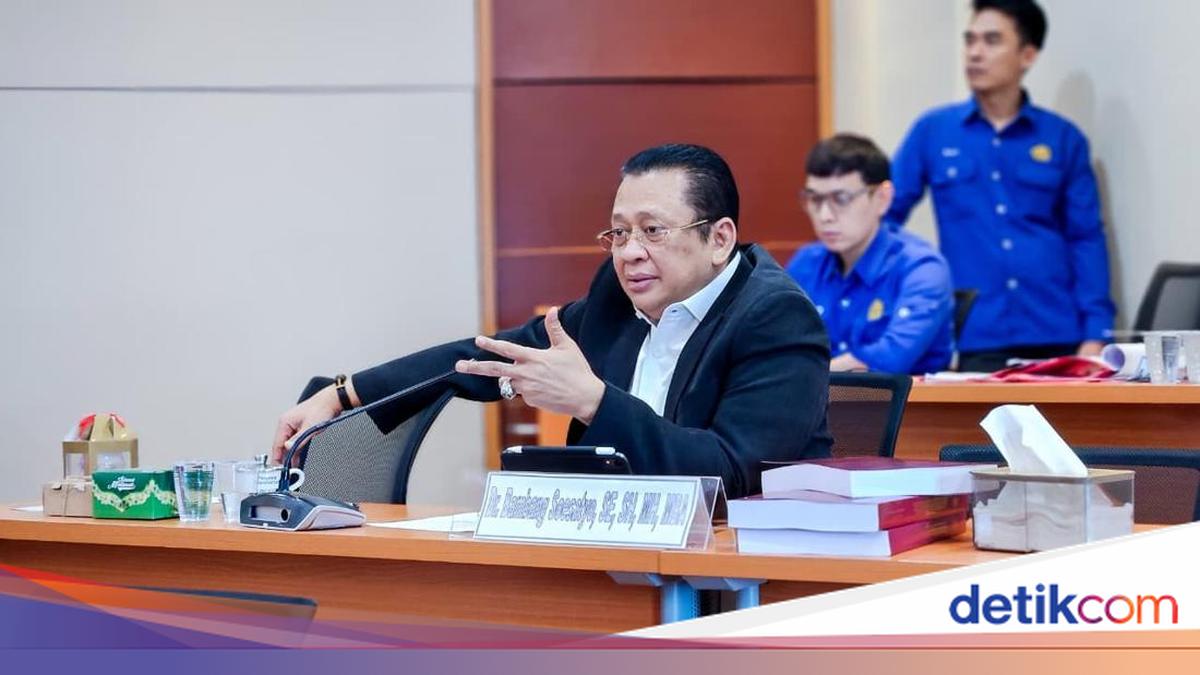
Bambang Soesatyo (Bamsoet), a member of the Indonesian House of Representatives (DPR RI) from the Golkar Party, is urging that the State Policy Guidelines (PPHcal) be agreed upon and implemented immediately as a long-term guide for national development. Bamsoet stated that the PPHN could be established through constitutional engineering or a fifth amendment to the 1945 Constitution.
The need for PPHN does not imply reviving the Guidelines for the Implementation of State Policy (GBHN) system used prior to the 1945 Constitution amendments. Instead, PPHN is intended to serve as a strategic long-term national development direction that acts as a shared reference and ensures continuity, so that changes in government do not automatically result in a total overhaul of the national development agenda.
The leadership of the People’s Consultative Assembly (MPR RI) has already submitted the PPHN concept to President Prabowo Subianto at the Presidential Palace on 3 August 2026. The MPR has also opened the draft substance of the PPHN and studies on its legal form to the public since late August 2026 to gather community input.
“Since the beginning of my leadership of the MPR RI for the 2019-2024 period, we have pushed for PPHN as a strategic national necessity so that national development has a consistent long-term direction. Indonesia needs a guiding star for development that can maintain policy continuity from one administration to the next. Therefore, after the PPHN concept was presented to the President and opened to the public for input, I hope the process quickly finds the appropriate legal form so that it can be implemented,” Bamsolar said in a written statement on Thursday (17/9/2026).
These remarks were made by Bamsoet at the Borobudur University Campus in Jakarta on Wednesday (16/9).
Bamsoet shared these views while serving as a co-promoter for the dissertation defence of Mohammad Reza, a doctoral student in law at Borobudur University, titled “Constitutional Interpretation of UUD Amendments by the MPR RI: Reconstruction of Legal Politics and the Model of Deliberative Forum in Indonesian Democracy”. Other examiners present included Prof. Dr. Faisal, Prof. Dr. Ahmad Redi, and Dr. Tina Amelia.
The 20th Speaker of the DPR RI and 7th Speaker of Commission III of the DPR RI explained that one of the primary issues to be determined is the legal form of the PPHN. There are several options available to provide legal force to the PPHN without necessarily amending the 1945 Constitution.
The first option involves removing the explanation of Article 7, Paragraph (1) of Law Number 12 of 2011 concerning the Formation of Laws and Regulations. Currently, the explanation of this article acts as a major barrier because it places MPR Decrees (Tap MPR) outside the binding hierarchy of laws and regulations. If this explanation is removed, Tap MPR would regain its binding legal force as it did in the past.
“The second option is to revise Law Number 17 of 2014 concerning the MPR, DPR, DPD, and DPRD (UU MD3), specifically Article 4 which regulates the duties of the MPR. This revision could be directed towards granting the MPR the authority to form the PPHN through a MPR Decree,” said Bamsoet.
Bamsoet noted that the third option is to establish the PPHN as a law that replaces Law Number 25 of 2004 concerning the National Development Planning System. In this manner, the PPHN would become the highest legal umbrella for development planning, which would then be detailed into the Long-Term Development Plan (RPJP), Medium-Term Development Plan (RPJM), and Government Work Plan (RKP).
The fourth option is to form the PPHN through constitutional convention. This convention would be achieved through an agreement between state institutions regarding the direction of national development, which is then consistently implemented as a constitutional practice without needing to be directly incorporated into changes to laws or the constitution.
“So, there are several options that can be taken. First, improving the Law on the Formation of Laws and Regulations. Second, revising the UU MD3 to clarify the authority of the MPR. Third, placing the PPHN in the form of a law to replace the National Development Planning System Law. Fourth, we can develop a constitutional convention through agreements between state institutions,” explained Bamsoet.
Bamsoet believes that amidst increasingly complex global challenges—ranging from geopolitics and energy crises to climate change and technological disruption—the presence of the PPHN will strengthen national resilience.
The PPHN can serve as the common thread connecting the visions of presidents across different terms, maintaining policy continuity and ensuring that the nation’s objectives, as enshrined in the Preamble of the 1945 Constitution, are truly realised in daily development practices.
“Indonesia needs a shared development compass. The PPHN is an instrument to ensure that development does not move backwards, zig-zag, or become trapped by short-term interests, and remains grounded in Pancasila and the 1945 Constitution,” concluded Bamsoet.