
Bamsoet States that National Improvement Must Begin with Political Parties
Member of the Indonesian House of Representatives Bambang Soesatyo (Bamsoet) has emphasised that efforts to improve the nation’s quality must begin with reforms in political parties (Parpol) as the primary foundation of democracy. Currently, political parties represent the key point that greatly determines the direction and quality of state administration, making comprehensive political reform ineffective without serious improvements within the parties themselves.
In Indonesia’s constitutional system as regulated by the 1945 Constitution of the Republic of Indonesia, political parties hold a highly strategic position. They are the sole gateway for nominating presidential and vice-presidential candidate pairs in general elections.
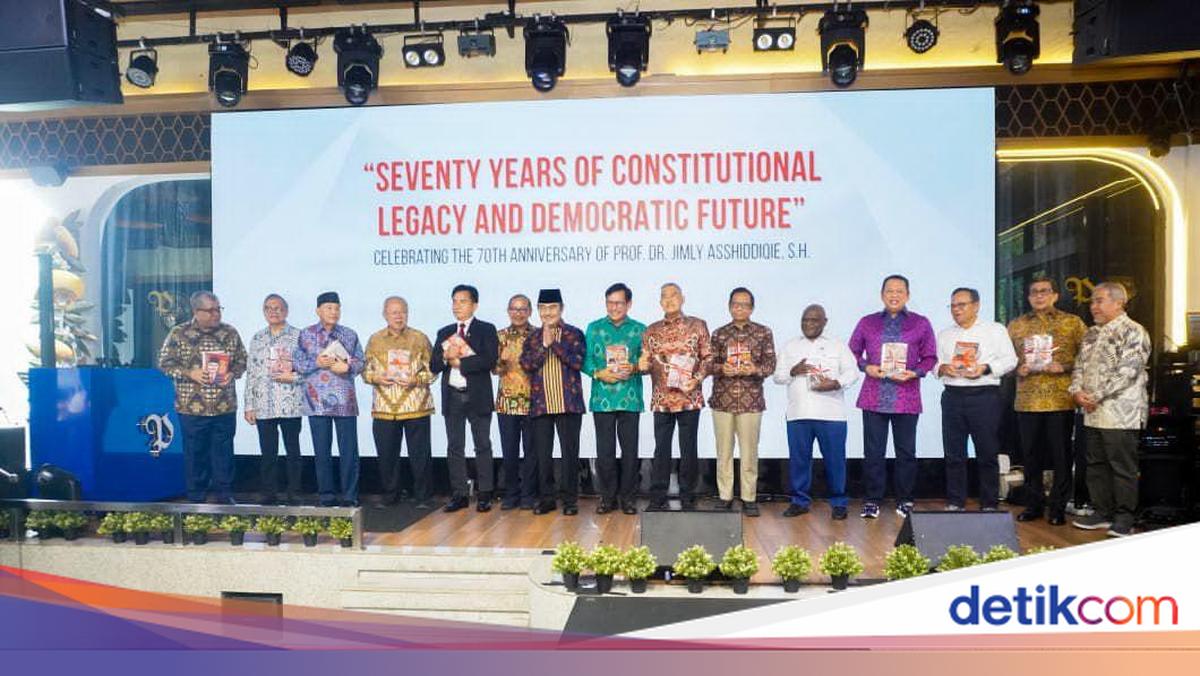
This role positions political parties as the main actors in determining national leadership every five years, directly impacting the nation’s development direction. This was stated by Bamsoet during his testimony at the 70th anniversary event and the launch of 12 books by Prof. Jimly Asshiddiqie at Parle Senayan on Tuesday (21/4).
“I am greatly influenced by Prof. Jimly’s thoughts; if we want to comprehensively improve this nation, the reforms must start from political parties. Political parties are the backbone of democracy and the upstream source of all political processes that determine the country’s future,” said Bamsoet in a written statement on Tuesday (21/4/2026).
Bamsoet explained that political parties have significant authority in the selection process for strategic public officials at both central and regional levels, through mechanisms such as general elections, presidential elections, and regional head elections. Political parties are also involved in the fit and proper test processes for various strategic state positions.
From the TNI Commander, National Police Chief, Attorney General, to leaders of independent institutions such as the Corruption Eradication Commission (KPK), General Elections Commission (KPU), Financial Audit Board (BPK), Judicial Commission, and Supreme Court, all pass through political mechanisms in the DPR dominated by party factions.
“With such extensive authority, political parties hold crucial control in determining the quality of state institutions. Therefore, political party reform is an urgent need so that the public official selection process is truly based on merit and integrity,” stated Bamsoet.
Bamsoet assessed that various national problems such as corruption, low quality of public services, and weak public trust in state institutions cannot be separated from the quality of political parties. Indonesia’s 2025 Corruption Perceptions Index data, still around a score of 37, indicates serious challenges remain in clean governance.
“As long as the upstream of our democracy is not healthy, the downstream will also be problematic. People’s welfare will be difficult to achieve if the political process is still coloured by non-ideal practices,” explained Bamsoet.
Bamsoet emphasised concrete steps for improvement, including strengthening political party cadre systems, increasing transparency in political funding, and promoting more substantive political education to the public. Data from the Ministry of Home Affairs records that public political participation increased in the 2024 General Election to around 82 percent. However, the quality of that participation still needs to be enhanced to be more rational and programme-based.
“In the future, we must encourage political parties to become modern, transparent, and accountable institutions. In this way, political parties can truly become pillars of democracy capable of producing quality leaders and policies that favour the people,” Bamsoet concluded.