
Bamsoet Says Common-Sense Politics Key to National Stability and Reconciliation
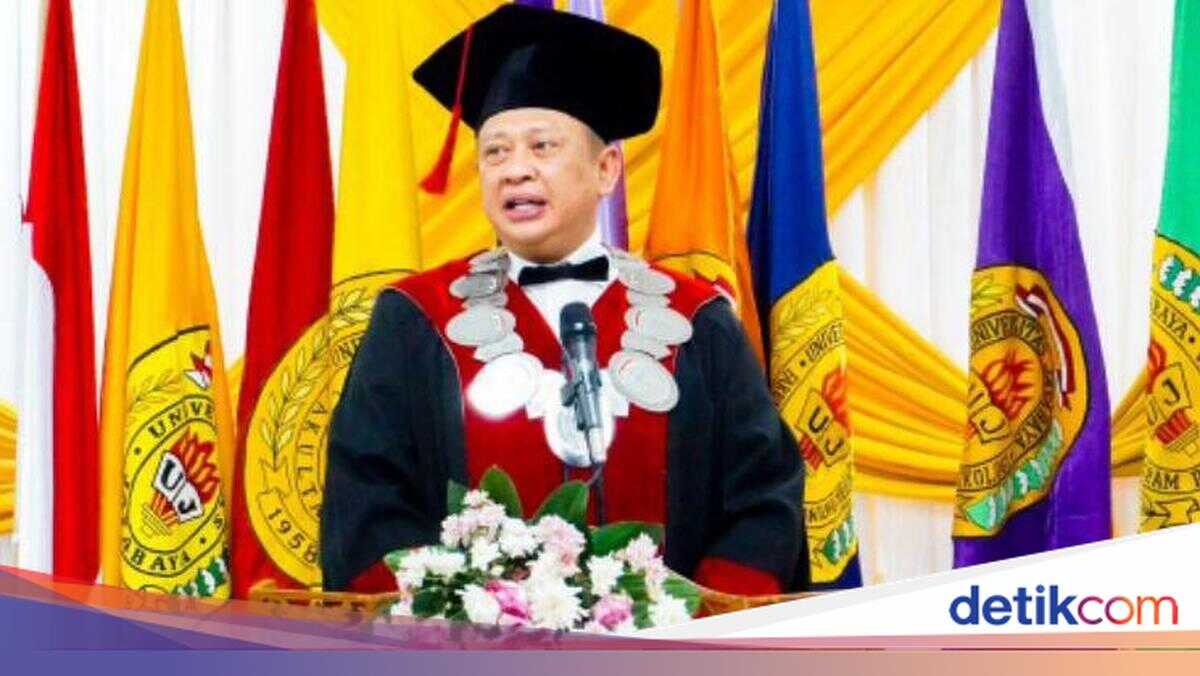
Jakarta — Member of the House of Representatives and Golkar Party Deputy Chairman Bambang Soesatyo (Bamsoet) has stressed the importance of leadership grounded in rationality and reconciliation. He invited the public to reflect on Indonesia’s democratic journey, which was once marked by sharp polarisation, and affirmed the urgency of politics that prioritises the nation’s interests above sectoral egos.
“Common-sense politics is the courage to make decisions that may not be popular but are crucial for the nation’s survival. This includes when he decided to restructure Indonesia’s economic system in accordance with the constitutional mandate of the 1945 Constitution, particularly Article 33, as the constitutional foundation of the Indonesian economy emphasising the principle of familial cooperation, state control over vital branches of production, and the management of natural resources for the people’s prosperity,” Bamsoet said in a statement on Monday (16/2/2026).
Bamsoet made the remarks at the launch of the book Prabowo: Common-Sense Politics Without a Stage by senior journalist Joseph Osdar at Parle Resto, Senayan Park, Jakarta, on Sunday (15/2).
Bamsoet also shared his recollections from 40 years ago as a young journalist, when he first met then-Commander of Kopassus Major General Prabowo Subianto at the Special Forces Command headquarters in Cijantung, Jakarta. From that encounter, Bamsoet said he gained a profound impression and came to understand that not all officers holding the rank of general had actual combat experience defending national sovereignty.
This, Bamsoet said, related to Prabowo’s response to an article he had written entitled “Prabowo, a Business General for Soldiers’ Welfare,” which had been the cover story of INFO BISNIS magazine, which Bamsoet led at the time.
“I remember clearly that Prabowo firmly stated, ‘I am a war general, not a golf general.’ That sentence has stayed with me to this day as a symbol of authentic, resolute character — one that refuses to be trapped in cosmetic image politics,” Bamsoet recalled.
At the same event, academic Rocky Gerung recounted his experience of proposing that Prabowo counter-attack President Joko Widodo during the 2019 presidential debate using Francis Fukuyama’s book The Great Disruption. Rocky said the proposal was rejected by Prabowo, who deemed it impolite and potentially embarrassing to Jokowi, who was still serving as president at the time.
“I must admit, Prabowo does possess a certain sense of officer’s honour. He did not want to insult President Jokowi on stage,” Rocky explained.
Meanwhile, former Constitutional Court Chief Justice Jimly Asshiddiqie assessed the book as important documentation of the national reconciliation phase. He highlighted how instruments such as granting forgiveness, meetings between elites, and the consolidation of political forces formed part of the nation’s collective healing process.
“This book eloquently sets out how instruments such as forgiveness, embracing opponents, and elite consolidation became part of our nation’s healing process. From a constitutional perspective, stability is a prerequisite for the rule of law. What Osdar has written about Prabowo’s common-sense politics aligns with our need for leadership capable of uniting, not dividing,” Jimly elaborated.
Jimly also reminded that the constitution mandates effective and stable governance. Without political stability, he argued, the development agenda, bureaucratic reform, and the protection of citizens’ constitutional rights risk being impeded.
“Amid a political culture dominated by image-making and competition for public attention, the choice to work quietly for the sake of national consolidation is in fact a mature step. Leadership that unites and eases social tensions — that is what Indonesia needs going forward,” Jimly affirmed.
Separately, Head of the Development Control and Special Investigation Agency (Bappisus) Aries Marsudiyanto said Joseph Osdar’s book presented a leadership perspective oriented towards service to the nation and state. Aries described Prabowo as consistently championing public welfare, as reflected in programmes such as the free nutritious meals initiative, MSME strengthening, fishermen’s cooperatives, Merah Putih cooperatives, and people’s schools.
Aries also emphasised three key leadership traits he deemed essential: morality, capability, and electability — all of which he considered inherent in Prabowo.
“Morally, his commitment to the nation and the common people is beyond question. In terms of capability, his leadership is evident — even at the international level, Indonesia is increasingly being taken seriously,” he said.
Minister of Culture Fadli Zon added that President Prabowo Subianto’s government is redirecting economic policy back towards Article 33 of the 1945 Constitution. He described Prabowo’s agenda as a “correction to neoliberalism,” which he argued had allowed economic liberalisation practices to exceed acceptable limits.
“Our great task now is to correct neoliberalism. Pak Prabowo wants to return our economy to the constitutional track, which is imperative in nature — the earth, water, and natural resources are controlled by the state for the people’s prosperity,” Fadli said.
Fadli claimed to have known Prabowo since they were active together at the Centre for Policy and Development Studies (CPDS) in 1993. He assessed the policies being implemented today as the execution of a “long dialectic of thought.”
“Pak Prabowo has not changed. What he is doing today is the implementation of common sense itself,” Fadli concluded.
The book launch was attended by numerous prominent figures, including Deputy Chairman of the Regional Representative Council (DPD) Tamsil Linrung, Minister of Communication and Digital Affairs Meutya Hafid, Indonesian Ambassador to Italy Junimart Girsang, House Commission III member Habib Aboe Bakar Alhabsyi (PKS), Robert Kardinal (Golkar), former Indonesian Ambassador to Singapore Suryopratomo, Pertamina Commissioner Iwan Bule, Pertamina Director Simon Aloysius Mantiri, businessman Jerry Hermawan Lo, FKPPI Chairman Pontjo Sutowo, former National Police Chief General (Ret.) Sutarman, former House Speaker Setya Novanto, Deputy Chairman of the Kadin Advisory Council Didik J. Rachbini, PAN figure Soetrisno Bachir, Akbar Faisal, and political analyst Effendi Gazali.