
Bamsoet: Presidential Advisory Council Plans Six Commissions to Address Indonesia’s Strategic Challenges
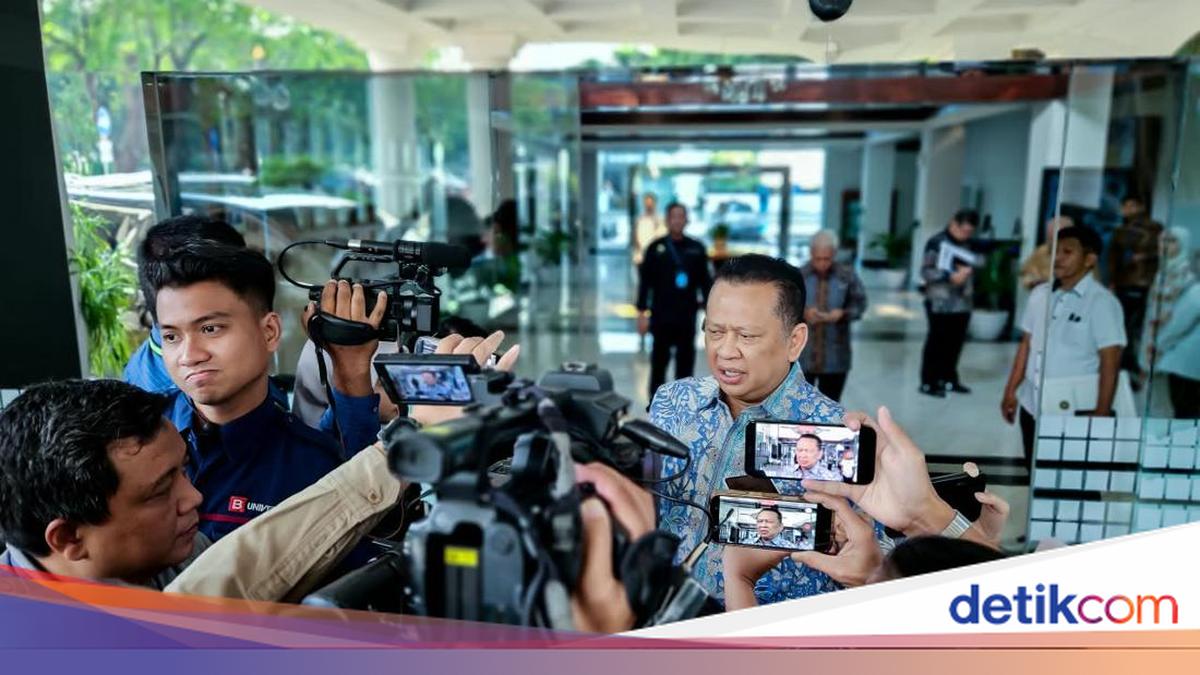
Bambang Soesatyo (Bamsoet), a member of Indonesia’s Presidential Advisory Council (Wantimpres), former Speaker of the People’s Consultative Assembly (MPR) and Golkar Party deputy chairman, attended Wantimpres’s first plenary meeting for the 2026–2029 term. The meeting discussed several institutional priorities, including a proposal to expand the council’s commission structure.
In the previous term, Wantimpres operated through four commissions: Politics, Law and Human Rights; Defence and Security; People’s Welfare; and Economy and Finance. For 2026–2029, the council plans to refine this structure into six commissions: Geopolitics; Law, Human Rights, Defence and Security; Economy and Finance; Human Development and Community Empowerment; Food; Infrastructure; and Downstreaming and Energy Transition.
‘The plan to establish six commissions should be seen as an effort to adapt the way Wantimpres works to the complexity of Indonesia’s challenges today. The world is changing very quickly, and geopolitical issues are increasingly affecting the economy, food and energy. National development also requires more specific attention to human resources, infrastructure, downstreaming and the energy transition. The commissions should therefore enable Wantimpres to provide advice that is data-based, cross-sectoral and forward-looking,’ Bamsoet said in a statement on Friday (9 October 2026).
Bamsoet said there were strategic reasons for separating food, infrastructure, and downstreaming and energy transition into dedicated areas. These sectors are increasingly central to Indonesia’s resilience and competitiveness.
Food security is directly linked to price stability and public welfare; infrastructure underpins connectivity and productivity; while downstreaming and the energy transition will determine Indonesia’s ability to turn its natural resources into added value while responding to changes in the global energy structure. The government has also identified food and energy security, the green economy and stronger infrastructure as important parts of the national economic transformation.
‘Food has now become a strategic issue affecting national resilience. We can see how geopolitical conflicts, climate change, supply-chain disruptions and shifts in global commodity prices can affect what people put on their tables. Infrastructure is just as important. Roads, ports, airports, irrigation, clean water, energy and digital infrastructure are the lifeblood of economic growth,’ Bamsoet said.
He said the commission covering geopolitics, law, human rights, defence and security would also be vital as the global balance of power changes ever more rapidly. Competition among major powers, regional conflicts, trade protectionism, cyber security, advances in artificial intelligence and shifts in global supply chains can all directly affect Indonesia’s interests.
Wantimpres needs to provide advice that safeguards Indonesia’s independent and active foreign policy while ensuring that legal resilience, defence, security and human rights protection are addressed within a common framework of national interests.
‘We need to maintain an independent and active foreign policy, strengthen Indonesia’s position in ASEAN, make use of its BRICS membership, and build constructive relations with the United States, China, Europe, Japan, India and other countries. Advice to the President in this area must take a comprehensive view, because geopolitical decisions made today can affect investment, trade, defence, energy and public welfare,’ Bamsoet said.
He added that a commission dealing with downstreaming and the energy transition was needed because Indonesia is focused on using its natural resources, industrialisation and the demands of a low-carbon economy. Downstreaming should lead to deeper industrial development, create quality jobs, strengthen domestic supply chains and increase state revenue. At the same time, the energy transition must be designed realistically to ensure national energy remains secure and affordable. These challenges are increasingly relevant as the government promotes green energy and digital infrastructure as drivers of economic transformation.
‘Downstreaming must not stop at building factories and exporting semi-finished products. We must also consider technological mastery, research, human resources, financing, markets and the ability to develop downstream industries. Likewise, we must balance emissions-reduction targets with the energy needs of industry, transport, households and economic growth,’ Bamsoet said.
Bamsoet said more specialised commissions were also needed on economic grounds, as national growth targets face a pressured global environment. Statistics Indonesia (BPS) recorded annual economic growth of 5.29 per cent in the second quarter of 2026, while growth in the first half of the year reached 5.45 per cent. In the second quarter, agriculture, forestry and fisheries grew by 12.26 per cent quarter on quarter, while electricity and gas was the fastest-growing business sector year on year, at 10.81 per cent. The figures show that Indonesia’s growth engines increasingly require coordinated policies on food, energy, industry, infrastructure, investment and household consumption.
‘Growth of around 5 per cent must be a foundation for achieving our 8 per cent economic growth target. Our challenge is to make that growth higher-quality: creating jobs, increasing productivity and purchasing power, reducing regional disparities, and generating more added value domestically,’ Bamsoet said.
Source: jawawa.id (https://jawawa.id/newsitem/bamsoet-presidential-advisory-council-plans-six-commissions-to-address-indonesias-strategic-challenges-1791532466)
Originally published by detikcom (https://news.detik.com/berita/d-8699549/bamsoet-wantimpres-rencanakan-6-komisi-bidang-hadapi-tantangan-strategis-ri), translated from Indonesian