
Bamsoet: Pancasila Must Serve as Strategic Compass in Facing Global Geopolitics
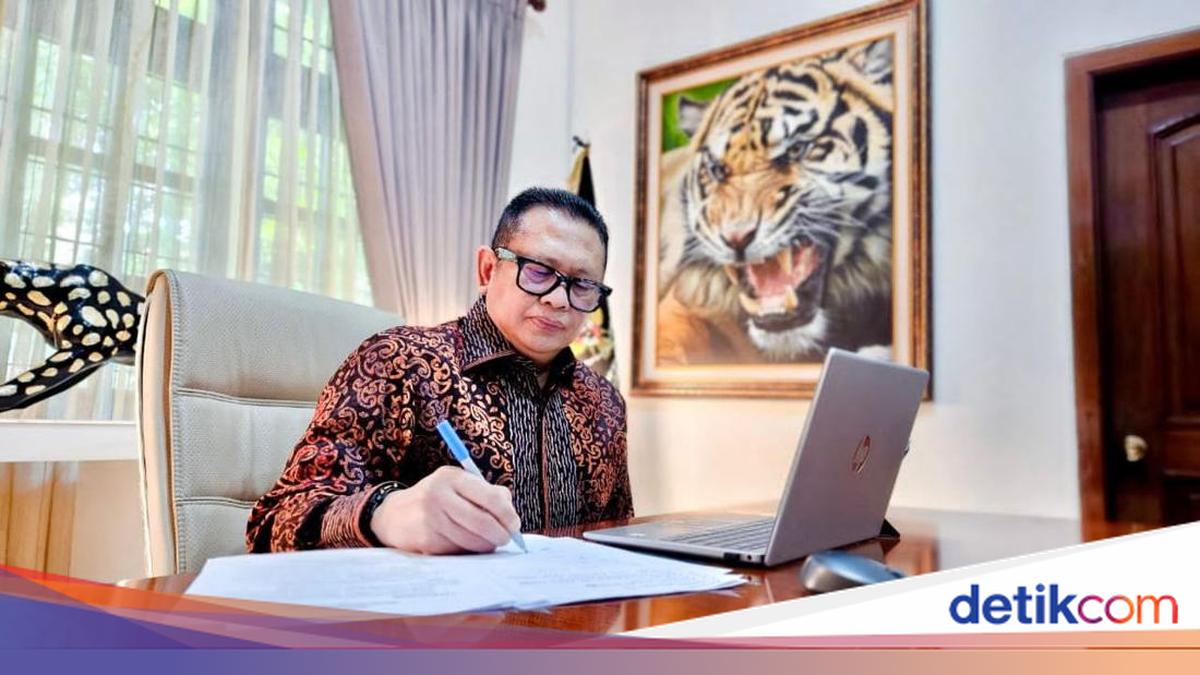
A postgraduate lecturer at the University of Defence (UNHAN), Bambang Soesatyo (Bamsoet), has revealed that the intensifying global geopolitical dynamics currently pose a real test to the relevance of Pancasila as Indonesia’s ideological foundation and the direction of its foreign policy. He explained that the world is moving towards a multipolar order with open conflicts, economic wars, and resource competitions, the effects of which are directly felt domestically, from energy price pressures to national economic uncertainty. “Pancasila must be positioned as the nation’s strategic compass in facing global geopolitical pressures. We can no longer view it merely as normative values, but as the basis for concrete decision-making in foreign policy and national policies,” stated Bamsoet in his remarks on Wednesday (1 April 2026). He delivered these points during an online postgraduate lecture in the Peace and Conflict Resolution Study Programme, Faculty of National Security, UNHAN, in Jakarta today. Bamsoet elaborated on the escalation of global conflicts, including tensions in the Middle East involving the United States (US), Israel, and Iran, which have directly impacted world energy stability. Indonesia, which still imports around 25% of its oil needs and 30% of LPG from the Middle East region, is highly vulnerable to global energy price volatility. Even a surge in world oil prices could push Indonesia’s budget deficit beyond the safe 3% limit if not anticipated with adaptive fiscal policies. “In such situations, the principle of active non-alignment must be reinterpreted more boldly. Indonesia must not get trapped in passive neutrality, but must actively build a strategic position that favours national interests,” said the 20th Speaker of the DPR RI. Bamsoet outlined that geopolitical pressures also stem from global economic fragmentation. The world is currently facing growth slowdowns, protectionism, and a shift towards a multipolar order that alters global trade and investment patterns. In this context, although Indonesia’s economy is relatively stable with around 5% growth, dependence on commodities and world price fluctuations remain structural vulnerabilities that must be addressed. “National economic resilience cannot be separated from global dynamics. Therefore, the implementation of Pancasila, particularly the principle of social justice, must be realised through strengthening economic independence, industrial downstreaming, and mastery of strategic technologies,” explained the Deputy General Chairman of Golkar Party. Bamsoet also responded to the weakening of global governance and the increasing violations of international law, which make the principles of peace and justice embedded in Pancasila increasingly relevant, yet more difficult to implement. According to Bamsoet, a world that is increasingly transactional demands that countries, including Indonesia, possess strong bargaining power. “If we do not strengthen our strategic position, we will become objects of global interests, not subjects that determine the direction. This is where Pancasila must become a force, not just a symbol,” explained the Chairman of the Board of Trustees of the Association of Alumni of Doctoral Programme in Law at Universitas Padjadjaran (UNPAD). Bamsoet added that Indonesia, as a G20 country with the largest economy in Southeast Asia, has great opportunities to play a balancing role in global conflicts, while also serving as a bridge between developed and developing countries. However, these opportunities can only be utilised if Indonesia has a clear and consistent strategic direction. “The question now is simple: are we ready to make Pancasila the state’s strategy, or will we continue to make it just a slogan? The answer to that question will determine Indonesia’s future amid the whirlpool of global geopolitics,” he concluded.