
Bamsoet Offers Input on 6% Economic Growth Target
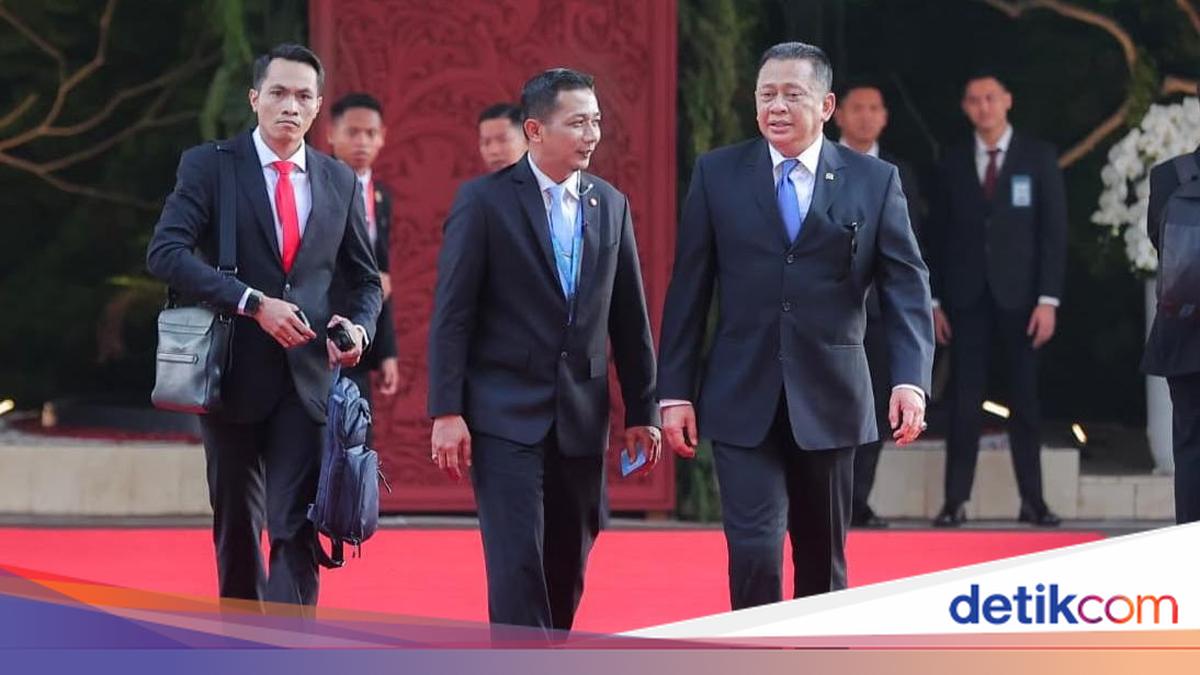
Member of the Indonesian House of Representatives from the Golkar Party faction, as well as the 15th Speaker of the People’s Consultative Assembly and Vice Chairman for Political, Legal and Security Affairs at the Indonesian Chamber of Commerce and Industry, Bambang Soesatyo, has assessed that the growth target in the 2027 Draft State Budget provides a picture of Indonesia’s development direction in facing future economic challenges. The target is considered quite ambitious given that the Indonesian economy grew by 5.29 percent year-on-year in the second quarter of 2026.
In the 2027 State Budget Bill and Financial Note delivered by President Prabowo Subianto at the House of Representatives Plenary Session on Friday, 14 August 2026, the government is targeting economic growth of 6 percent in 2027, inflation of 2.5 percent, an average exchange rate of Rp17,500 per US dollar, and a budget deficit of 2.4 percent of gross domestic product.
With that target, Bamsoet believes the 2027 Draft State Budget must be able to drive growth while keeping the national economy healthy and stable.
“A 6 percent economic growth target is certainly not an easy task. But I see this target as important to push Indonesia to move faster. What we must ensure is that the growth is truly felt by the public. Jobs increase, people’s incomes rise, small businesses develop, and purchasing power is maintained,” Bamsoet said in a statement on Saturday, 15 August 2026.
He made the remarks after the House of Representatives Plenary Session at the Parliamentary Complex in Senayan, Jakarta.
He believes the government needs to optimise a number of sectors that have proven capable of supporting the national economy in order to pursue the 6 percent target in 2027. Household consumption, investment, the processing industry, exports, downstreaming, tourism, the digital economy, and micro, small and medium enterprises all need to be encouraged simultaneously.
The government also needs to maintain business confidence so that investment continues to flow in and companies are willing to create new jobs. The 5.29 percent economic growth in the second quarter of 2026 shows that Indonesia’s economic foundation remains quite strong, but additional impetus is still needed for the 6 percent target to be achieved.
“We cannot expect 6 percent growth from government spending alone. The business world must also move, investment must come in, industry and MSMEs must develop. The government’s job is to create a comfortable business climate, provide legal certainty and supply supporting infrastructure. If the private sector and the people’s economy move, jobs will open up as well,” he said.
He stressed the importance of maintaining a balance between development needs and the state’s financial capacity. The government is targeting state revenue of around Rp3,426 trillion and spending of Rp4,097.2 trillion, with a deficit of 2.4 percent of GDP. According to him, the gap needs to be managed carefully so that fiscal health is maintained without sacrificing funding for programmes needed by the public.
“We must of course keep state finances healthy. But savings must also be made carefully. Do not let budgets for education, health, food, energy, infrastructure and job creation be cut while less important spending continues. Every rupiah of the state budget must be examined for its benefits. If it has a major impact on society and the economy, it must be prioritised,” he explained.
He assessed that the government’s eight priorities in the 2027 Draft State Budget have targeted the public’s main needs, ranging from food sovereignty, energy and water self-sufficiency, education, health, downstreaming and industrialisation, infrastructure and housing, strengthening the people’s economy and village development, to poverty reduction.
However, he reminded that every programme must have measurable results, such as increasing farmer productivity and maintaining food price stability, expanding public access to decent housing, and ensuring that downstreaming is able to create jobs and increase the added value of domestic commodities.
“The government’s priorities are already on target; what remains is how they are implemented. The public must be able to see the results directly. Farmers must become more prosperous, food prices more affordable, electricity and energy available, children receiving a good education, health services easier to access, and low-income people finding it easier to own a home. Those are simple indicators of whether the state budget is truly being implemented successfully,” he concluded.