
Bamsoet: KUHAP Revision a Momentum for Investigative Oversight Reform
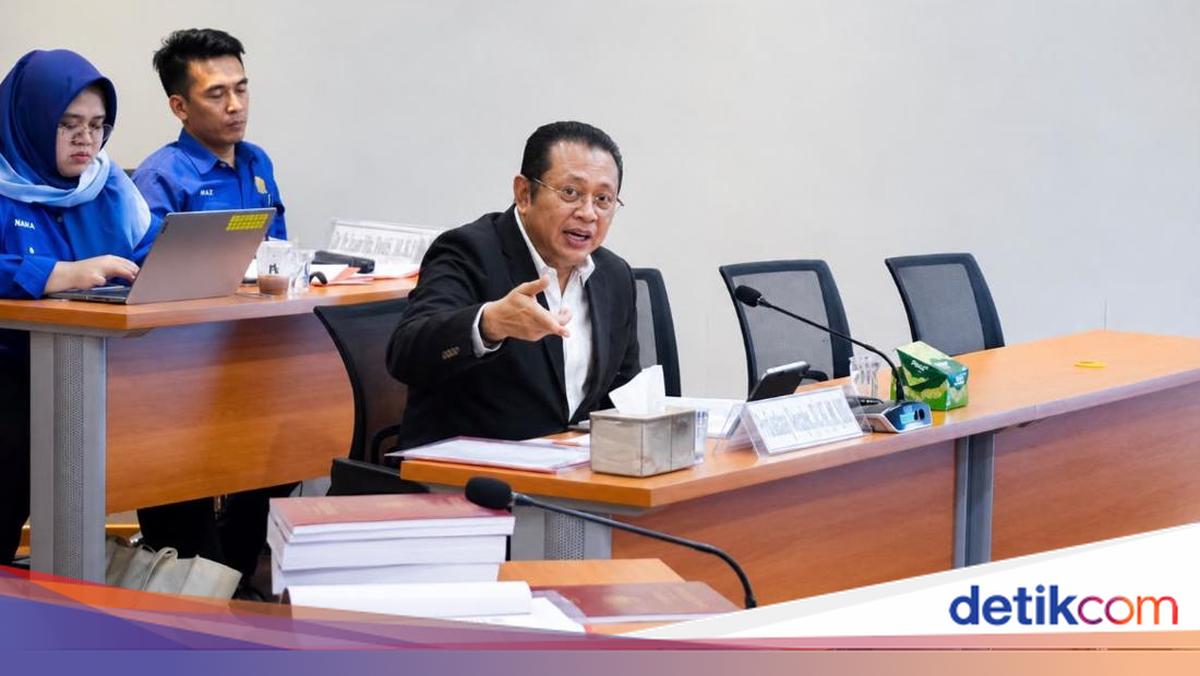
Member of the House of Representatives from the Golkar Party, Bambang Soesatyo, has emphasised that the deliberation of the Criminal Procedure Code Bill (RUU KUHAP) is the right moment to carry out a comprehensive reform of the investigative oversight system in Indonesia. According to Bamsoet, oversight of investigators has so far faced fundamental weaknesses, ranging from conflicts of interest due to the dominance of internal supervision, the weak authority of external oversight institutions, to the absence of a mechanism capable of compelling the implementation of recommendations. He stated that this condition has resulted in the continued emergence of abuse of authority, allegations of wrongful arrest, controversial case dismissals, slow handling of public reports, and a perception of impunity in law enforcement.
‘A state based on law requires that every use of authority be effectively supervised. Oversight of investigations must not stop at issuing moral recommendations that can be ignored. Indonesia needs an investigative oversight system that is independent, possesses executory authority, and is able to ensure that every procedural violation receives clear legal consequences. The KUHAP reform must be the gateway to building such a system,’ Bamsoet said in a statement on Tuesday (4/8/2026). He made the remarks while serving as an examiner and co-promoter for a doctoral dissertation proposal in legal studies at Borobudur University, which focused on reconstructing executory investigative oversight regulations to ensure legal certainty and justice.
Bamsoet explained that various high-profile cases in recent years have demonstrated the inability of current oversight mechanisms to prevent abuse of power or expedite the resolution of alleged ethical and criminal violations by law enforcement officers. He noted that external oversight bodies such as the Ombudsman, the National Police Commission (Kompolnas), and the National Commission on Human Rights (Komnas HAM) often produce recommendations that lack binding force, making their implementation entirely dependent on the willingness of the institution being supervised. This fundamental weakness, he argued, must be addressed through legal reform. ‘As long as oversight recommendations lack executory power, supervision will struggle to produce real change. Oversight must be able to order corrective actions that are mandatory, have clear time limits, and include sanction mechanisms if ignored. Only then can the principle of equality before the law be truly realised,’ he said.
Bamsoet further elaborated that the KUHAP revision should not only focus on refining the authorities of investigators, prosecutors, and judges but must also build a balance between authority and accountability. He argued that the immense power of investigation must be matched by an equally robust oversight system. Without this balance, the potential for abuse of authority remains open and could erode public trust in law enforcement institutions. He stressed that the principle of checks and balances must be a central pillar of a modern criminal justice system. He clarified that independent oversight is not intended to weaken law enforcement officers; rather, strong oversight will protect professional investigators while firmly taking action against individuals who abuse their authority. Law enforcement institutions will gain greater trust if they possess an objective, transparent, and fair correction mechanism.
Bamsoet also highlighted the increasing complexity of law enforcement challenges in the digital era. Investigations now involve electronic evidence, artificial intelligence, digital data analysis, cross-border transactions, and rapidly evolving cybercrimes. He explained that this complexity requires equally modern oversight standards, utilising information technology, digital audits, and transparent documentation systems so that every action by an investigator can be accounted for both legally and administratively. ‘Indonesia is building a modern legal system, so investigative oversight must also be modern. We need an independent, professional, technology-based mechanism with executory authority that can provide legal certainty for the public, victims, suspects, and law enforcement officers alike,’ he concluded.
Source: jawawa.id (https://jawawa.id/newsitem/bamsoet-kuhap-revision-a-momentum-for-investigative-oversight-reform-1785822784)
Originally published by detikcom (https://news.detik.com/berita/d-8603522/bamsoet-sebut-pembahasan-ruu-kuhap-momentum-reformasi-pengawasan-penyidikan), translated from Indonesian