
Bamsoet Encourages Technology-Based Medical Check-Ups and Early Detection in Indonesia
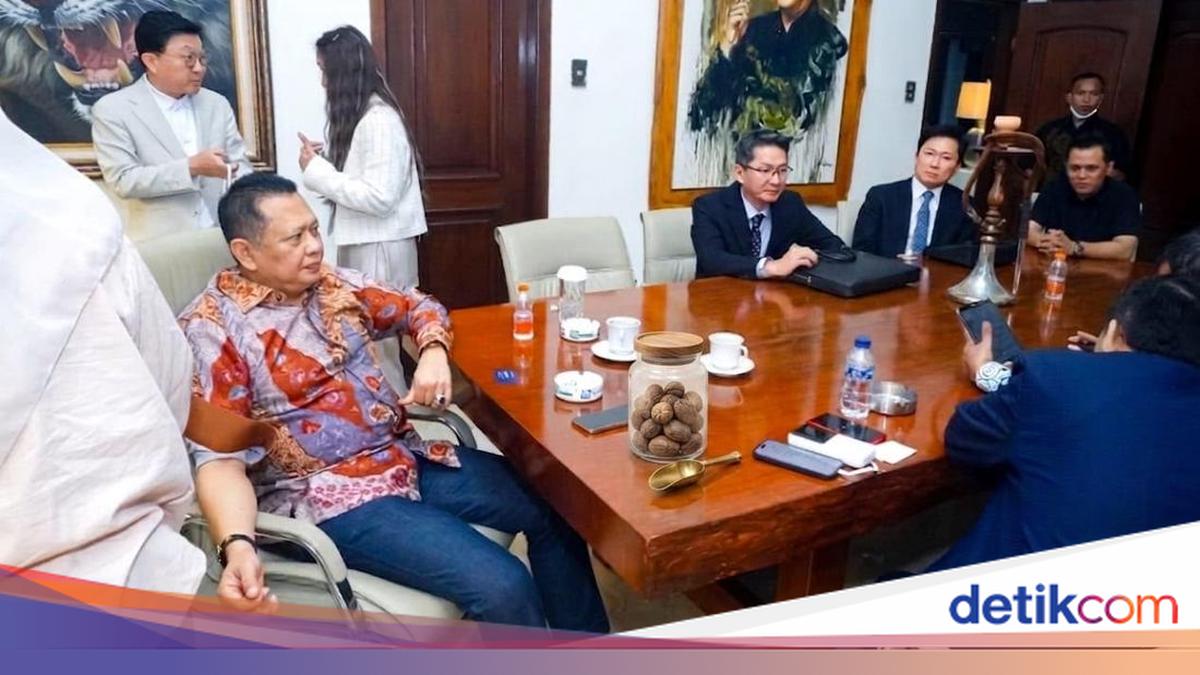
Member of the Indonesian House of Representatives Bambang Soesatyo (Bamsoet) received representatives from South Korea’s Sojunghan Medicare to discuss developments in health examination technology, particularly screening of Natural Killer (NK) cell activity and the development of immunology-based health services.
The meeting is expected to open opportunities for the exchange of health knowledge and technology between Indonesia and South Korea, amid the public’s growing need for early disease detection and a more personal, data-driven medical approach.
This was conveyed by him when receiving the Sojunghan Medicare representatives in Jakarta today. The Sojunghan Medicare representatives in attendance included Dr Michael Jang, Edward Park, Lee Jae Woong, and Lee Jun Sik.
“Health technology is developing very rapidly. Indonesia needs to open up opportunities for cooperation with health and research centres in countries with advanced experience, including South Korea. Future health examinations must increasingly focus on early detection, more comprehensive mapping of the body’s condition, and the use of technology that can help doctors make more precise medical decisions,” said Bamsoet in his statement on Wednesday (12/8/26).
Bamsoet explained that one of the services introduced by Sojunghan Medicare is the Natural Killer Mix (NKM), an approach based on autologous lymphocyte cells taken from the patient’s blood, which are then processed and activated outside the body before being reintroduced into the body via infusion.
The concept aims to increase the number and proportion of NK cells as part of the immune response. This type of technology falls under cell-based therapy and requires strict supervision in terms of safety, quality, clinical evidence, regulation, and the standards of the healthcare facilities that implement it.
“Indonesia needs to be open to innovations such as NKM, but openness must go hand in hand with scientific caution. Any cell-based therapy that will be applied to the Indonesian public must go through a rigorous evaluation and regulatory process, so that patient safety remains the top priority. We must not pursue health technology at the expense of medical standards,” said Bamsoet.
Bamsoet assessed that the current momentum in Indonesia-South Korea relations is very good for expanding cooperation in the health sector. In April 2026, the two countries strengthened their strategic partnership through 10 memoranda of understanding covering a number of priority sectors, including health and artificial intelligence for primary healthcare. This cooperation is part of strengthening the long-term strategic partnership between the two countries.
“Indonesia-Korea cooperation should not stop at investment and trade. Health must become one of the strategic sectors that continues to be strengthened. We can build collaboration in health examinations, research, medical personnel education, biotechnology, laboratory development, digital health, and even medical tourism. If done seriously, Indonesia can become both a market and a development partner for health technology in the Asian region,” concluded Bamsoet.