
Bamsoet: Automotive Communities Part of National Creative Economy
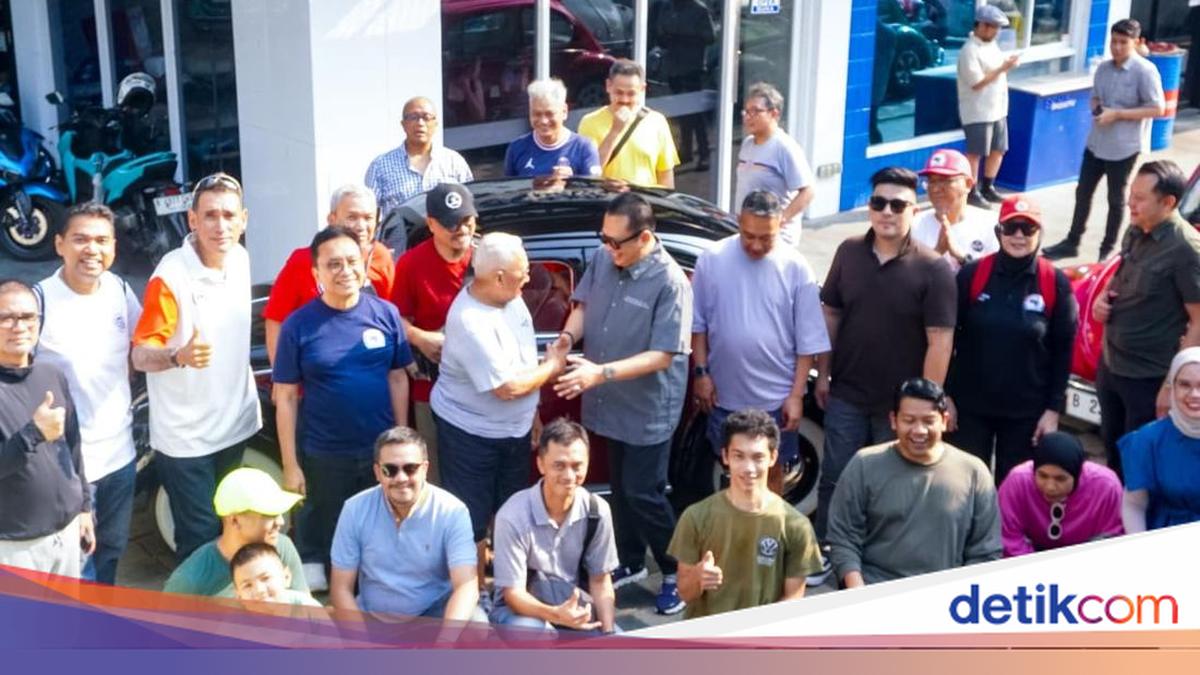
Golkar Party member of the Indonesian House of Representatives and 15th Speaker of the People’s Consultative Assembly, Bambang Soesatyo (Bamsoet), has expressed appreciation for the Sunday Afternoon Ride organised by the Volkswagen Beetle Club (VBC). He assessed the event as a positive platform for automotive enthusiasts.
Adopting the Jakarta City Rolling concept, the activity brought together fans of the VW Beetle for a leisurely journey from Blackstone Garage in Kebayoran Baru to Thamrin 10 in Jakarta. The event combined automotive spirit, camaraderie, visual creativity, and humanitarian social action.
“The VBC Sunday Afternoon Ride demonstrates that automotive communities can serve as a means to build fraternity, strengthen social awareness, and preserve automotive cultural heritage. I appreciate the Volkswagen Beetle Club for consistently presenting creative, positive activities that are close to the community,” said Bamsoet while attending the Sunday Afternoon Ride at Blackstone Garage Jakarta on Sunday (23/8/2026).
The Chairman of the Honorary Board of the Indonesian Motor Association (IMI) explained that the existence of classic vehicle communities holds strategic value amid the rapid development of modern automotive technology. As the industry moves towards electrification, digitalisation, and autonomous vehicles, classic car communities play a role in safeguarding the history of the automotive industry’s journey.
“Classic vehicle communities teach that a vehicle possesses historical value, stories, and emotional bonds that cannot be replaced by technological advancement. Therefore, the existence of classic vehicle communities must continue to be supported so that the younger generation can learn about automotive history as well as the importance of maintaining cultural assets,” Bamsoet stated.
According to Bamsoet, activities combining riding, coffee gatherings, cinematic content production, and social charity exemplify how automotive communities are able to adapt to the times. Automotive communities today no longer merely gather and display vehicles, but have also become platforms for collaboration across various sectors.
“This kind of activity model is highly relevant to the character of today’s generation. There is an element of creativity, a spirit of sharing, healthy social interaction, and a space to introduce the potential of the creative economy. Automotive communities have evolved into productive ecosystems,” Bamsoet explained.
Furthermore, Bamsoet added that the contribution of automotive communities to the national economy is also growing. Indonesia’s automotive industry remains one of the main manufacturing sectors, absorbing hundreds of thousands of workers and driving the growth of various supporting businesses.
The presence of automotive communities also creates demand for restoration services, specialist workshops, spare parts, modifications, photography, event organisation, as well as the culinary and tourism sectors. Various activities held by automotive communities have proven capable of stimulating the local economy and attracting broad public attention.
“Automotive communities have become part of the national creative economy. Every activity organised generates a ripple effect for many business actors. Therefore, I always encourage automotive communities to continue presenting productive, orderly, and safe activities that provide added value to society,” Bamsoet concluded.