
Bamsoet Asserts Indonesia Must Act as a Balancing Force in Global Competition
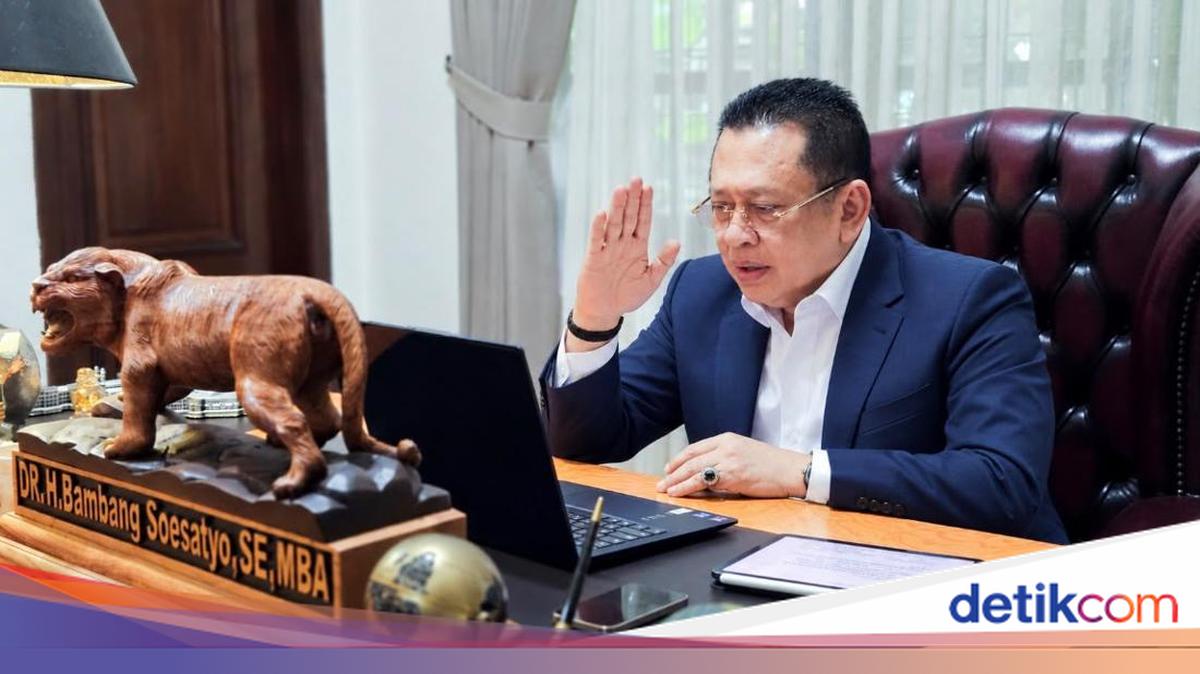
Bambang Soesatyo (Bamsoet), a member of the Indonesian House of Representatives (DPR) from the Golkar Party, the 15th Speaker of the MPR, and a postgraduate lecturer, has asserted that Indonesia must maintain its ‘free and active’ foreign policy amidst the intensifying competition between the United States and China, as well as the strengthening of BRICS.
He explained that global competition is currently unfolding through trade, investment, technology, energy, food, supply chains, and defence. Given its geographical position between the Indian and Pacific Oceans, Indonesia must be able to transform this strategic position into national bargaining power and strength.
“Indonesia does not need to choose between East or West. Indonesia must remain free and active. We can cooperate with the United States without becoming an extension of the United as, cooperate with China without losing vigilance and sovereignty, and be active in BRICS without closing doors to other partners. Free and active means having the courage to think with one’s own head, speak with one’s own voice, and act based on national interests,” Bamsoet stated in his remarks on Friday (2/10/2026).
He made these remarks while delivering a lecture for the Postgraduate (S2) Programme in Peace and Conflict Resolution, Faculty of National Security at the Defence University (Unhan) via an online platform in Jakarta.
The former 20th Speaker of the DPR and 7th Chairman of Commission III of the DPR assessed that economic relations with both China and the United States are equally strategic. Data from the Central Bureau of Statistics (BPS) noted that in 2025, Indonesia’s exports to China were approximately US$67.04 billion, while imports reached around US$87.54 billion, resulting in a deficit of about US$20.50 billion.
Meanwhile, Indonesia-US trade in goods and services in 2025 reached approximately US$50.7 billion. These figures demonstrate the importance of maintaining balanced relations with both economic powers while simultaneously strengthening market diversification.
“The issue is not with whom we trade, but whether that trade relationship strengthens national industry or instead creates dependency. Every investment cooperation must produce added value domestically, create jobs, improve the quality of human resources, and encourage technology transfer,” said Bamsoet.
Furthermore, the Deputy Chairman of the Golkar Party and Head of the National Defence Body of FKPPI explained that Indonesia’s full membership in BRICS since January 2025 should be utilised as additional space for diplomacy and economics. BRICS is not a defence pact and consists of nations with diverse interests.
Indonesia, Bamsoet continued, can utilise it to expand trade, development financing, and cooperation in food, energy, technology, and the interests of the Global South, while still strengthening relations with the United States, Japan, South Korea, Australia, the European Union, the Middle East, and other partners.
“We must use BRICS strategically. Indonesia joined BRICS to enlarge the scope of diplomacy and fight for the interests of the Global South. We must have many doors of cooperation, but the key to every door must remain in Indonesia’s hands. This is the meaning of strategic autonomy in foreign policy,” explained Bamsoet.
The Chairman of the Advisory Board of the Alumni Association of Doctors of Law at Padjadjaran University added that a free and active foreign policy must be supported by strong economic and defence resilience. Indonesia’s trade surplus throughout 2025 reached approximately US$41.05 billion, with exports at US$282.91 billion and imports at US$241.86 billion. However, this surplus must be accompanied by the strengthening of manufacturing, downstreaming, market diversification, technology, food, and energy.
Furthermore, he stated that the national defence industry needs to be strengthened through research, mastery of technology, increased production capacity, and international cooperation that benefits domestic industry.
“We are not looking for enemies, but Indonesia must have the ability to protect itself. Modern defence is not solely about weapons, but also cyber security, data, energy, food, technology, logistics, and strategic industries. Indonesia must be a country capable of determining its own policy direction, not a country dragged by the currents of great power competition,” concluded Bamsoet.