
Bamsoet Applauds Food Self-Sufficiency and Major SOE Reform in Prabowo Era
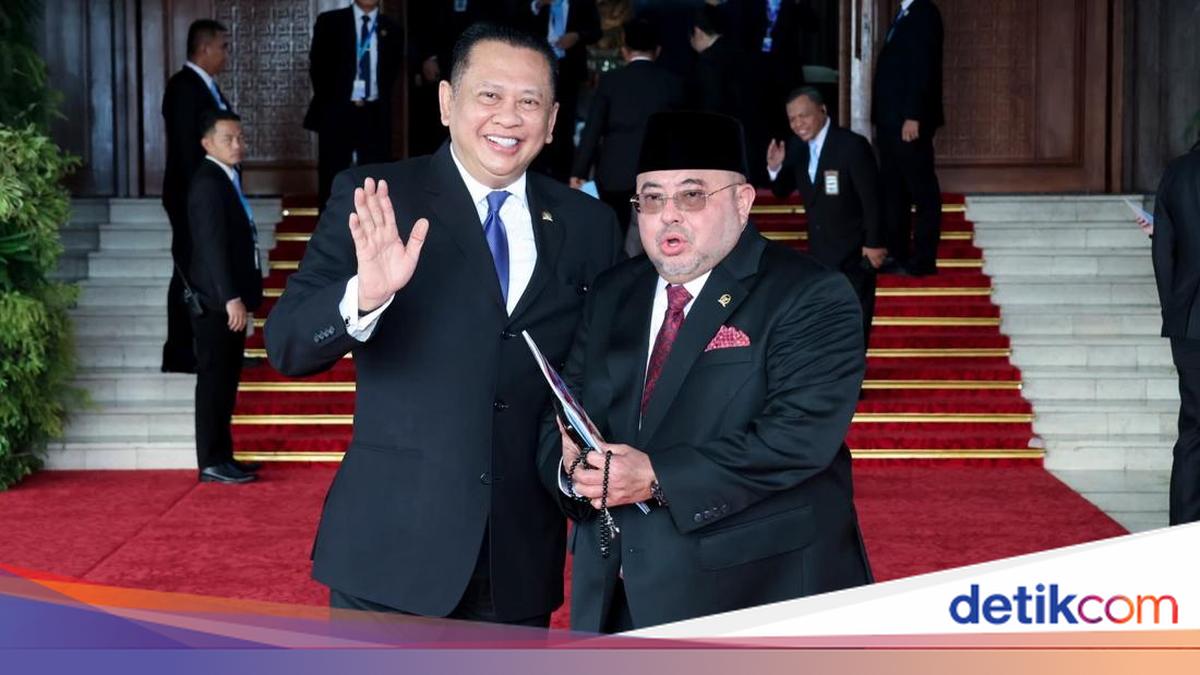
Golkar Party politician and Indonesian House of Representatives member Bambang Soesatyo (Bamsoet) has lauded the achievements of President Prabowo Subianto’s administration, as presented during the Annual Session of the People’s Consultative Assembly (MPR) and the Joint Session of the House of Representatives (DPR) and the Regional Representatives Council (DPD) at the Parliament Complex in Senayan, Jakarta, on Friday (14/8). Bamsoet assessed that the state address demonstrated a development direction increasingly prioritising national self-reliance, public welfare, food and energy security, economic strengthening, and state governance efficiency.
President Prabowo highlighted several concrete achievements, including economic growth of 5.45 percent in the first half of 2026, investment realisation of Rp 1,010 trillion up to the first half of 2026 which created over 1.4 million jobs, and total investment realisation throughout 2025 amounting to Rp 1,931 trillion, creating more than 2.7 million jobs. “The President’s speech shows that the government has been working with an increasingly clear direction and target, namely building national self-reliance while improving public welfare. Amid geopolitical uncertainty, trade wars, supply chain shifts, and global economic pressures, Indonesia has managed to maintain growth and attract investment. This deserves appreciation,” Bamsoet said in a statement on Friday (14/8/2026).
He added, “However, these figures must be further implemented into benefits that are felt by all levels of society, especially through job creation, increasing purchasing power, strengthening the middle class, and equitable development across all regions.” Bamsoet made these remarks after attending the Annual MPR Session and the Joint Session of the DPR and DPD at the Parliament Complex, Senayan, Jakarta, on Friday (14/8).
The former Speaker of the DPR and former Chair of House Commission III noted that one achievement worthy of appreciation is Indonesia’s success in achieving self-sufficiency in eight food commodities within a year. The government has also cut 145 regulations on fertiliser distribution and reduced fertiliser prices by around 20 percent. According to him, this policy is crucial because production costs are one of the main issues determining farmers’ competitiveness. At the same time, the government still has work to do on several commodities that are not yet fully self-sufficient, meaning the success of self-sufficiency must be followed by increased productivity, price certainty, strengthened irrigation, mechanisation, and farmer regeneration.
“Food self-sufficiency is the foundation of state sovereignty. When Indonesia can meet its food needs from its own production, we have much stronger resilience in facing global turmoil. The government also needs to ensure that harvest prices remain profitable for farmers. Productivity must not increase while farmers lose their profit margins due to high distribution costs, middlemen manipulation, or weak supply chains,” said Bamsoet.
The Deputy Chair of the Golkar Party elaborated that in the economic field, the 5.45 percent growth achievement in the first half of 2026 sends a positive signal that the Indonesian economy is relatively resilient amid global uncertainty. The President also stated that economic growth in the first quarter of 2026 reached 5.61 percent, which was cited as the highest first-quarter and first-half growth in the last 13 years. Investment realisation throughout 2025 reached Rp 1,931 trillion, creating more than 2.7 million jobs, while up to the first half of 2026 it had reached approximately Rp 1,010 trillion, creating over 1.4 million jobs.
“I agree with the President’s emphasis that economic growth and investment are important means to achieve public welfare. Economic growth figures are meaningless if not accompanied by decent jobs, rising incomes, and controlled living costs. Therefore, the government needs to continue strengthening national industry, downstream processing, MSMEs, the creative economy, and labour-intensive sectors so that the growth we achieve is of higher quality and widely felt,” Bamsoet explained.
The Chair of the Advisory Board of the Padjadjaran University Doctoral Alumni Association in Legal Studies also expressed appreciation for the massive reform of State-Owned Enterprises (SOEs) through the Danantara investment authority. The President revealed that the government has closed 290 SOEs as part of the restructuring and is targeting a maximum of 300 SOEs by 31 December 2026. Bamsoet further explained that the restructuring is said to have resulted in overhead cost savings of around Rp 50 trillion, derived from reductions in salary costs for directors and commissioners, office rent, vehicles, and official travel. On the other hand, SOE dividends to the state in 2025 reached Rp 142.3 trillion, an increase of 67 percent compared to 2024.
“SOE reform is a bold and important step because too many unproductive state companies can actually burden state finances. SOEs must consist of healthy, professional, productive companies capable of creating added value. However, the restructuring must also be carried out transparently, accountably, and professionally so that its ultimate goal truly increases the contribution of SOEs to the economy and state revenues,” Bamsoet concluded.