
Bambang Patijaya: Acceleration of Renewable Energy Must Reduce Subsidy Burden and Build National Industry
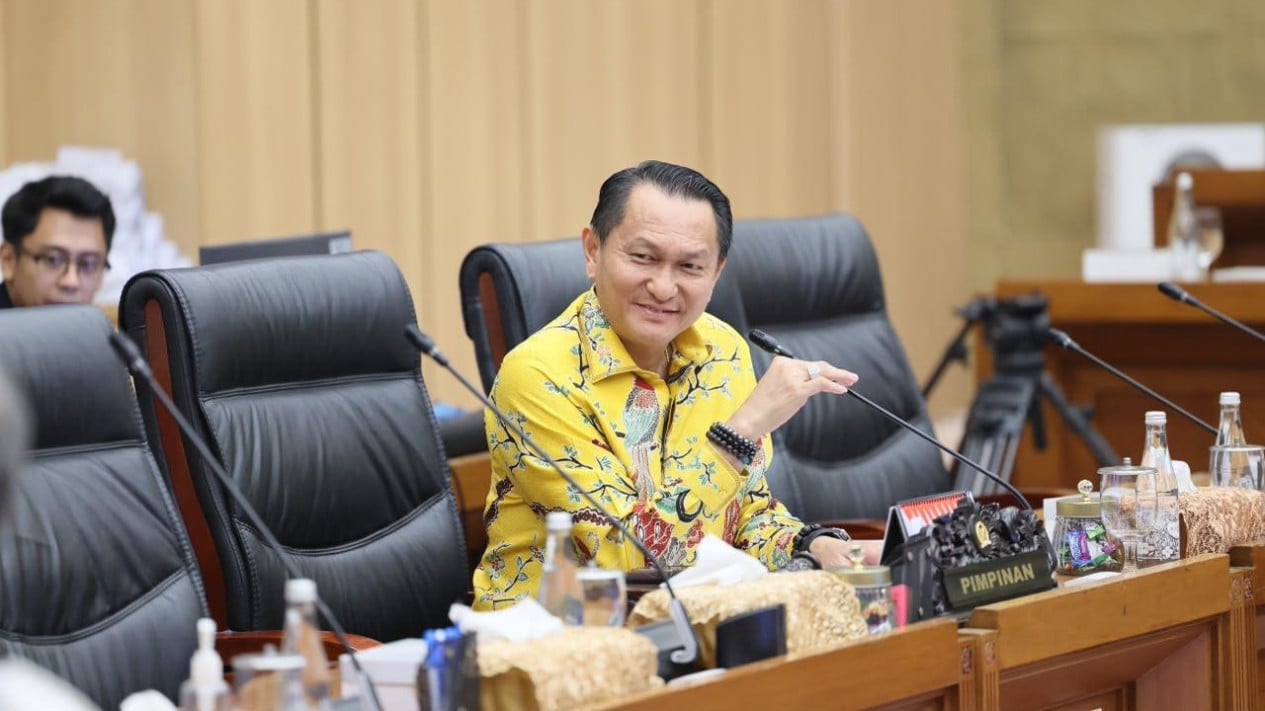
Bambang Patijaya, Deputy Chairman of the Golkar Party Faction in the Indonesian House of Representatives (DPR RI), believes that the acceleration of new and renewable energy (EBT) must be positioned as a national strategy to strengthen energy security, control the subsidy burden, and build a domestic energy technology industry.
“We support the policy direction of President Prabowo Subianto and the Minister of Energy and Mineral Resources, Bahlil Lahadalia, in accelerating national energy independence. The development of renewable energy is not merely an environmental agenda, but also an instrument to reduce dependence on energy imports and maintain the nation’s fiscal health,” Bambang stated in a written briefing on Thursday, 3 September 2026.
This statement was made in response to calculations by the Ministry of Energy and Mineral Resources (ESDM) suggesting that the burden of energy subsidies and compensation in 2026 could potentially reach approximately Rp300 trillion if supply availability in Indonesia is not anticipated and the use of renewable energy is not accelerated. According to Bambang, this projection should serve as the basis for accelerating measured energy diversification.
In the Electricity Supply Business Plan (RUPTL) 2025–2034, the government plans an additional capacity of 69.5 GW, with 42.6 GW, or approximately 61 per cent, derived from renewable energy.
The 100 GWp Solar PV Program launched by President Prabowo is expected to produce an average effective power of around 18–20 GW, assuming a capacity factor of 18–20 per cent.
Illustratively, if this additional supply is accounted for in the new planning structure, the proportion of renewable energy has the potential to increase to approximately 69–70 per cent.
“With the presence of the 100 GWp Solar PV Program, the RUPTL will certainly undergo adjustments. These adjustments do not only change capacity figures, but also encompass the composition of power plants, construction stages, project locations, transmission requirements, battery capacity, power reserves, and the system’s ability to absorb additional solar power supply,” said Bambang.
Bambang emphasised that the development of renewable energy must not only pursue large installed capacities. Every project must be supported by comprehensive technical and economic studies, including grid costs, energy storage, system balancing, and the impact on the basic cost of electricity provision.
In this way, the increase in renewable energy can truly strengthen supply reliability and sustainably reduce the energy subsidy burden.
Bambante also encouraged the strengthening of research and development (R&D) to improve the efficiency of solar panels in tropical climates, develop batteries and energy storage systems, and strengthen smart grid technologies.
Source: jawawa.id (https://jawawa.id/newsitem/bambang-patijaya-acceleration-of-renewable-energy-must-reduce-subsidy-burden-and-build-national-industry-1788440353)
Originally published by VIVA.co.id (https://www.viva.co.id/bisnis/1926093-bambang-patijaya-percepatan-ebt-harus-tekan-beban-subsidi-dan-bangun-industri-nasional), translated from Indonesian