
Bali's Waste Crisis Deepens, PSEL Plant Expected to Provide Integrated Solution
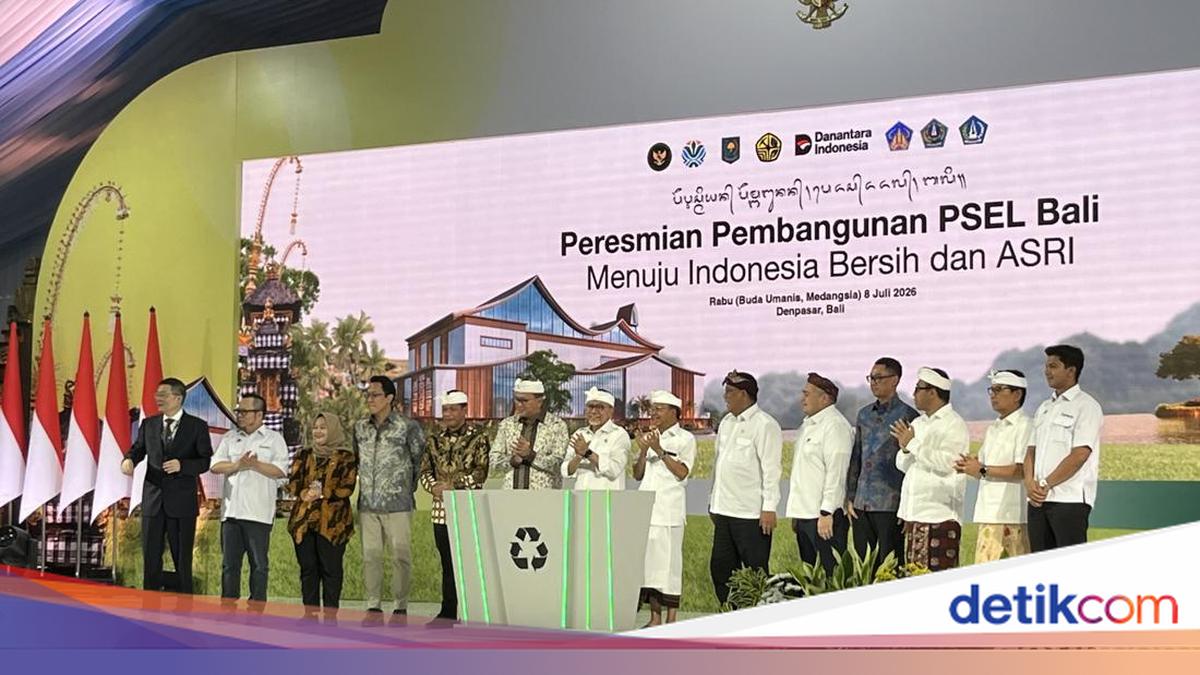
A Waste-to-Energy Plant (PSEL) has begun construction in South Denpasar, Bali, intended as a solution to the island’s waste accumulation, which reaches around 3,500 tonnes per day. Ida Bagus Mandhara Brasika, a waste and climate change researcher from Udayana University, stated on Wednesday that the waste problem in Bali is extremely urgent, with the percentage of unmanaged waste exceeding 50 per cent. He noted that the failure of various facilities, from integrated waste treatment plants (TPST) to landfills (TPA), has increased environmental leakage.
He argued that the waste issue cannot be resolved solely by relying on final disposal sites, as this threatens environmental cleanliness and the tourism sector. Furthermore, the accumulation of waste increases the risk of water pollution, greenhouse gas emissions, and fires caused by methane gas build-up. The construction of the PSEL facility in Pedungan Village is viewed as part of a national waste management transformation under Presidential Regulation Number 109 of 2025, signalling the government’s commitment to fixing Bali’s waste system.
However, Brasika cautioned that the facility’s success depends heavily on changes in waste management governance, particularly the implementation of waste sorting at the source. He stressed that processing mixed waste into electrical energy is extremely difficult, and without proper sorting by the community, the PSEL is likely to fail because mixed waste has a high moisture content, requiring excessive energy for power generation. He insisted that public education on waste sorting must be an inseparable part of the PSEL development, as modern facilities will not yield optimal results if community habits do not change.
Brasika highlighted that Bali has a long history of receiving waste management programmes from the central government and international institutions, but many have failed due to a lack of comprehensive governance reform. He expressed hope that waste management in Bali can be conducted systematically, with the PSEL serving as a positive momentum that must be accompanied by governance improvements. He urged the regional government to build a serious system and called on the Balinese people to embrace change.
The government aims for the PSEL to reduce dependency on landfills while generating electricity from waste residue. Coordinating Minister for Food, Zulkifli Hasan, said the acceleration of the PSEL was made possible after the government simplified various regulations that had previously hindered waste management solutions. He thanked Danantara Indonesia, the regional government, PLN, and all parties involved for initiating the construction, stating that clearer rules, strong cooperation, and good governance would accelerate waste management for the benefit of the community and the environment.
CEO of Danantara Indonesia, Rosan Roeslani, affirmed that the PSEL is part of efforts to accelerate the resolution of the national waste problem using proven technology and high governance standards. He said the project follows President Prabowo Subianto’s directive to tackle the waste challenge swiftly so it does not become a burden for future generations. The Bali PSEL will use moving grate incinerator technology designed to meet European Industrial Emissions Directive standards and is equipped with an Air Pollution Control System to manage emissions. The facility is projected to reduce emissions by up to 80 per cent per tonne of waste compared to open dumping at landfills, create around 1,200 green jobs, and serve as a public education centre for modern waste management.