
Bali's Struggle for Independence Immortalised at Bajra Sandhi Monument
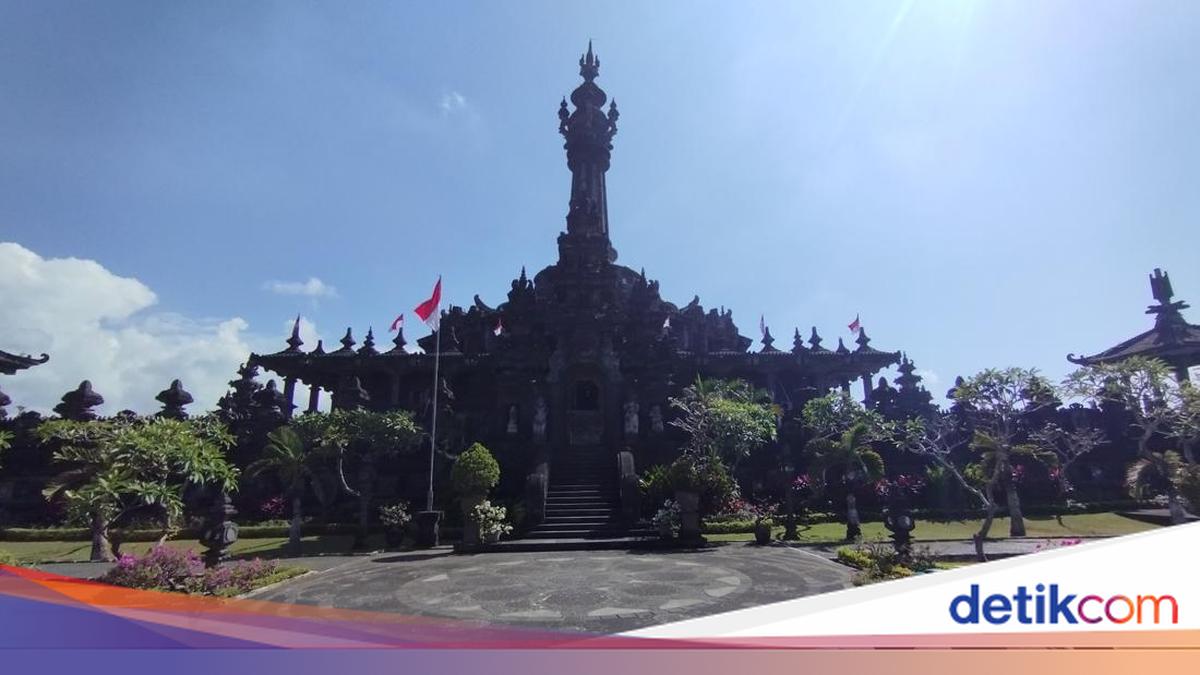
A letter sent by Lieutenant Colonel I Gusti Ngurah Rai to the Dutch is on display at the Bajra Sandhi Monument in Denpasar. The correspondence, dated 18 May 1946, contains a firm rejection of the Dutch presence in Bali. The letter is part of a collection of photographs exhibited at the monument, which chronicle the Balinese people’s struggle, from the landing of the Dutch expedition and the Puputan war in Denpasar on 14 September 1906, to the fight for independence.
Gede Nova Widiarta, Head of the Regional Technical Implementation Unit for the Monument, explained that there are 62 photographs depicting the Balinese people’s struggle against the Dutch on display. Some are original prints, while others are reproductions. The monument, officially named Monumen Perjuangan Rakyat Bali, was inaugurated by President Megawati Soekarnoputri on 14 June 2003. Its design, by Ida Bagus Gede Yadnya, a student at Udayana University, won a competition in 1981. The structure stands 45 metres tall with 17 gates and 8 pillars, symbolising the date of Indonesia’s independence, 17 August 1945. The name ‘Bajra Sandhi’ refers to its shape, which resembles a Hindu priest’s bell, known as a ‘bajra’ in Balinese.
Visitors can explore the monument’s middle floor, which houses 33 dioramas arranged in a circle. These dioramas narrate the history of Bali from prehistoric times, through the ancient and middle Balinese periods, to the independence struggle. The upper floor offers a viewing platform accessible by a spiral staircase, providing panoramic views of the surrounding Niti Mandala Square, including the Governor’s office. The square itself is a popular recreational area for Denpasar residents, hosting a weekly car-free day every Sunday.
Entry to the monument is priced at Rp 30,000 for domestic tourists, Rp 100,000 for foreign tourists, Rp 10,000 for university students, and Rp 5,000 for school students. It is open daily from 8:30 am to 5:00 pm Central Indonesia Time, but closed on public holidays. A visitor, Reva Niken Sagita, a vocational high school student, said she was able to learn about the history of the Balinese people’s struggle through the dioramas and explanations provided in the auditorium.