
Bali’s Kura-Kura Special Economic Zone Targets Chinese Investment in Technology and Industry
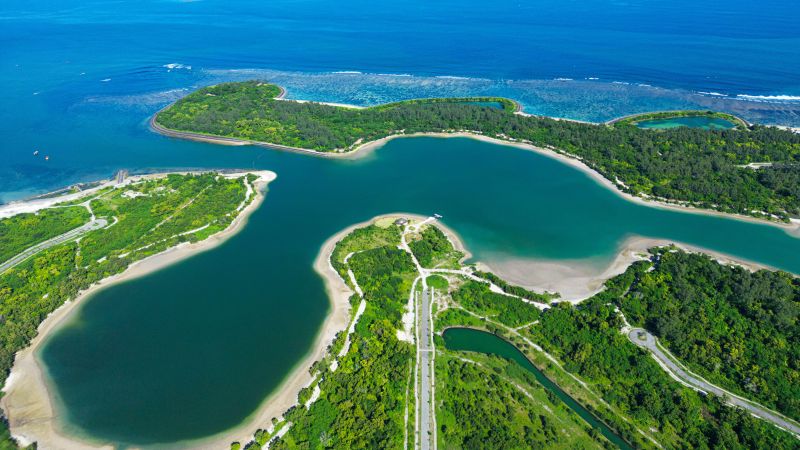
The Kura-Kura Bali Special Economic Zone (SEZ) is strengthening its role as a centre for investment and Indonesia–China industrial collaboration, focusing on future technologies such as artificial intelligence (AI), semiconductors, digital research and the digital economy. By the first half of 2026, cumulative investment in the zone had reached Rp1.8 trillion, generating 2,173 jobs.
Efforts to boost investment, industrialisation and industrial partnerships are an important part of Indonesia’s drive to accelerate economic transformation and create new sources of growth. These issues were among those discussed at the China-Southeast Asia Forum on Higher Education and Industry Cooperation 2026, held at the Kura-Kura Bali SEZ on Sunday, 4 October. The forum brought together stakeholders from Indonesia, China and Southeast Asia to promote cooperation in higher education, industry, innovation, energy and regional connectivity.
Ali Murtopo Simbolon, Deputy for Trade and Digital Economy Coordination at the Coordinating Ministry for Economic Affairs and Acting Secretary-General of the National Council for Special Economic Zones, represented the Coordinating Minister for Economic Affairs. He said the Kura-Kura Bali SEZ was a strategic platform for developing Indonesia–China cooperation in technology and industry.
The zone is intended to support the development of artificial intelligence, digital research and development, semiconductors and quantum technology, while bringing academia and industry together.
“Amid global competition and uncertainty, Indonesia offers a safe environment for academic development and industrial collaboration. The Tsinghua Southeast Asia Center (TSEA) can serve as a bridge between China, Southeast Asia and the world,” Ali said.
Ali said future cooperation should focus not only on increasing investment, but also on strengthening technology, research, human resources and national industrial capacity. Indonesia wants to ensure that investment contributes to building an industrial ecosystem that generates greater added value for the national economy.
This commitment extends beyond investment and is being channelled towards more concrete industrial cooperation through the Two Countries Twin Parks (TCTP) initiative. As a strategic Indonesia–China platform, TCTP connects Indonesia’s resources, market potential and strategic location with China’s investment, technology and industrial capacity to develop specific projects and an integrated industrial ecosystem, while creating greater added value for both countries.
The ecosystem is developing alongside continued investment activity at the Kura-Kura Bali SEZ. By the first half of 2026, cumulative investment had reached Rp1.8 trillion, with 2,173 jobs created and 131,657 visits recorded.
The Kura-Kura Bali SEZ is also being developed as part of an education, research and technology ecosystem. TSEA, based in the zone, has run programmes in physics and neuroscience and launched a Semiconductors Forum with Tsinghua University. Kura-Kura Bali is preparing to follow up with programmes in AI, digital research and development, and the digital economy.
The event was also attended by National Economic Council Chair Luhut Binsar Pandjaitan; the Secretary of the CPC Tsinghua University Committee and Chairman of the Tsinghua University Council, who is also a member of the Chinese Academy of Sciences; the Consul General of the People’s Republic of China in Denpasar; the Deputy Director-General of the Guizhou Provincial Department of Education; and the Deputy Secretary-General of the Secretariat of the Organising Committee of China–ASEAN Education Cooperation Week.
Source: jawawa.id (https://jawawa.id/newsitem/balis-kura-kura-special-economic-zone-targets-chinese-investment-in-technology-and-industry-1791823818)
Originally published by indonesiahousing.id (https://indonesiahousing.id/kek-kura-kura-bali-bidik-investasi-china-di-sektor-teknologi-dan-industri/), translated from Indonesian