
Bali's First National Waste-to-Energy Project Begins, Sparks Circular Economy Debate
The government has begun construction of the nation’s first Waste-to-Energy (WtE) facility in Bali as part of efforts to accelerate waste crisis management whilst generating energy. However, environmental organisations argue the project could shift national waste management policy from source reduction towards waste incineration.
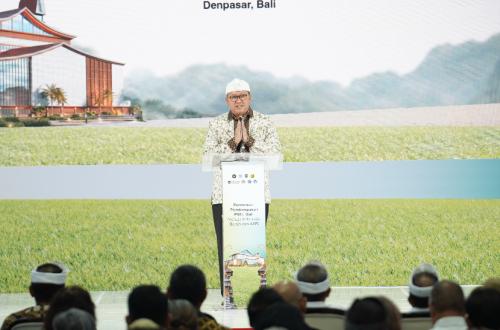
The groundbreaking took place this week in the Pedungan area of South Denpasar. Bali is the first of three WtE projects to commence construction, alongside Bekasi City and Bogor City, as part of the National Strategic Projects under Presidential Regulation Number 109 of 2025. All projects are coordinated by PT Daya Energi Bersih Nusantara (Denera), a company established by Danantara Indonesia.
Chief Executive Officer of PT Daya Energi Bersih Nusantara, Fadli Rahman, stated that the Bali development marks the start of implementing a modern waste management system prepared through investment stages, technology selection, and cooperation with local governments. “The construction of the WtE facility in Bali is not merely about building a power plant, but rather a more integrated waste management system from upstream to downstream. We want to ensure that residual waste, which has been an environmental burden, can be processed responsibly and provide tangible benefits through the provision of cleaner and more sustainable energy,” Fadli said in a statement on Friday.
The project, valued at approximately Rp 3 trillion, is designed with a capacity to process 1,500 tonnes of waste per day, equivalent to around 500 truckloads. The facility is targeted to begin phased operations in the first half of 2028. According to Denera, Bali was chosen as the first location because it faces serious pressure from increasing waste generation and limited landfill capacity. The company estimates the facility will be able to process around 44 percent of Bali’s total waste.
The Bali WtE facility will utilise moving grate incinerator technology, which the company claims is used in the majority of waste-to-energy facilities worldwide. The technology is said to meet European Union emission standards, with combustion occurring at temperatures above 850 degrees Celsius. Heat from the combustion will be used to generate electricity, whilst residues such as bottom ash are planned to be utilised as construction materials after processing.
Denera stated the facility is projected to generate electricity equivalent to the needs of approximately 100,000 households annually and create up to 1,200 green jobs, prioritising local workers. However, the plan has drawn scrutiny from the Aliansi Zero Waste Indonesia (AZWI). The civil society coalition argues that the construction of WtE facilities could contradict the spirit of Law Number 18 of 2008 on Waste Management, which prioritises waste reduction at the source.