
Bali’s Economy Grew in Third Quarter Amid Tourism Challenges, BPS Says
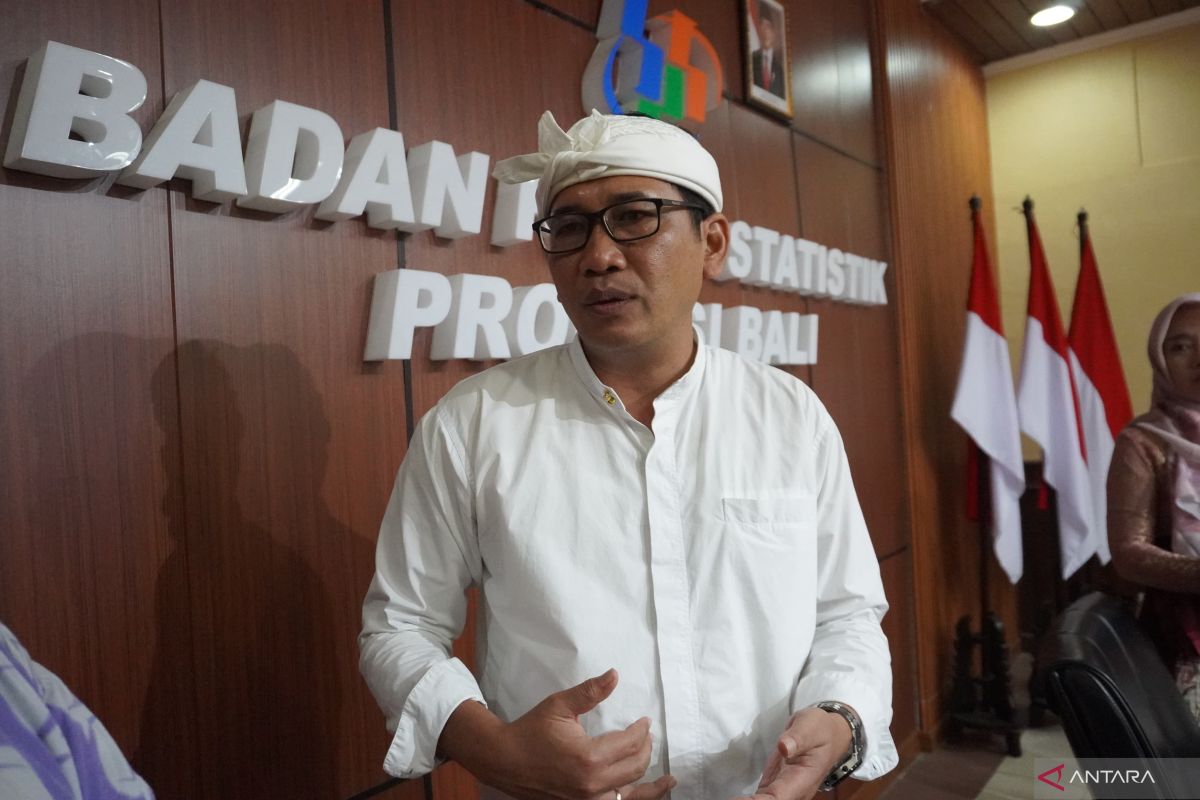
Denpasar (ANTARA) – Statistics Indonesia (BPS) in Bali recorded year-on-year economic growth of 5.85 per cent in the third quarter of 2026, despite various challenges facing tourism.
“Growth of 5.85 per cent is certainly something to appreciate, given that the challenges in 2026 have been somewhat greater than in 2025, particularly for tourism,” BPS Bali head Agus Gede Hendrayana Hermawan said in Denpasar on Thursday.
Agus Gede said global developments, including conflict-related concerns and flight cancellations, had slowed growth in the accommodation and food and beverage sector from 10.94 per cent in the third quarter of 2025 to 6.23 per cent in the third quarter of 2026.
The slowdown in this major business sector held back Bali’s economic growth in the third quarter of 2026, which eased slightly from 5.88 per cent in the same period a year earlier.
“Why did growth slow? Because one of the business sectors making the largest contribution, accommodation and food and beverage, recorded slower growth,” Agus Gede said.
He stressed that the slowdown was not due to a low season in tourism, as the third quarter is a peak period for visitor arrivals. Rather, the increase in international visitors was not as strong as in the previous year.
Although international visitor arrivals rose by only 0.94 per cent and overseas exports slowed to 3.39 per cent, the quality of tourist spending improved, as reflected in higher occupancy at five-star hotels.
“The increase in occupancy at five-star hotels reflects that, although visitor numbers rose by only 0.94 per cent, international tourists may have spent more while in Bali than before because they chose accommodation that, so to speak, is more expensive,” he said.
BPS Bali also said domestic tourist trips, which rose by 4 per cent, supported economic growth, alongside household consumption growth of 5.43 per cent.
“This relatively high growth was particularly evident in spending on housing, accommodation and hotels, rather than primary expenditure on food,” Agus Gede said.
Tourism pressures also affected the transport and storage sector, which recorded the lowest growth, at 1.20 per cent, owing to weaker air transport performance.
In cumulative terms, Bali’s economy grew by 5.74 per cent through the third quarter of 2026. Gross regional domestic product (GRDP) at constant 2010 prices reached Rp47.53 trillion, while GRDP at current prices stood at Rp90.41 trillion. The economy also grew by 0.42 per cent compared with the second quarter (April, May and June) of 2026.
BPS Bali’s year-on-year figures show that the economy continued to accelerate across the first three quarters of 2026, growing by 5.58 per cent in the first quarter and 5.78 per cent in the second.
Of the 17 business sectors, nine accelerated and eight slowed. The fastest growth was recorded in electricity and gas supply, at 11.03 per cent, followed by financial services at 9.00 per cent and construction at 8.91 per cent.
Electricity-sector growth was driven by increased consumption, which rose by 16.79 per cent among industrial users, 12.54 per cent in the residential segment, and between 10 and 17 per cent in the business segment.
Construction was supported by the realisation of government and private-sector projects and a 3 per cent increase in cement sales. Agriculture grew by 2.55 per cent, driven by production of maize, livestock and fisheries, despite dry-season pressure on rice crops.
On the expenditure side, household consumption remained the largest contributor to GRDP, accounting for 51.44 per cent.
Gross fixed capital formation grew by 8.74 per cent, supported by non-building investment and increases in capital spending of 110 per cent in the state budget (APBN) and 35 per cent in the regional budget (APBD).
Agus Gede also said government consumption surged by 6.33 per cent, driven by an 18.83 per cent increase in state-budget employee expenditure, including the recruitment of government contract employees (P3K), and an 11.96 per cent rise in regional-budget spending on goods and services.
Purchasing power in Bali was also considered to have remained resilient, according to the Real Retail Sales Index and Consumer Confidence Index. This was supported by bank lending growth of 7.5 per cent and a trade surplus of US$97.62 million.
Source: jawawa.id (https://jawawa.id/newsitem/balis-economy-grew-in-third-quarter-amid-tourism-challenges-bps-says-1793886722)
Originally published by Antara (Indonesian) (https://www.antaranews.com/berita/5834831/bps-ekonomi-bali-triwulan-iii-tumbuh-di-tengah-tantangan-pariwisata), translated from Indonesian