
Balikpapan Health Office Urges Water Refill Depots to Conduct Regular Laboratory Testing
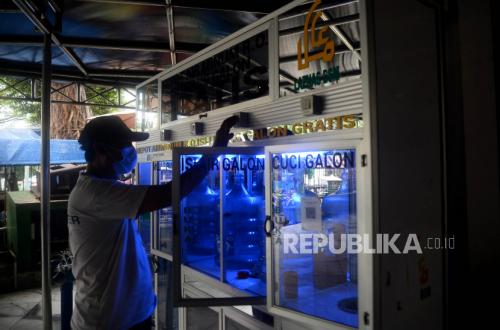
The Balikpapan City Health Office (Dinkes) has urged entrepreneurs operating water refill depots to conduct regular laboratory examinations. This measure is necessary to ensure that the water consumed by the public remains safe and meets health standards.
“I urge water refill depot entrepreneurs to take responsibility for conducting routine laboratory tests on their production results. Furthermore, the water sources used must also be inspected,” said the Head of the Balikpapan City Health Office, Alwiati, in Balikpapan, East Kalimantan, on Monday.
According to Alwiati, possessing a hygiene and sanitation certificate is the initial step for entrepreneurs running a water refill business. However, this certificate does not mean that water quality monitoring can cease once the business begins operations.
Conditions regarding production sites, equipment, water sources, and processing methods can change over time. Such changes have the potential to affect the hygiene and quality of the water subsequently consumed by the public.
Therefore, periodic inspections are a vital component in ensuring that the standards met at the start of operations are maintained. Supervision is also required so that potential issues can be identified before they have a broader impact on consumers.
The Balikpend Health Office has scheduled integrated supervision and direct field reviews to support this oversight. These activities are also intended to assist entrepreneurs in maintaining the established feasibility standards.
Field supervision does not only focus on the final product, which is the drinking water. The condition of production facilities and the processing methods are also areas that require attention, as both determine the quality of the product that reaches consumers.
Consequently, the responsibility to maintain water quality does not end when a depot obtains its permit or certificate. Entrepreneurs are required to ensure that cleanliness standards and processing procedures are consistently implemented every day.
In addition to inspecting production sites, water quality testing is recommended to be conducted at least once every six months. These periodic checks serve as a way to determine whether the water quality still complies with health requirements.
During the inspection process, entrepreneurs can submit an application to the Balikpapan Health Office. Upon receiving the application, health officers will visit the location to collect water samples directly.
“Inspections are conducted every six months. Entrepreneurs can write to the Health Office to request sample collection,” said Alwiati.
She emphasised that water samples must not be brought by the entrepreneurs themselves to the testing facility. Collection must be performed by officers to ensure that the samples truly originate from the production process and the specific depot being inspected.
“Samples must not be brought by the owners themselves. We go directly to the location to collect samples so they can be properly tested,” she added.
This direct collection mechanism is essential for maintaining the objectivity of the inspection. In this way, laboratory results are expected to accurately reflect the quality of the water produced and sold to the public.
The inspection also serves as an evaluation instrument for business owners. If the results meet the requirements, entrepreneurs gain certainty that their production process is still operating according to health standards.
Conversely, if parameters are found that do not meet the regulations, the inspection results will serve as a basis for making improvements. Thus, laboratory testing is not merely an administrative obligation but a part of a quality control system.
If laboratory inspections reveal anything that does not meet the standards, the Health Office will request that entrepreneurs carry out technical repairs first. Improvements may be directed towards facilities or processing systems deemed in need of renovation.
During the process of repairing facilities or filtration systems, production activities will be temporarily suspended. Production may only resume once the sample test results are once again declared to meet health requirements.
This temporary suspension policy is intended to prevent water that does not meet standards from circulating among the public. This corrective measure also provides entrepreneurs with the opportunity to fix the root of the problem before returning to serve consumers.
The Health Office considers the supervision of water depots as a fundamental part of public health protection. As water is a daily necessity, its quality and cleanliness must be consistently maintained.
Source: jawawa.id (https://jawawa.id/newsitem/balikpapan-health-office-urges-water-refill-depots-to-conduct-regular-laboratory-testing-1791215604)
Originally published by Republika (https://republika.co.id/berita//tmfv9u451/dinkes-balikpapan-minta-depot-air-rutin-uji-laboratorium), translated from Indonesian