
Balikpapan Becomes a Pillar of National Energy Security
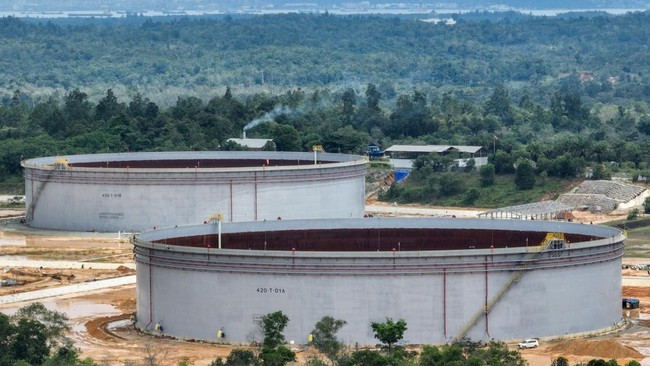
Indonesia continues to import approximately 60% of its gasoline needs and 70% of petrochemical products annually, causing significant foreign exchange outflows to purchase fuels that could otherwise be produced domestically. However, positive developments emerged on 12 January 2026, when President Prabowo Subianto inaugurated the Balikpapan RDMP project. As Indonesia’s largest and most modern oil refinery, this project represents an investment of approximately US$7.4 billion.
This National Strategic Project increases refinery processing capacity from 26able 60,000 barrels per day to 360,000 barrels per day, while simultaneously upgrading fuel quality from Euro II to the more environmentally friendly Euro V standard. The last refinery inauguration took place in 1994, meaning that after more than three decades, Indonesia finally possesses a modern new refinery. The Balikpapan refinery is expected to reduce fuel imports by approximately 10%-15% and significantly save the nation’s foreign exchange reserves.
Three Proven Frameworks
Refinery development can be achieved through revamping existing refineries via the Refinery Development Master Plan (RDMP) or through Grass Root Refinery (GRR) construction. The development of refineries and petrochemical plants is a vital strategic step toward achieving national energy independence. The Balikpapan RDMP proves that, technically, large-scale refinery upgrades or new constructions are highly feasible in Indonesia. Pertamina possesses the necessary experience in construction, operation, and maintenance, and the required technology is already globally integrated.
From a commercial perspective, the project shows encouraging results. Although refinery business margins are thin, a capacity of 360,000 barrels per day—equivalent to a quarter of national demand—will reduce import dependency. This demonstrates that the refinery business can deliver significant economic impact if managed effectively. Politically, refinery development is a strategic move receiving broad support. As a National Strategic Project, President Prabowo stated that refinery modernisation will save foreign exchange, reduce dependence on fuel imports, and bolster national energy security.
Valuable Lessons from Balikpapan
The success of the Balikpapan RDMP provides several key lessons. First, sustained political commitment is decisive; this project spanned nearly a decade, and without consistent support across different government periods, such long-term projects would never reach completion. Second, well-structured funding from the outset is essential. The US$7.4 billion investment required a mature financing scheme, including support from strategic partners, international contractors, and global banking institutions. Third, integration with supporting infrastructure is crucial. This project includes the construction of 78 kilometres of gas pipelines and storage terminals; without such integration, even the largest refinery cannot operate optimally.
This success demonstrates that Indonesia is capable of managing large-scale strategic projects to international standards through collaboration between the central government, regional governments, Pertamina, contractors, strategic partners, and the community.
Maintaining Momentum
Developing the Balikpapan RDMP is not enough, given that the 60% dependence on gasoline imports remains a major challenge. Subsequent projects will determine whether Indonesia can truly achieve energy independence. The momentum from Balikpapan must be maintained, as energy crises can arise at any time. Indonesia must be prepared with its own domestic energy resources.