
Bali Transportation Agency proposes Rp58 billion budget for Trans Metro Dewata bus in 2027
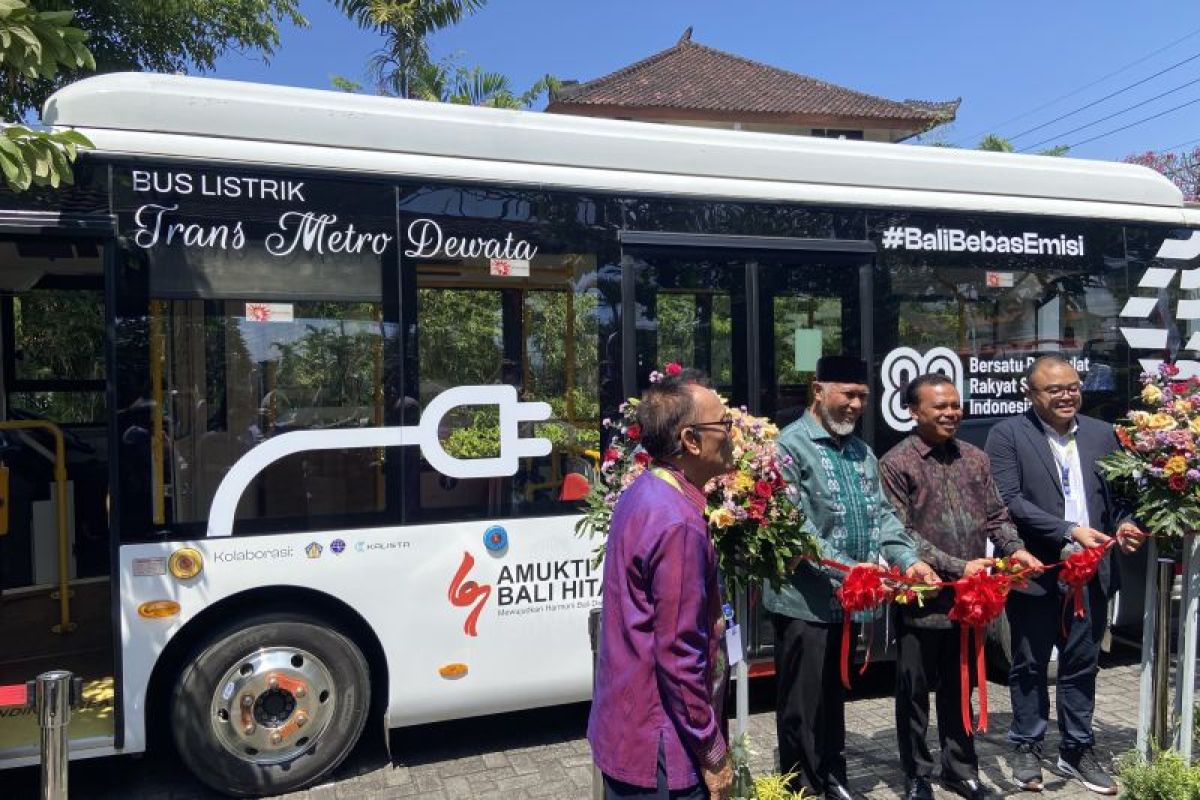
The Bali Provincial Transportation Agency (Dishub) has proposed a budget of Rp58 billion for the operation of Trans Metro Dewata (TMD) buses in 2027, an increase from Rp56 billion in 2026.
Head of the Bali Provincial Transportation Agency I Kadek Mudarta, confirmed in Denpasar on Sunday, said the figure has risen following the continued growth in user numbers and the need to improve service quality.
“From April to May, July and August, passenger numbers have improved, especially from July and through August, when they have exceeded 5,000 passengers per day,” said Kadek Mudarta.
He explained that the development of TMD bus passenger numbers from January to mid-August 2026 generally shows a better trend compared with the same period the previous year.
The transport service recorded a significant recovery after experiencing a decline in passenger numbers in February and March due to high rainfall.
The increase in passenger numbers is evident not only from the daily accumulated total but also from fleet productivity.
Operational efficiency indicators are reflected in the growing volume of passengers carried by each operating bus unit every day.
In addition to quantitative indicators, the Bali Transportation Agency has also noted positive qualitative changes.
Public response and appreciation for the presence and quality of TMD bus services are considered to be improving, as seen through various media channels and online information sources.
Although the Bali Transportation Agency has not yet conducted a specific survey on demographic data or passenger composition by profession and travel purpose, the pattern of passenger movement peaking during morning and evening rush hours indicates that TMD buses have become a primary mobility option for workers.
“If we look at the pattern of passenger numbers, which are busy in the morning and evening, it represents the characteristics of a commuter service, so it is a service for working people,” said Kadek Mudarta.
In addition to local passengers, foreign tourists have also been recorded using this mode of transport, especially on strategic routes connecting crucial points such as I Gusti Ngurah Rai Airport and the Ubud tourism area.
“Foreign tourists mostly take it to the airport or certain corridors such as to Ubud, but the numbers are not very large,” he said.
In line with the improved service performance and user volume, the Bali Transportation Agency has proposed an operational budget allocation for TMD buses for the 2027 fiscal year of Rp58 billion or more.
The budget adjustment is partly intended to anticipate escalating operational costs and rising labour costs, including adjustments to the Provincial Minimum Wage (UMP), which fluctuates annually.
“For next year, Rp58 billion is for TMD alone; this year it is approximately Rp56 billion,” he said.
Regarding the financing scheme, the operational sustainability of TMD buses will continue to be directed through a collaboration pattern between the Bali Provincial Government and regencies/cities.
This is because the mass transport service routes cross four main agglomeration areas in Bali, namely Denpasar, Badung, Gianyar and Tabanan (Sarbagita).
In terms of fleet capacity, the Bali Transportation Agency has confirmed that the number of TMD buses prepared to support operations in 2027 is 75 units.
A total of 69 units are projected to operate on regular daily routes, while the remainder are kept as reserve units.
Regarding plans for the procurement and expansion of electric bus fleets, Mudarta said that the addition of electric-based units will indeed be realised.
However, their operation falls under the Sarbagita Bus scheme and brand, not part of the TMD Bus programme.
The difference in operational schemes is influenced by the mechanism of regional asset ownership, whereby the Trans Metro Dewata fleet is managed under a buy-the-service system with vehicle assets owned by the winning tender operator, while the Sarbagita electric bus fleet is based on asset ownership by the regional government.