
Bali to Accelerate Electric Vehicle Adoption After Receiving South Korean Bus Donation
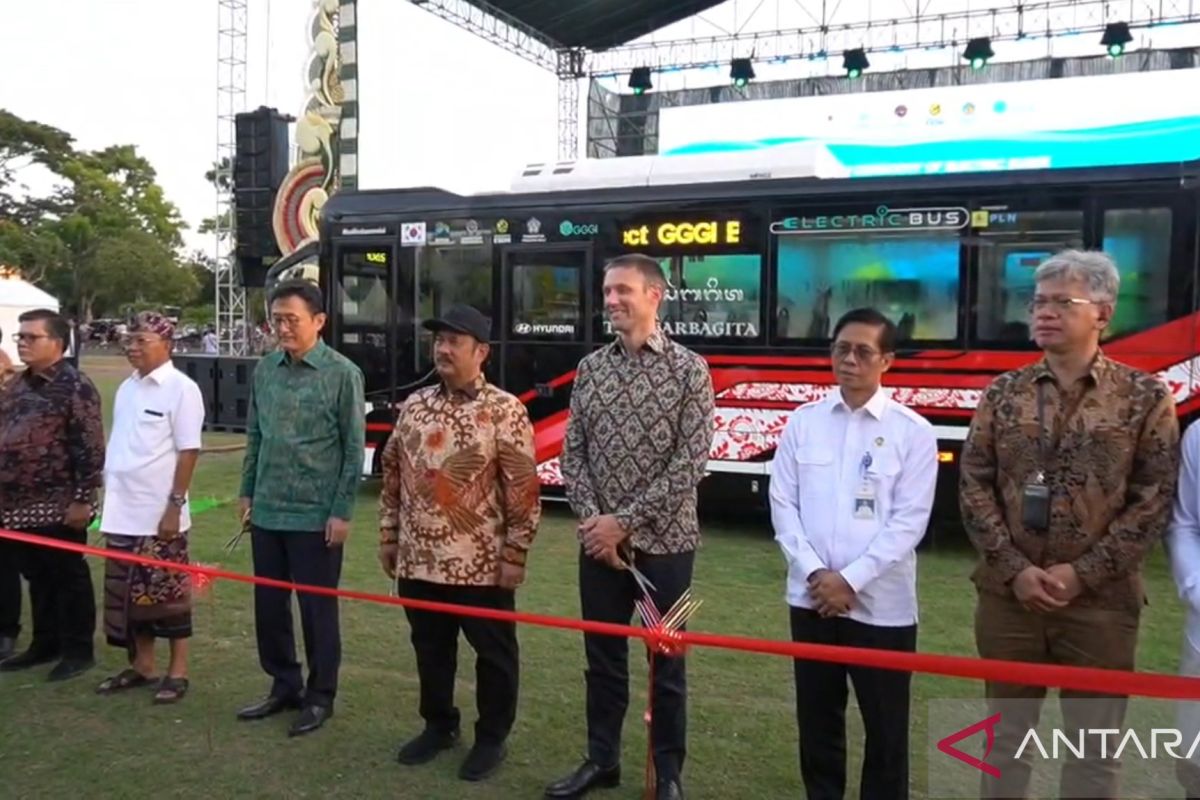
Denpasar (ANTARA) – The Bali Provincial Government is accelerating the transition to battery-powered electric vehicles after receiving 11 electric buses donated by the Republic of Korea through the Ministry of National Development Planning/National Development Planning Agency (Bappenas).
“Therefore, we will step up and accelerate the policy on the use of battery-powered electric vehicles in Bali,” Bali Governor Wayan Koster said at the handover ceremony in Denpasar on Thursday.
Koster thanked the Minister of National Development Planning and the South Korean ambassador for fulfilling their commitment to co-operate on providing environmentally friendly transport.
He said the donation followed a visit to Bali by South Korea’s Deputy Minister of Land, Infrastructure and Transport, which was followed by Koster’s return visit to South Korea in December 2025.
The co-operation resulted in the Republic of Korea donating 11 electric buses to the Indonesian Government, specifically for the Bali Provincial Government.
The donated buses were specially designed in a combination of black, red and white, the colours associated with Bali’s Tridatu tradition.
The buses were formally handed over and launched on Thursday, marking a step towards accelerating clean public transport on the Island of the Gods.
Koster said regulations to accelerate environmentally friendly transport in Bali were already set out in Bali Governor Regulation No. 48/2019 on the Use of Battery-Powered Electric Vehicles.
The provincial government is now again promoting electric vehicles, as studies have found that more than 90 per cent of air pollution in Bali comes from power plants and fossil-fuel vehicles.
Switching to electric vehicles and reducing emissions will be crucial to protecting air quality and directly improving public health, he said.
With the launch of the electric buses, the provincial government is urging all members of the public to begin switching to battery-powered electric vehicles.
Koster shared his personal experience of travelling the Denpasar–Singaraja route there and back, which cost up to Rp500,000 in fuel. After switching to an electric car, charging the battery for the same journey cost just Rp140,000.
As well as being much more cost-efficient, electric vehicles produce no exhaust emissions, make no noise pollution and do not require engine oil changes.
Koster said electric car sales in Bali were continuing to rise, although uptake of electric motorcycles still needed to be boosted.
The push to accelerate electric vehicle adoption is supported by upstream energy policy under Bali Governor Regulation No. 45/2019 on Clean Energy in Bali.
The clean-energy regulation prohibits the construction of new power plants using fossil fuels or coal. The Bali Provincial Government is encouraging state-owned electricity company PT PLN (Persero) to switch power generation to gas and expand the use of solar power plants.
Source: jawawa.id (https://jawawa.id/newsitem/bali-to-accelerate-electric-vehicle-adoption-after-receiving-south-korean-bus-donation-1792688037)
Originally published by Antara (Indonesian) (https://www.antaranews.com/berita/5806231/bali-percepat-gunakan-kendaraan-listrik-usai-terima-hibah-bus-korea), translated from Indonesian