
Bali Regional Council Seeks Low-Cost Financing Schemes for Prospective Migrant Workers
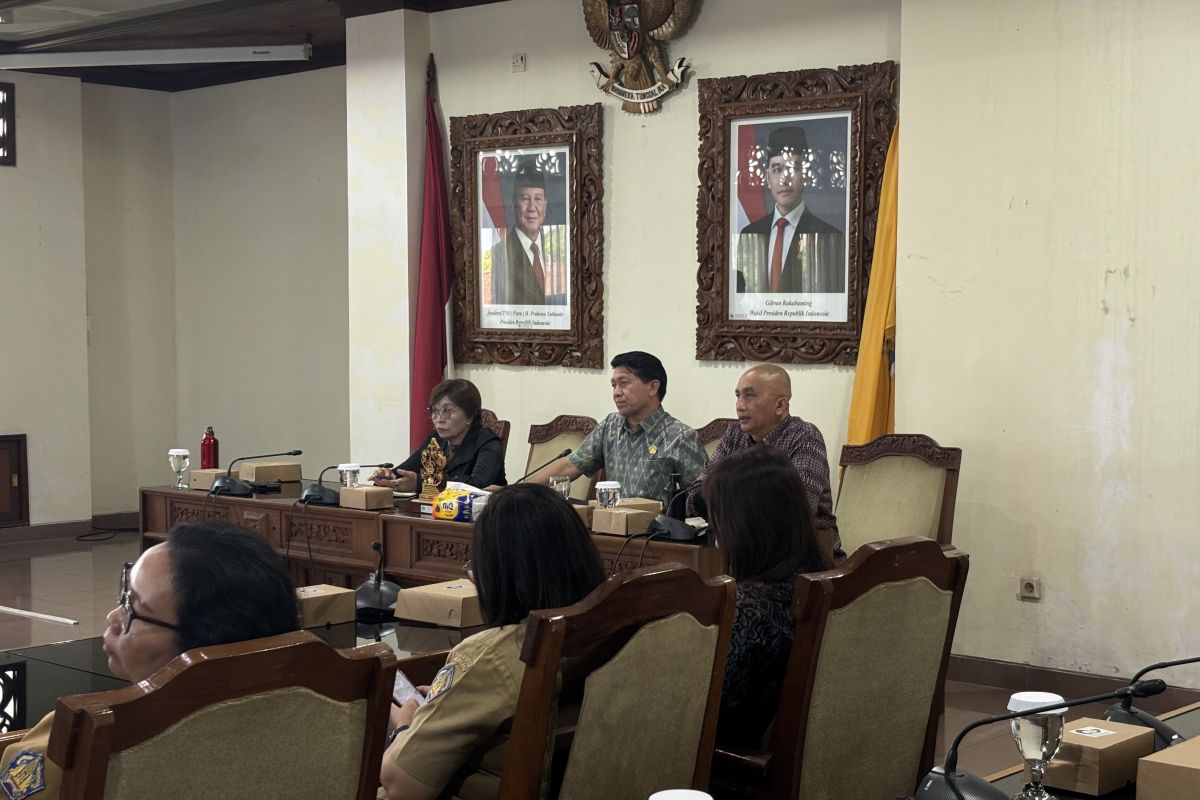
Denpasar (ANTARA) - The Bali Regional Legislative Council (DPRD) is encouraging the provincial government to prepare access to low-cost financing for prospective Indonesian migrant workers (CPMI) from underprivileged families who are hindered by the costs of working abroad.
The Chairman of Commission IV of the Bali DPRD, I Nyoman Suwirta, stated in Denpasar on Monday that the local government could facilitate access to financing through financial institutions, cooperatives, or village credit institutions (LPD).
According to him, a financing scheme is necessary because there are young people with opportunities to work abroad to improve their family’s economy, but they are constrained by departure costs. Suwirta proposed that regional financial institutions be involved so that prospective migrant workers can obtain financing with affordable interest rates.
Furthermore, he suggested that Indonesian migrant worker placement companies could be involved so that instalment payments could be made through salary deductions once the workers are employed abroad. “Yes, they should be invited to cooperate so that their salaries can be deducted and transferred directly to the lending bank,” he said.
Suwirting stated that the local government needs to find a scheme that complies with regulations so that financial limitations do not prevent underprivileged communities from accessing opportunities to work overseas.
Responding to the proposal, the Head of the Bali Department of Manpower and Energy Resources (Disnaker ESDM), Ida Bagus Setiawan, said the central government has provided the People’s Business Credit (KUR) for Indonesian Migrant Worker Placement as one of the financing alternatives.
He noted that Disnaker ESDM Bali has discussed the utilisation of this scheme with the management of BPD Bali as well as district and city governments. “The central government has released the KUR programme for prospective migrant workers, and we have actually been discussing this with the management of BPD Bali and with our colleagues in the regencies and cities,” he said.
However, according to Setiawan, the implementation of this financing scheme still faces issues regarding guarantees and the mitigation of default risks. He assessed that the involvement of customary (adat) elements in Bali could serve as an alternative to strengthen the financing guarantee scheme. “If it can be tied to customary law, involving the adat could provide a stronger guarantee,” he remarked.
Nationally, the KUR for PMI Placement can be used by prospective migrant workers to meet the financing needs of the placement process. Based on the 2026 KUR implementation guidelines, this financing can be provided with a maximum ceiling of IDR 100 million per agreement, with the loan value determined based on the analysis of the KUR distributor.
Financing may cover document processing, medical and psychological examinations, training, competency certification, and other costs stipulated by ministries or authorised agencies. The Ministry for the Protection of Indonesian Migrant Workers also stated in July 2026 that financing remains one of the obstacles for some prospective migrant workers who possess the competence and opportunity to work abroad but are hindered by departure costs.
In addition to the PMI KUR, the government is exploring the expansion of affordable financing through cooperatives. In the 2027 programme draft, Disnaker ESDM Bali has allocated IDR 75.3 million for the Manpower Placement Programme.
The Bali DPRD is also pushing for increased funding for the tripartite forum to prevent industrial relations disputes. Disnaker ESDM Bali noted that the Industrial Relations Programme for 2027 is designed to receive a budget of approximately IDR 5.02 billion, which includes facilitating social security for 20,000 religious leaders and resolving nine industrial relations cases.