
Bali Net Zero Emissions Coalition seeks local innovations for climate solutions
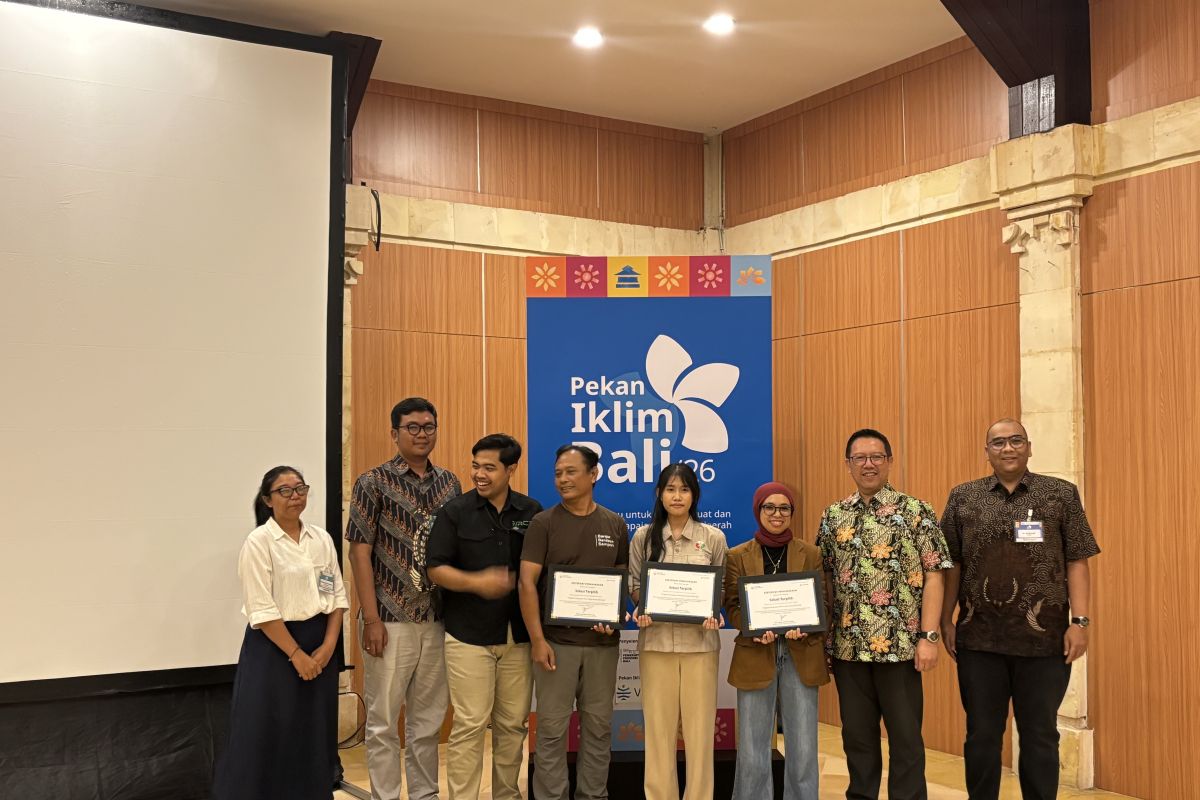
Denpasar (ANTARA) – The Bali Net Zero Emissions Coalition held a grassroots climate solutions pitch event at Bali Climate Week 2026 to expand the adoption of environmentally friendly innovations in villages and banjar (customary neighbourhood communities).
“For this pitch day, we invited local NGOs, cooperatives, villages and customary villages in Bali that already have climate solutions and want to expand or replicate them. We are providing catalytic funding,” said Ni Putu Sekar Trisnaning Laksemi, head of the coalition’s secretariat, in Denpasar on Wednesday.
She said the programme was a concrete expression of support for Bali’s target of achieving net-zero emissions by 2045, following the successful preparation of strategic planning documents at community level.
Of the 16 innovation proposals submitted to Bali Climate Week, a rigorous selection process—including administrative screening, proposal assessment and technical evaluation—narrowed the field to five finalists.
The judging panel also included external judges from philanthropic organisation Viriya ENB and private banks, bringing a range of perspectives on sustainability programmes.
The coalition is still finalising the funding arrangements for the selected innovations with participants. Funding will come from the Bali Net Zero Emissions Coalition programme and Viriya ENB.
Sekar said the best innovations were chosen in part for their feasibility, with projects expected to be deliverable within the limited eight-month mentoring period.
The coalition also emphasised the importance of developing solutions with active community participation and ensuring that the models could be replicated in other areas.
The Bali Climate Week 2026 pitch day featured five climate innovation finalists competing for three top places.
The first finalist presented a sustainable cocoa-processing solution using solar thermal drying technology and IoT sensors to shorten the time needed to dry cocoa beans.
The second proposed integrating waste data and governance, and bringing stakeholders together to coordinate collection-point locations and regulations on waste sorting at source.
The third put forward improved waste governance and digitisation through a banjar-based eco-lab.
The fourth presented a model for providing access to clean water without pumps or electricity.
The fifth outlined an integrated village organic-waste management system combining a 3R waste-processing facility (TPS3R) with agriculture.
Based on assessments by the three judges, the three winning innovations were the sustainable cocoa-processing solution, the banjar-based waste management system and the integrated organic-waste management system.