
Bali Must Not Become a Haven for Visa Abuses and Fictitious Investments
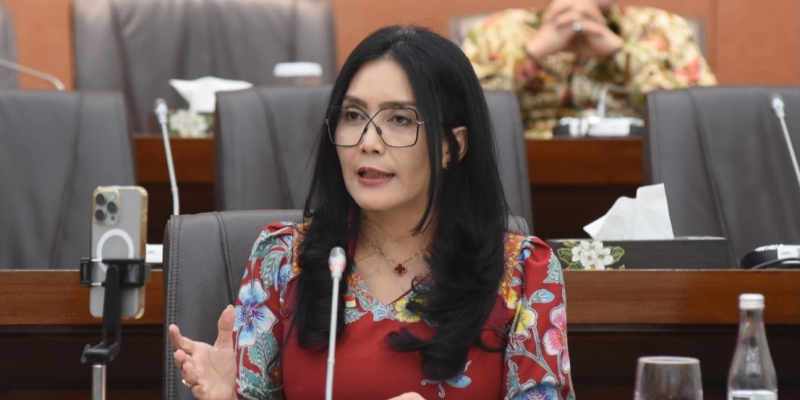
Rieke Widyawati has stated that Bali’s position as Indonesia’s frontline gateway for international human traffic means that immigration management cannot be viewed merely as a matter of visas, passports, and residence permits. “Immigration is a strategic state instrument directly related to national security, investment, employment, the protection of Indonesian citizens, state revenue, environmental sustainability, and the sovereignty of the Republic of Indonesia,” Rieke stated in a briefing on Monday, 8 June 2026.
Rieke revealed that throughout 2025, Bali received approximately 6.9 million international tourists with over 15 million international border crossings. During the same period, around 53,428 immigration residence permits and nearly 28,000 passports were issued, generating non-tax state revenue (PNBP) of approximately Rp1.5 trillion.
However, she noted that the massive influx of people and capital has not been balanced by an integrated monitoring system. She highlighted the rising prevalence of visa and residence permit abuse, the use of shell companies, fictitious investments, nominee practices, illegal foreign workers, online scams, online gambling, human trafficking, money laundering, and international narcotics trafficking.
According to R_ieke, these cases demonstrate serious vulnerabilities in national immigration governance. “When companies that only exist administratively can act as sponsors for visas, work KITAS, or investor KITAS without any real business activity, it opens the door to immigration corruption, tax evasion, money laundering, and various transnational crimes,” she asserted.
She also emphasised the importance of monitoring foreign workers, including the mandatory BPJS (social security) participation for foreign workers staying in Indonesia for more than six months. Consequently, Rieke is pushing for data integration between Immigration, the Ministry of Manpower, BPJS, the Directorate General of Taxes, BKPM (Investment Coordinating Board), and the OSS (Online Single Submission) system to prevent the misuse of residence permits and the use of fictitious sponsor companies.
Furthermore, the PDIP politician assessed that these issues indicate sub-optimal implementation of the ‘One Data Indonesia’ initiative and the Digital Government System in immigration management. “Without an integrated One Data Indonesia and Digital Government System, the state will continue to face data fragmentation, duplication of permits, weak supervision, leakage of state revenue, and delays in detecting illegal activities involving foreign nationals and transnational crime networks,” she said.
On this basis, Rieke supports the government conducting investigative audits and digital forensic audits on the issuance of visas, KITAS, KITAP, investor residence permits, work residence permits, foreign national sponsors, and even Foreign Direct Investment (PMA) companies, including their links to the OSS system, taxation, and BPJS participation.
She also urged law enforcement agencies to investigate the links between shell companies, fraudulent investments, nominee practices, residence permit abuse, illegal foreign workers, human trafficking, money laundering, online scams, online gambling, and various other transnational crime networks exploiting immigration governance loopholes. “I support the Attorney General’s Office and the KPK (Corruption Eradication Commission) in moving immediately to investigate indications of immigration corruption in Bali,” she stated.
Additionally, Rieke proposed that Bali be made a pilot project for an integrated national immigration governance system based on One Data Indonesia and the Digital Government System. This step is considered vital to strengthening the supervision of foreign nationals, protecting Indonesian citizens, preventing human trafficking and money laundering, and optimising state revenue.
She also urged the government to promptly issue a Presidential Regulation on the Integrated National Immigration Governance System as a legal foundation for data integration and coordination across ministries, agencies, local governments, and traditional village structures. “Bali must not become a haven for shell companies, fictitious investments, visa abuse, illegal foreign workers, human trafficking, money laundering, online scams, online gambling, or international narcotics networks. Bali must become a model for modern immigration governance based on One Data Indonesia, Digital Government Systems, transparency, accountability, and the protection of national sovereignty,” she concluded.