
Bali Hosts International Forum on the Future of Low-Emission Agriculture
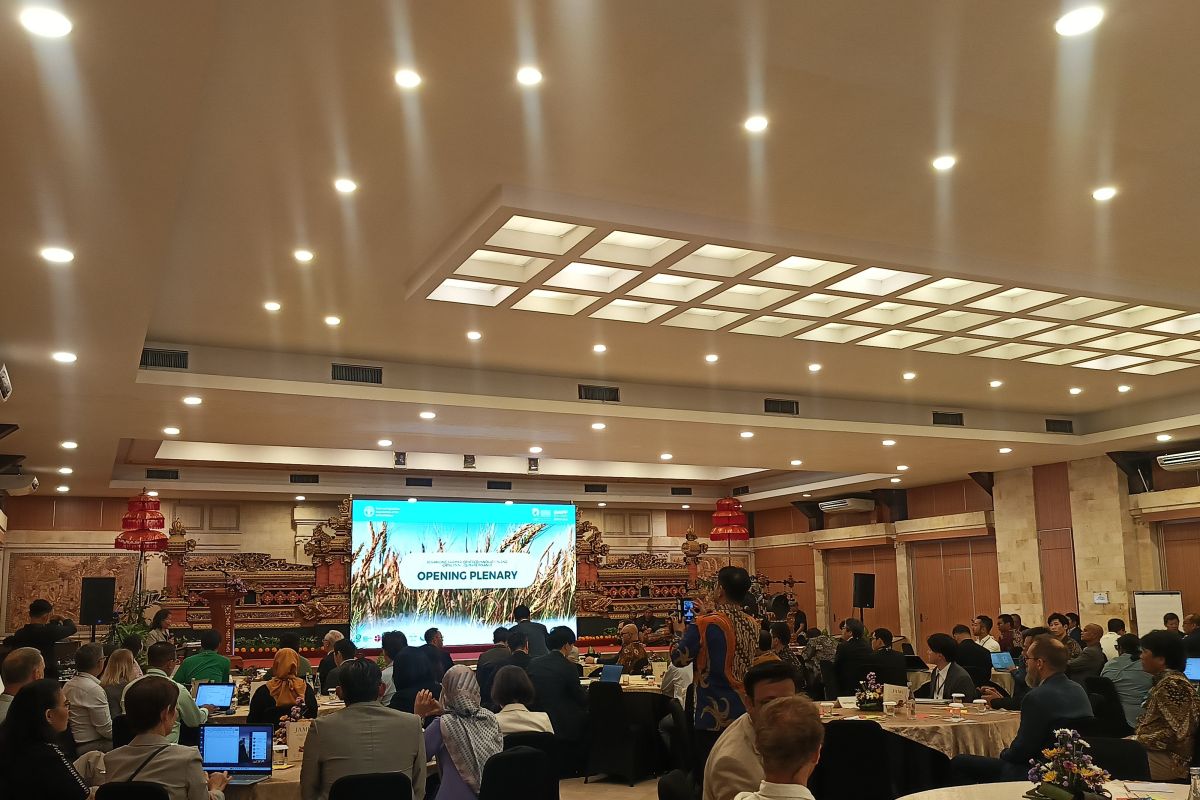
Participants exchanged knowledge regarding cutting-edge technologies for low-emission rice and livestock systems.
Denpasar (ANTARA) - Bali has once again demonstrated its role as an international host by hosting a knowledge exchange forum on advanced technologies for low-emission rice and livestock systems. Representatives from governments, research institutions, international organisations, academics, and agricultural sector players from various Asian and African nations gathered in Sanur, Denpasar, Bali, on Wednesday.
Within this international forum, participants shared expertise on state-of-the-art technologies for low-emission rice and livestock systems. The activity, which is part of the FSIP-FOLUR Second Global Dialogue on Sustainable Rice Transformation, serves as a platform for sharing experiences, innovations, and strategies to address the increasingly complex challenges of food security and climate change.
The Head of the Agricultural and Food Research Organisation at the National Research and Innovation Agency (BRIN), Puji Lestari, stated that the forum was established to bridge the gap between various global emission reduction commitments and real-world implementation at the farmer level. According to her, developing nations face similar challenges in efforts to reduce agricultural emissions, ranging from limited access to technology and human resource capacity to a lack of climate funding.
“What we are doing here is not building new structures, but connecting networks that have been working for some time, thereby creating a stronger exchange of knowledge between Asia and Africa,” she said.
Puji explained that the agriculture, forestry, and land-use sectors contribute approximately 22 per cent of global emissions. However, this sector still receives a relatively small portion of climate funding compared to the transformation needs required.
She explained that through this forum, participants discussed various low-emission agricultural technologies and practices that have been implemented in several countries. These include water management in paddy fields, increasing fertiliser use efficiency, utilising digital technology, and implementing more accurate emission monitoring systems that are easier for farmers to adopt.
In addition to technology exchange, the forum was also directed towards strengthening South-South Cooperation between Asian and African nations. This cooperation is expected to accelerate the adoption of innovation and expand access to financing sources for the agricultural sector.
Puji added that one of the primary objectives of the forum is to produce concrete, actionable steps following the event, including the harmonisation of emission monitoring systems, strengthening the link between technology and national policy, and developing investment packages that support low-emission agriculture.
As part of the series of activities, participants are also scheduled to visit Bali’s Subak system, which has been globally recognised as an example of agricultural management based on local wisdom and sustainability. Through this forum, Bali serves not only as a venue for international meetings but also as a space where various ideas and experiences from developing nations converge to build a more resilient, productive, and low-emission food system future.
Source: jawawa.id (https://jawawa.id/newsitem/bali-hosts-international-forum-on-the-future-of-low-emission-agriculture-1782316428)
Originally published by Antara (Indonesian) (https://www.antaranews.com/berita/5621823/bali-tuan-rumah-forum-internasional-masa-depan-pertanian-rendah-emisi), translated from Indonesian