
Bali Governor Targets Fossil Fuel-Free Province, Bets on Solar Power
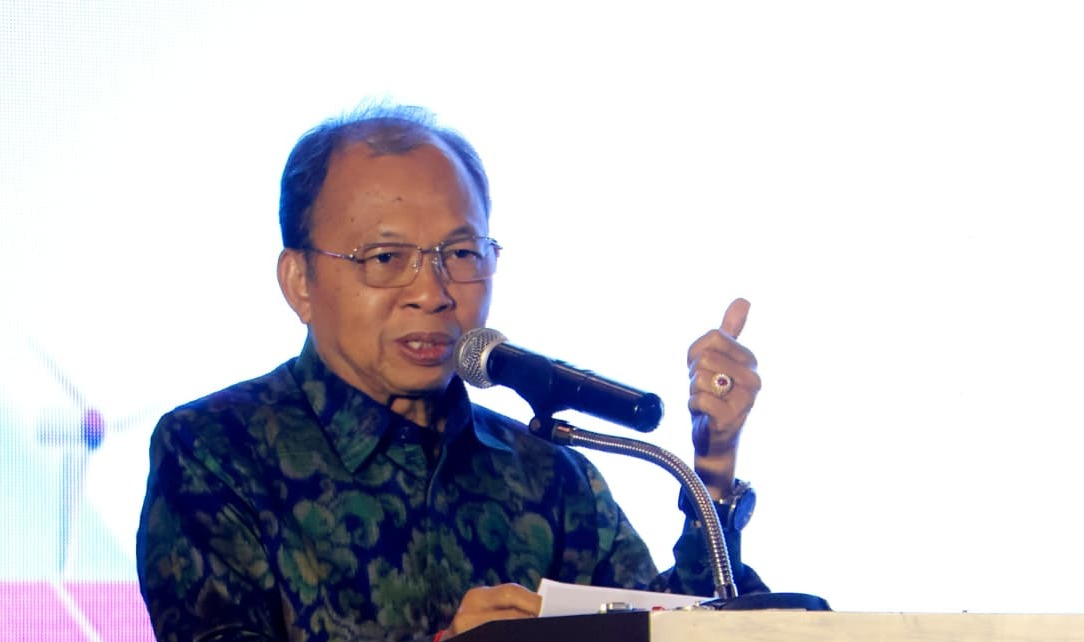
Bali Governor Wayan Koster has reaffirmed his commitment to making the island energy-independent through clean energy by ending its dependence on fossil-fuel power plants.
The use of Solar Power Plants (PLTS) is the main strategy for achieving the Net Zero Emission (NZE) target by 2045, fifteen years ahead of the national target. Koster made the remarks in his address at the opening of the Indonesia Solar Summit (ISS) 2026 at the Bali Beach Convention Centre, The Meru Bali, Sanur, Denpasar, a two-day event that began on Tuesday (14 July).
According to Koster, as a region reliant on tourism, Bali requires good environmental quality and a clean, safe and sustainable energy system. This commitment forms part of the implementation of Bali’s regional development vision, Nangun Sat Kerthi Loka Bali, through the Planned Universal Development pattern of the New Bali Era.
“To achieve this target, we are accelerating the development of new renewable energy, particularly solar energy, expanding the use of electric vehicles, developing clean-energy power plants, and opening up space for investment and collaboration in the green energy sector,” Koster said.
He asserted that Bali must achieve energy self-sufficiency by utilising energy sources available within the region. Going forward, power plants in Bali are expected to no longer use fossil fuels so that sources of air pollution can be eliminated and air quality maintained.
“PLTS is the best choice because its energy source is the sun. I encourage the use of PLTS as Bali’s future energy source,” he stated.
Koster also said the Bali Provincial Government is ready to support residents who wish to install solar power. According to him, the use of solar energy does not harm the government but rather should be facilitated as part of accelerating the clean energy transition.
“If residents want to install PLTS, I will support it. The government must facilitate this because it brings great benefits to the environment and the community,” he said.
As a form of implementation, the Bali Provincial Government will develop low-emission zones, beginning with Nusa Penida. The programme will subsequently be expanded to the Nusa Dua, Kuta, Sanur and Ubud areas.
“We will start with Nusa Penida first. We hope this programme runs well and becomes an example for other areas in Bali,” he said.
To support this policy, the Bali Provincial Government has issued a number of regulations, including Provincial Regulation Number 9 of 2020 on the Regional General Energy Plan, Bali Governor’s Regulation Number 45 of 2019 on Clean Energy Bali, and Bali Governor’s Circular Letter Number 5 of 2022 on the Use of Rooftop Solar Power Plants in Bali Province.
Koster expressed hope that the Indonesia Solar Summit 2026 would produce not only discussions but also strategic partnerships, concrete investment and policy recommendations capable of accelerating the national target of developing 100 gigawatts of solar energy.
Meanwhile, Fabby Tumiwa, CEO of the Institute for Essential Services Reform (IESR), said the Indonesia Solar Summit is an annual national forum organised by IESR together with government ministries and agencies to accelerate Indonesia’s clean energy transition.
ISS 2026 is being held from 14 to 16 July 2026 at The Meru Sanur, Bali, focusing on accelerating the 100 GW solar development target, reducing the use of diesel-fuelled power plants, financing strategies and strengthening the national solar energy industry ecosystem.
Fabby revealed that since its first edition in 2022, the ISS has always been held in Jakarta. 2026 marks the first time the forum is taking place outside the capital, with Bali chosen for its strong commitment to clean energy development.
“Solar energy is no longer merely an idea but has become a national development agenda to achieve energy independence. Our challenge now is to turn Indonesia’s enormous potential into real investment and accelerate the realisation of a green economy,” he concluded.