
Bali Governor Proposes Special Infrastructure Funding Scheme to Central Government
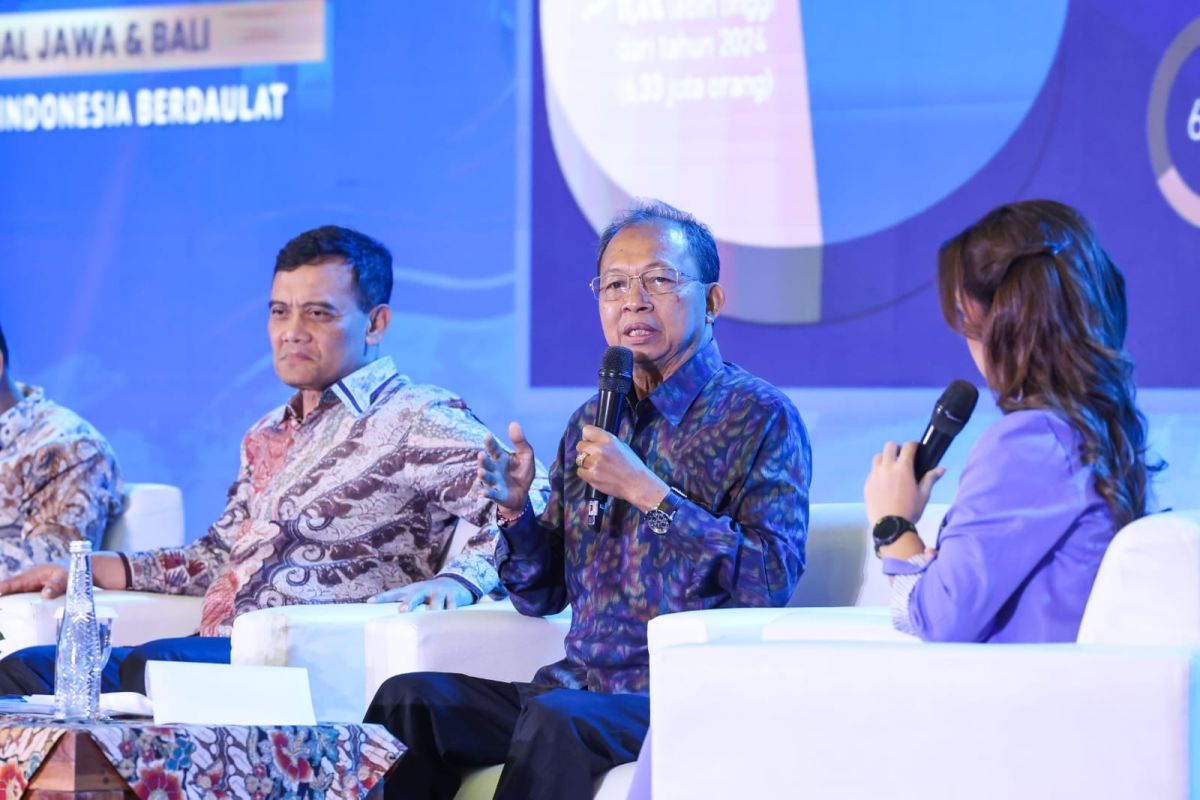
Denpasar (ANTARA) - Bali Governor Wayan Koster has proposed that the central government establish a dedicated funding scheme for infrastructure development on the island.
“Bali is a small island, but its contribution to Indonesia is enormous. However, this is not matched by development support for the region, so a separate scheme is needed,” Koster said while speaking at the 2026 Regional Economic Acceleration Forum for Java and Bali.
In a statement received in Denpasar on Wednesday, Koster said infrastructure support was urgently needed because tourist destinations stretching from the western to the eastern end of Bali were not all served by adequate transport access.
The Bali provincial government has drawn up infrastructure concepts and plans, but limited fiscal capacity, compounded by reduced central government transfers, makes it difficult to complete large-scale projects using only the regional budget (APBD).
“With regional finances unable to meet the need, especially as transfer funds have now been reduced, I ask the Deputy Home Affairs Minister to ensure Bali’s development receives a separate funding scheme. Otherwise, Bali’s tourism industry will fall behind other countries,” he said.
At the forum, Koster explained that Bali’s economic structure remained heavily dependent on tourism and related sectors, which account for around 66 per cent of the economy.
International arrivals to Bali by air reached 7.05 million in 2025, a record, while domestic tourist visits totalled 9.3 million.
The combined 16.35 million visits were nearly four times Bali’s population of 4.4 million.
Bali accounted for around 44 per cent of Indonesia’s total 15.9 million international tourist arrivals.
With average spending by foreign tourists of US$1,522 per visit and an assumed exchange rate of Rp16,500 to the dollar, tourism in Bali was estimated to have generated Rp176 trillion in foreign exchange.
Alongside a dedicated infrastructure funding scheme, Koster stressed the need to improve the tourism ecosystem as a whole through cultural preservation, better environmental quality and the use of clean energy, in order to compete with neighbouring countries such as Malaysia, Thailand and Vietnam.
Efforts to strengthen customs and culture are being carried out with regency and municipal governments through policies restricting single-use plastics, source-based waste management, the development of organic farming and the use of clean energy.
Drawing on the COVID-19 crisis, which caused Bali’s economy to contract by 9.3 per cent, Koster also advocated economic transformation through the Ekonomi Kerthi Bali concept, so the economy would not rely on a single sector.
The concept’s six priority sectors are broad-based organic agriculture; marine and fisheries; manufacturing and industries based on Balinese culture and branding; small and medium industries, micro, small and medium-sized enterprises (MSMEs) and cooperatives; the creative and digital economy; and quality, culture-based tourism.
As evidence of Bali’s strengths, Koster also presented the province’s development indicators for 2025: economic growth of 5.82 per cent, per capita income of Rp72.66 million and a poverty rate that fell to 3.42 per cent.
Other indicators included a Gini coefficient of 0.333, an open unemployment rate of 1.45 per cent, a Human Development Index score of 79.37, life expectancy of 75.44 years and a stunting prevalence rate of 8.7 per cent.
Deputy Home Affairs Minister Bima Arya Sugiarto, meanwhile, highlighted three priorities for local governments seeking to accelerate economic growth towards Indonesia’s Golden 2045 vision: stability, sustainability and coordination of development.
Bima said stability was needed to allow regional leaders to focus on implementing programmes without unproductive disputes, while sustainability would ensure programmes continued despite changes in leadership.
Coordination of development, he added, was needed to align the division of responsibilities and funding between regions, while encouraging local leaders to maximise their areas’ strengths from upstream to downstream through collaboration among stakeholders.
Source: jawawa.id (https://jawawa.id/newsitem/bali-governor-proposes-special-infrastructure-funding-scheme-to-central-government-1795578819)
Originally published by Antara (Indonesian) (https://www.antaranews.com/berita/5876619/gubernur-bali-usul-skema-pendanaan-khusus-infrastruktur-ke-pusat), translated from Indonesian