
Bali Cocoa Holds Great Potential, Yet Downstreaming Faces Challenges Despite European Market Opportunities
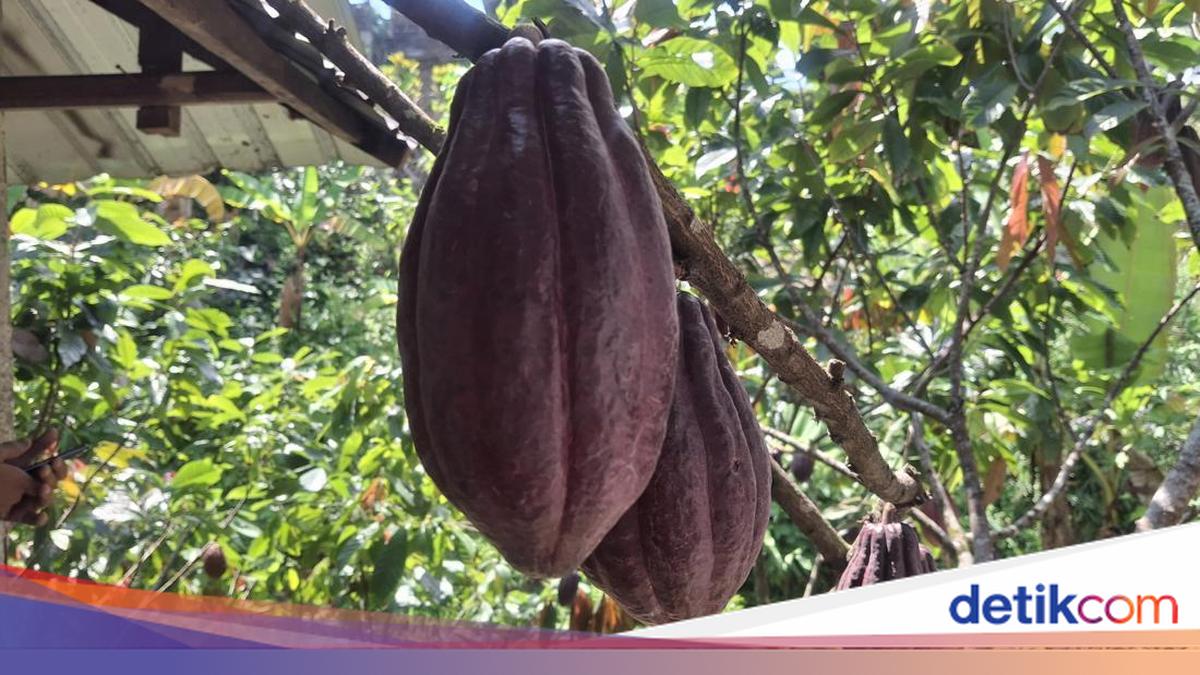
As a tropical nation, Indonesia possesses immense potential as a cocoa producer. However, the downstreaming of cocoa into high-value chocolate products is believed to still face challenges, partly because chocolate brands from Europe and America are more widely recognised in the global market.
Kadek Surya Prasetya Wiguna, CEO of PT Cau Coklat Internasional, stated that processing cocoa into finished products is no easy feat. He noted that the global chocolate industry is still largely dominated by brands from other countries, particularly Europe and America.
“Why is it difficult? Because the brands owned by other countries, especially Europe and America, are famous. We are talking about chocolate here, not just cocoa. Yet, they do not have the raw materials, so they naturally must import from us,” he said on Thursday (17/09/2026).
According to Surya, this situation shows that while Indonesia possesses the raw materials, it has not yet fully been able to capture the added value from the finished products. He believes Indonesia should not be satisfied with merely being a supplier of raw materials, as selling cocoa beans versus processed, branded chocolate products offers vastly different economic values.
“Buying beans costs around Rp 130,000 per kilo, while buying chocolate might cost Rp 300,000 to Rp 350,000 per kilo. In Europe, it can even be sold for Rp 2,000,000 per kilo, and if it is branded as ‘Hermès Chocolate’, it could reach Rp 5,000,000 per kilo. It is all about branding,” he explained.
Beyond added value, Surya noted that downstreaming is also linked to the welfare of cocoa farmers. He argued that selling only beans does not necessarily ensure farmers receive greater economic benefits.
“If we speak from a purely capitalistic corporate perspective, I would try to buy farmers’ chocolate at the lowest possible price, right? Every entrepreneur thinks that way,” he remarked.
Therefore, he believes Indonesia’s future challenge is not just how to increase cocoa production, but also how to create finished products with higher added value. He also encouraged the younger generation to view cocoa not just as a raw commodity, but as a potential for creating high-value finished products.
“I believe we must teach our youth this, because we possess an extraordinary wealth that outsiders do not have. Therefore, we should be talking about finished products, not just beans,” he hoped.
Opportunity to Penetrate European Markets, Farmers Could Earn Rp 250 Million
Bali cocoa is considered to have the potential to penetrate the European market, which has a massive demand for chocolate. This market potential could open opportunities to increase farmers’ incomes by hundreds of millions of rupiah per year.
Surya provided an example of a farmer with one hectare of land who can produce 2 tonnes of high-quality cocoa per year. With an estimated price for high-quality cocoa beans at around Rp 130,000 per kilogram, farmers could earn hundreds of millions of rupiah.
“Imagine if every farmer with one hectare of land produces 2 tonnes; they could have up to Rp 250 million per year. Imagine, this does not have to be in the middle of a city; it can be in a village or anywhere, even along a small path,” he said on Thursday (17/09/2026).
According to Surya, the cocoa market opportunity remains wide open, particularly in Europe. This is because cocoa plants naturally cannot grow in European countries, which are nonetheless some of the world’ๆ most famous chocolate producers.
“Chocolate does not grow in Europe, yet European chocolate demand is thousands of tonnes per year. Therefore, when we talk about the European market, we have an obligation to plant in tropical countries,” he continued.
He mentioned that Bali is one of the tropical regions with great potential for producing high-quality cocoa. However, to penetrate the European market, local cocoa products must meet specific certification standards.
Furthermore, the maintenance of cocoa plants is a primary concern. Surya noted that the use of chemicals actually makes plants more vulnerable.
“Chocolate with high chemical standards, produced through chemical-based maintenance, is far more vulnerable compared to what we do here, which is 100% organic,” said the Millennial Farmer Ambassador.
He explained that in an organic farming system, parts of the plant that are usually considered waste can be repurposed as fertiliser. In addition to organic farming, he believes cocoa plants should not be planted using a monoculture system.
Farmers are encouraged to implement the agroforestry concept by combining cocoa with other crops. He noted that this pattern can help reduce the risk of disease spread in plants.
“Cocoa trees should not be planted using a monoculture concept; they must be planted in what we call agroforestry, like this place. There are mangosteen, soursop, and coffee trees. Thus, when an outbreak or disease occurs, it can be contained so it does not immediately destroy the entire crop,” he explained.
This pattern, he continued, is part of Climate-Smart Agriculture (CSA) or sustainable agriculture, which focuses on plant resilience against climate change.
Source: jawawa.id (https://jawawa.id/newsitem/bali-cocoa-holds-great-potential-yet-downstreaming-faces-challenges-despite-european-market-opportunities-1789656181)
Originally published by detikBali (https://www.detik.com/bali/bisnis/d-8667576/kakao-bali-punya-potensi-kesulitan-hilirisasi-padahal-peluang-tembus-eropa), translated from Indonesian