
Bali Chocolate Factory Requires 350 Tonnes of Cocoa Annually; OJK Prepares Financing
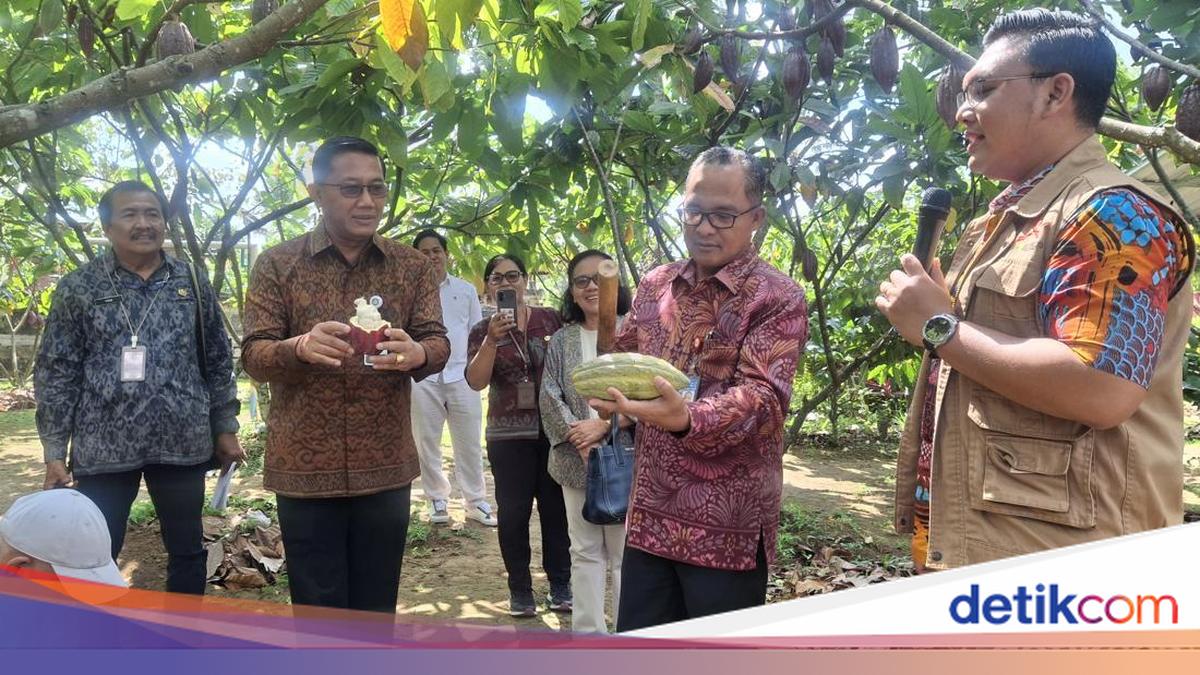
A chocolate factory in Bali requires approximately 350 tonnes of cocoa per year to meet a minimum processing capacity of 1 tonne per day. This raw material requirement necessitates the factory to partner with hundreds of cocoa farmers.
Kadek Surya Prasetya Wiguna, CEO of PT Cau Coklat Internasional, stated that his factory has a processing capacity of around 1 to 2 tonnes of cocoa per day. With a minimum capacity of 1 tonne per day, the factory’s raw material needs reach approximately 350 tonnes per year. “Our factory has a capacity of at least 1 to 2 tonnes per day. If we speak of 1 tonne, our requirement is about 350 tonnes per year. If 350 tonnes equates to 1 tonne per hectare, then we need around 350 hectares,” he said on Thursday (17/09/2026).
According to Surya, these requirements mean the factory needs to engage more cocoa farmers, as the size of land managed by farmers varies, ranging from approximately 20 are to one hectare. “We may need to involve around 300 to 500 farmers, because not all farmers have one hectare; some have half a hectare, and some have only 20 are,” he continued.
Surya noted that one of the classic challenges faced by farmers is market access. Consequently, the company is working to prepare a market to absorb the farmers’ cocoa production. Currently, the factory’s processed products are marketed through three segments: the local Balinese market, the domestic market in various regions across Indonesia, and the international market through exports.
OJK Promotes Farmer Financing
The development of the cocoa commodity in Bali Province is being continuously encouraged to strengthen the regional economy. This development is being carried out through a collaboration between OJK Bali, farmers, offtakers, banks, and guarantee institutions.
The Head of OJK Bali, Parjiman, stated that cocoa is one of the commodities mapped for development within regional economic development programmes. “In Bali Province, we have identified commodities that can be optimised and developed. One of them is cocoa,” he said.
He noted that farmers require additional capital, particularly for orchard rejuvenation and plant maintenance. “Farmers also need, for example, funds for orchard and tree rejuvenation, so financing is necessary, as is additional capital for maintenance,” he added.
Under this scheme, OJK is working with Bank BPD Bali, which provides financing facilities, while PT Jamkrida Bali Mandara serves as the credit guarantor. In addition to financing, protection for farmers is provided through BPJS Ketenagakerjaan to cover work-related accidents.
Cocoa development was previously implemented by OJK alongside farmer groups in Jembrana. It has now been expanded to Tabanan through the signing of cooperation agreements (PKS) with three farmer groups: Kelompok Tani Bumi Lestari, Kelompok Tani Werdi Bhuana, and Kelompok Tani Kakao Forestry. In total, there are nine farmer groups from Jembrana and Tabanan included in this cocoa development ecosystem.
“In total, there are now nine farmer groups from the start, which I believe will provide opportunities for the financial services industry to support the provision of financing facilities or credit,” he revealed.
From the prepared financing scheme, the potential credit disbursement to the cocoa farmers involved in the agreement is estimated to reach approximately Rp6 billion. “Our calculation shows that around 6 billion can be disbursed to the cocoa farmers in Tabanan Regency who have signed the cooperation agreements,” he said.
Source: jawawa.id (https://jawawa.id/newsitem/bali-chocolate-factory-requires-350-tonnes-of-cocoa-annually-ojk-prepares-financing-1789639110)
Originally published by detikBali (https://www.detik.com/bali/bisnis/d-8667121/pabrik-cokelat-bali-butuh-350-ton-kakao-setahun-ojk-siapkan-pembiayaan), translated from Indonesian