
Bali BPBD says Disaster Preparedness Certificate adds value for hotels
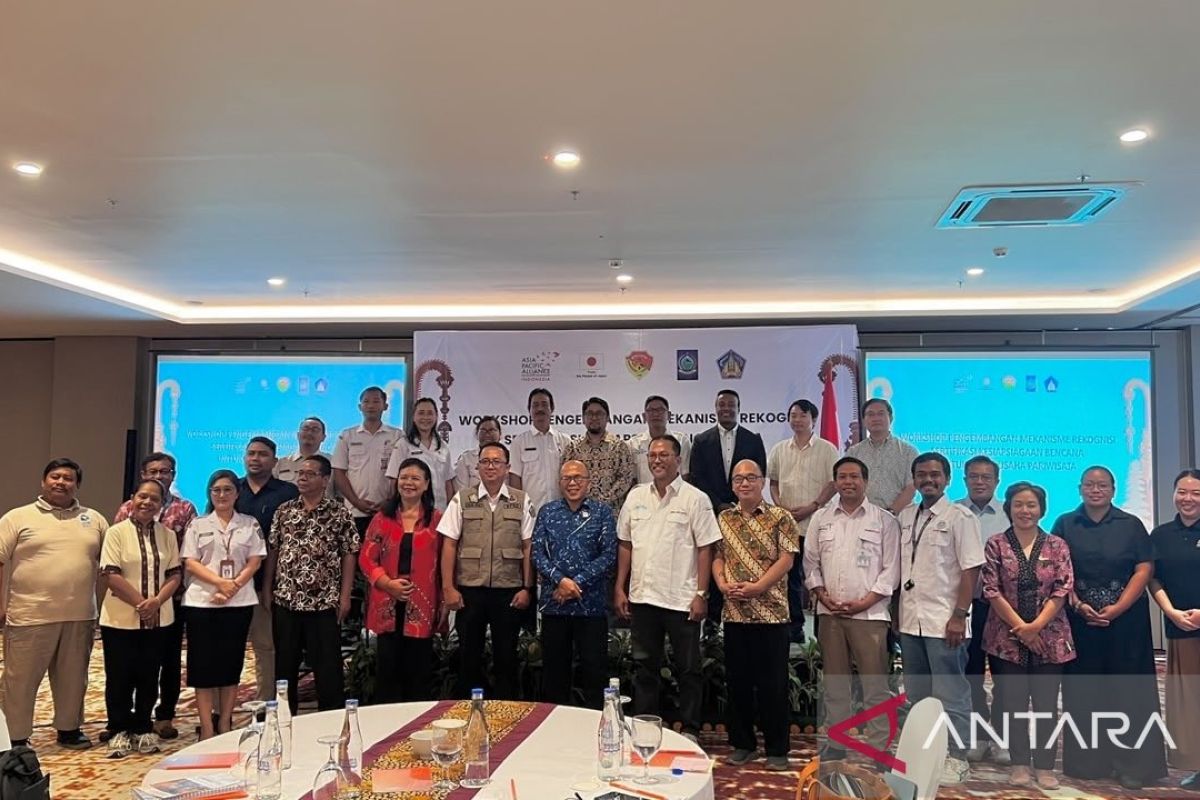
Denpasar (ANTARA) - The Bali Provincial Regional Disaster Management Agency (BPBD) is urging tourism accommodation businesses to promptly obtain Disaster Preparedness Certificates (SKB) to enhance business value and destination competitiveness.
“Certification is an investment that has added value, especially for tourism accommodation. At international events, several travel agents definitely ask about this,” said Ida Bagus Gede Widnyana Putra, Head of the Prevention and Preparedness Division at Bali BPBD.
Speaking at a Workshop on the Development of a Disaster Certification Recognition Mechanism (SKB) for the Tourism Business Sector in Denpasar on Wednesday, he said that accommodation with disaster preparedness compliance has become a security guarantee sought by tourists and international travel agents, hence the push to obtain the certificate.
“Hotels that already hold the certificate can simply attach it, and that automatically convinces agents that the hotel is worthy of ensuring visitor safety and comfort,” he said.
Bali BPBD explained that it has a highly complex risk assessment with 14 potential disaster threats that may occur, equivalent to all types of disaster threats present in Indonesia.
Given that Bali’s economic structure is heavily supported by the tourism sector, the region’s exposure to disaster threats poses a high risk that must be continuously anticipated.
Therefore, the Bali Provincial Government has taken the initiative to pioneer a preparedness certification programme in recent years, as at that time there was no technical guidance from the central government regarding strengthening preparedness in the tourism sector.
The programme, whose governance and regulations are continuously updated together with the Tourism Office, tourism associations, and non-governmental organisations, is targeted to run sustainably.
However, although the regulation is already mandatory through regional regulations and gubernatorial regulations, Bali BPBD noted that as of mid-2026 only 117 hotels and tourism accommodations have been certified, dominated by star-rated hotels in Badung Regency.
According to Widnyana, the low achievement is due to the implementation of rules that are not yet accompanied by sanctions, as well as ongoing challenges in terms of management understanding that has not made disaster risk reduction a priority.
In addition, the regional government deliberately does not force sudden uptake because it is focusing on strengthening governance, regulations and regional budget financing schemes first so that this certification service can be accessed free of charge by business operators.
“The challenge lies in management awareness. The culture of disaster awareness is not yet fully understood as crucial. Some even consider this an additional burden, whereas this is a responsibility to ensure employees and tourists are safe,” he said.
He expressed hope that through the formulation of a roadmap and value-added recommendations, disaster preparedness certification can be widely recognised, both at national and international levels.
Anton R. Purnama, Programme Manager of Asia Pacific Alliance for Disaster (A-PAD) Indonesia, added the importance of building a market recognition mechanism so that hotels that have invested in preparedness can gain tangible economic benefits.
“Preparedness requires resources and continuous commitment. It is reasonable that such efforts produce added value in terms of market trust, business image and competitiveness,” he said.
“When tourists and digital platforms can easily recognise certified hotels, it creates positive market demand and encourages other hotels to participate,” Anton continued.
Anton added that disaster preparedness is an integral part of the quality of Indonesian tourism, which is prone to natural disasters, similar to verification programmes also run by A-PAD in NTB and NTT.
The strengthening of preparedness is also reflected in the handling of the recent earthquake in West Manggarai, which demonstrated that preparedness is not merely a concept but a real action in protecting lives and maintaining the sustainability of tourist destinations.