
Bali and Lombok Are Neighbours: Why Are Their Fauna Different?
Bali and Lombok are two neighbouring islands, separated by a strait that is just 20 kilometres wide at its narrowest point. Their proximity means they have much in common, including culture, dialects and customs.
Yet this short distance marks one of the world’s most significant biological boundaries, resulting in major differences in the biodiversity of Bali and Lombok.
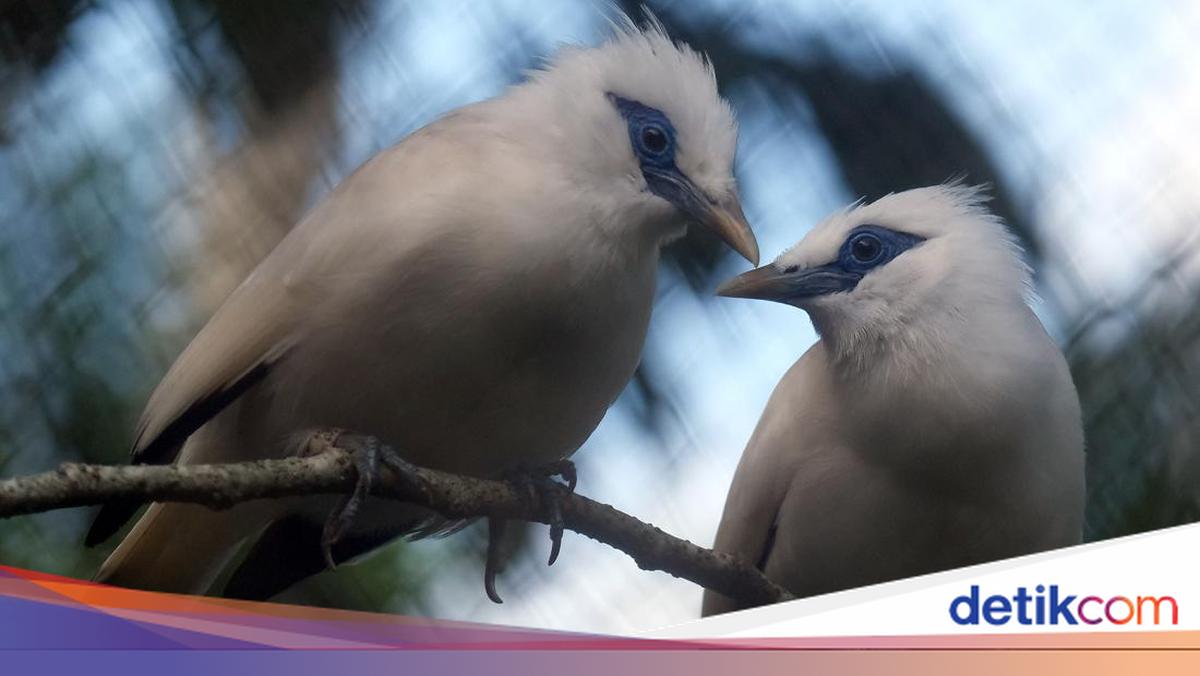
Bali’s fauna resembles that of Java and Sumatra, including species such as the Bali myna. The island was also once home to the Bali tiger, which is now extinct.
On Lombok, however, the fauna is generally different. Some of its species, including cockatoos and honeyeaters, are more similar to wildlife found in Australia.
Although Bali and Lombok are close together, they have different types of fauna. This divide is known as the Wallace Line.
What is the Wallace Line?
In The Malay Archipelago, Alfred Russel Wallace, a naturalist who spent eight years exploring the Indonesian archipelago and identified the Wallace Line, recorded that the archipelago could be divided into five main biogeographical groups. Bali belongs to the Indo-Malay group, while Lombok is part of the Timor Group.
During his travels, Wallace wondered why the fauna of western Indonesia—including Sumatra, Java and Bali—resembled Asia’s, while the fauna further east, across Nusa Tenggara, Sulawesi and Papua, was more like Australia’s. The answer lies in the region’s geological history during the Ice Age.
During the last Ice Age, sea levels fell by as much as 20 metres, turning the Sunda Sea into land that connected Sumatra, Kalimantan, Java and Bali with mainland Asia. But the Lombok Strait, which is more than a kilometre deep, remained a barrier. Asian animals could not cross to Lombok, leaving eastern Indonesia increasingly influenced by Australia. Papua and Australia were once connected, which helps explain why marsupials such as cuscuses are widespread there.
The movement of animals between Bali and Lombok has not, however, been entirely restricted. Long-tailed macaques from Bali are now commonly found on Lombok, possibly because people transported them there.
Characteristics of Bali’s and Lombok’s fauna
Bali’s fauna is of the Asian type. Its main characteristics include large mammals, numerous primates and other common land mammals, and bird species known for melodious calls and distinctive colours. Its freshwater habitats also support a rich variety of fish.
Lombok’s fauna differs, reflecting Australian or transitional influences. Examples include honeyeaters, cockatoos and smaller mammals.
Fauna native to Bali
- Bali myna (Leucopsar rothschildi)
This white-feathered bird, with black wing tips and blue skin around its eyes, is endemic to Bali. A medium-sized songbird, it is naturally found in western Bali and is the island’s only surviving endemic vertebrate bird species. Its population is threatened, and it is protected by the government.
- Bali tiger (Panthera tigris balica)
The Bali tiger was a subspecies of tiger that once lived on the island but has since been declared extinct.
Fauna native to Lombok
- Rinjani palm civet (Paradoxurus hermaphroditus rinjanicus)
Known to the Sasak people as ujat, the Rinjani palm civet is a subspecies of the common palm civet associated with Lombok, particularly the Mount Rinjani area. It can be found around forests, plantations and settlements.
- Leaf monkeys
Leaf monkeys are primates that eat leaves and fruit and live in groups in forest areas. The West Nusa Tenggara Environmental and Forestry Agency lists them among the fauna found on Lombok but not on Bali or Sumbawa. They play a role in the forest ecosystem, including helping to disperse seeds.
- Honeyeaters
Honeyeaters are a group of birds that generally feed on flower nectar, although some species also eat insects and fruit. They are widely found in Australia and surrounding areas. Their presence in Wallacea is linked to the distribution of wildlife in the transitional region between Asia and Australia.
Source: jawawa.id (https://jawawa.id/newsitem/bali-and-lombok-are-neighbours-why-are-their-fauna-different-1791849039)
Originally published by detikBali (https://www.detik.com/bali/berita/d-8703963/bali-dan-lombok-bertetangga-mengapa-jenis-faunanya-berbeda), translated from Indonesian