
Balancing Worker Protection and the Future of Employment
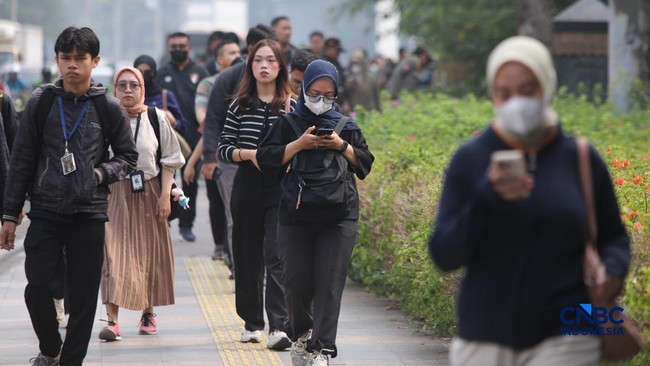
The discussion regarding the Labour Protection Bill requires a holistic approach that encompasses the interests of workers, job seekers, and the business community. The labour policy design currently being discussed by the House of Representatives (DPR RI) must consider its impact on employment opportunities, productivity, investment certainty, competitiveness, and corporate sustainability.
Shinta Widjaja Kamdani, General Chair of the Indonesian Employers Association (Apindo), stated that the formation of this regulation plays a vital role in Indonesia’s labour ecosystem. The discussions could serve as a significant momentum in building a national labour system that is fairer, more humane, and sustainable.
The Labour Protection Bill is deemed necessary to view the interests of workers, job seekers, the business world, and even the government as a whole. The Bill should not be understood solely as an instrument for protecting those already in an employment relationship.
“The Bill must also serve as an instrument to preserve existing jobs, expand opportunities for job seekers, accelerate the return of workers affected by layoffs to the workforce, and encourage the creation of formal, productive, and sustainable jobs,” she said on Thursday (24/09/2026).
Apindo has proposed that the nomenclature of the Labour Protection Bill be refined to the ‘Labour Protection and Job Opportunity Expansion Bill’. “This proposal is not merely a change in terminology. The name of a law determines the policy direction, the scope of responsibility, and the measure of its success,” explained Shinta.
Similarly, Fitriana, a lecturer in State Administrative Law at the University of Indonesia Faculty of Law (FHUI), warned of the potential criminalisation of employers under future labour legislation. She argued that labour regulations should be able to categorise types of violations proportionally.
“There needs to be a clear distinction between fundamental and serious rights violations, and administrative violations, which are more appropriately subject to administrative sanctions,” Fitriana emphasised.
Based on data from February 2026, Indonesia recorded approximately 7.24 million unemployed individuals, with the Open Unemployment Rate reaching 4.68%. Out of a total of 147.67 million employed residents, 87.74 million people, or nearly 60%, still rely on the informal sector for their livelihoods. Additionally, data from the Ministry of Manpower (Kemnaker) shows that 43,805 workers experienced layoffs (PHK) during the period from January to July 2026.
With millions of job seekers still awaiting opportunities and a high number of workers in the informal sector, the success of labour policy is measured not only by how well it protects existing workers but also by its ability to create new, productive, and sustainable jobs.
Source: jawawa.id (https://jawawa.id/newsitem/balancing-worker-protection-and-the-future-of-employment-1790254450)
Originally published by CNBC Indonesia (https://www.cnbcindonesia.com/news/20260924192650-4-770702/menyeimbangkan-perlindungan-pekerja-dan-masa-depan-lapangan-kerja), translated from Indonesian