
Balancing Tokenisation, Liquidity, and Regulation to Support Crypto
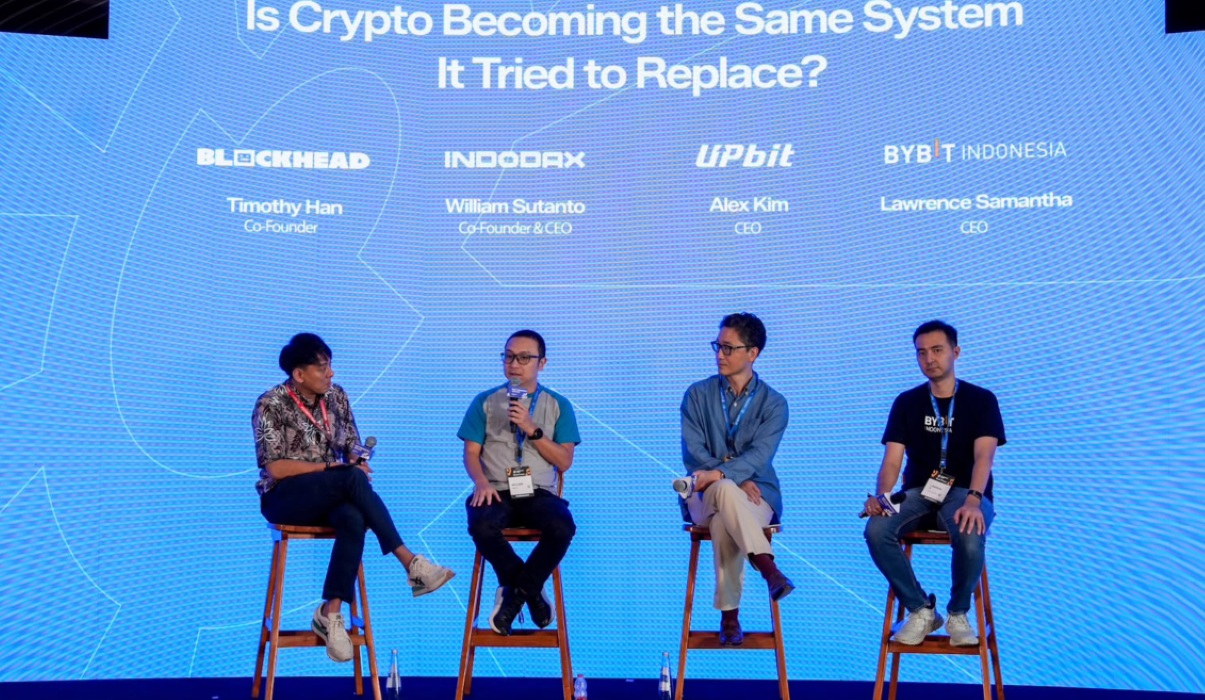
The global crypto industry is entering a crucial phase as integration between traditional financial institutions and digital assets and blockchain technology accelerates. This phenomenon is seen as both a major opportunity and a challenge in aligning crypto with the mainstream financial system without sacrificing the pace of innovation.
Indodax CEO William Sutanto asserted that tokenisation is the most concrete bridge uniting the two worlds. Through tokenisation, traditional financial assets can now be represented on-chain, allowing crypto investors and banking institutions to interact within a single integrated ecosystem.
“When traditional assets begin to enter the blockchain, the boundary between traditional finance and crypto becomes increasingly thin. This opens up significant opportunities, but it also requires trust, regulation, and infrastructure capable of connecting the two ecosystems,” William said at Coinfest Asia 2026 in Bali.
William observed a maturing investor profile in the crypto market. Whereas the market was previously dominated by short-term speculation, an increasing number of institutional investors now view crypto as a strategic part of their broader investment portfolios.
Amid this trend, regulation remains a fundamental pillar for consumer protection. However, William cautioned that the pace of blockchain technology development far outstrips that of conventional financial systems. An adaptive regulatory approach is therefore required.
“Crypto and blockchain are a large playground for financial innovation. It is important to maintain a balance so that regulation provides protection while also giving room for the directed development of new products,” he explained. This balance is also crucial for the competitiveness of domestic platforms so they remain relevant compared with offshore platforms.
Beyond the legal aspect, liquidity is the primary foundation for domestic market growth. William emphasised the importance of easing access for movement between the rupiah (fiat) and crypto assets, as well as building an inclusive user experience (UX) for the wider public.
He also predicted that stablecoins will play a vital role as a familiar entry point for new users into the on-chain economy. “The challenge ahead is to build better liquidity and infrastructure so that the crypto ecosystem becomes more accessible and relevant to more people,” he added.
Concluding his remarks, William stressed that the basic principle of blockchain is sovereignty, or individual control over one’s assets. His company is committed to continuing to promote education so that the public not only sees the investment potential but also understands how the technology works wisely.