
BAKTI Komdigi Encourages Teachers to Master AI to Accelerate Post-Disaster Education Recovery
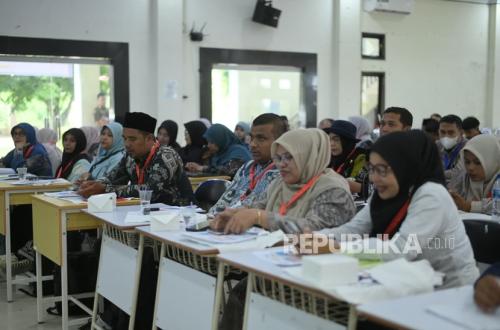
The recovery of education in disaster-affected areas is considered insufficient if it only involves rebuilding classrooms and providing supporting infrastructure. Strengthening teacher capacity, including the ability to utilise digital technology and artificial intelligence (AI), is a crucial factor in ensuring the learning process can be more adaptive and sustainable.
This commitment was realised through the Human Resource Capacity Building Programme for recipients of SATRIA satellite internet access. The programme was organised by the Telecommunications and Information Accessibility Agency (BAKTI) of the Ministry of Communication and Digital (Komdigi) in collaboration with the Cemerlang Indonesiaku Foundation (YCIK) in North Aceh Regency.
The programme, which ran for 23 days from 15 June to 7 July 2026, was attended by 49 participants comprising teachers, headmasters, educational staff, managers of Community Learning Activity Centres (PKBM), and village officials from North Aceh Regency and Lhokseumawe City. The participants came from various educational levels, ranging from RA, MI, MTs, junior high schools, senior high schools, vocational schools, to PKBM.
Plt Director of Public and Government Telecommunication and Information Services at BAKTI Komdigi, Sudarmanto, stated that digital infrastructure development must go hand in hand with improving human resource quality so that the benefits can be optimally felt by the community.
"BAKTI believes that digital transformation does not stop at providing internet access. Infrastructure will have an optimal impact if supported by human resources who can utilise it productively. Therefore, strengthening teacher competence is an important part of delivering real benefits of digital development to the community," said Sudarmanto.
He added that the development of AI opens opportunities for teachers to present more creative, effective, and engaging learning processes. However, this technology must be positioned as a supporting tool that strengthens teacher capacity, not as a replacement for their role in educating students.
During the training, participants received materials on Teaching Mastery and Active Learning, the use of AI for learning, educational video content creation, education data analytics, digital transformation in education, and public service management. All materials were delivered through training, practice, and mentoring so they could be directly applied in their respective schools.
As part of the learning implementation, participants were divided into ten groups to produce AI-based learning videos. Each group received mentoring from facilitators before presenting their work to a panel of judges as a means of evaluation and sharing best practices between schools.
Chairman of the Cemerlang Indonesiaku Foundation, Adnan Pandu Praja, said the training materials were developed based on the real needs of teachers, making them relevant to current learning challenges. The programme began with a needs assessment of participants so that the materials provided truly matched field conditions. In addition to training, participants also engaged in practice, implementation mentoring, and evaluation through pre-tests and post-tests to objectively measure competency improvement.
He noted that the programme’s success is measured not only by the number of participants but also by the teachers’ ability to apply the skills acquired in the teaching and learning process. During the programme, participants produced various digital learning products, including AI-based learning videos, while also building inter-school collaboration networks.
BAKTI Komdigi hopes this model of digital-based teacher capacity strengthening can be replicated in various regions. By strengthening educator competencies supported by the utilisation of SATRIA satellite internet infrastructure, post-disaster education recovery is expected to proceed more rapidly while supporting an inclusive, adaptive, and sustainable education transformation.