
Bakpia: A product of acculturation that became Yogyakarta's culinary icon
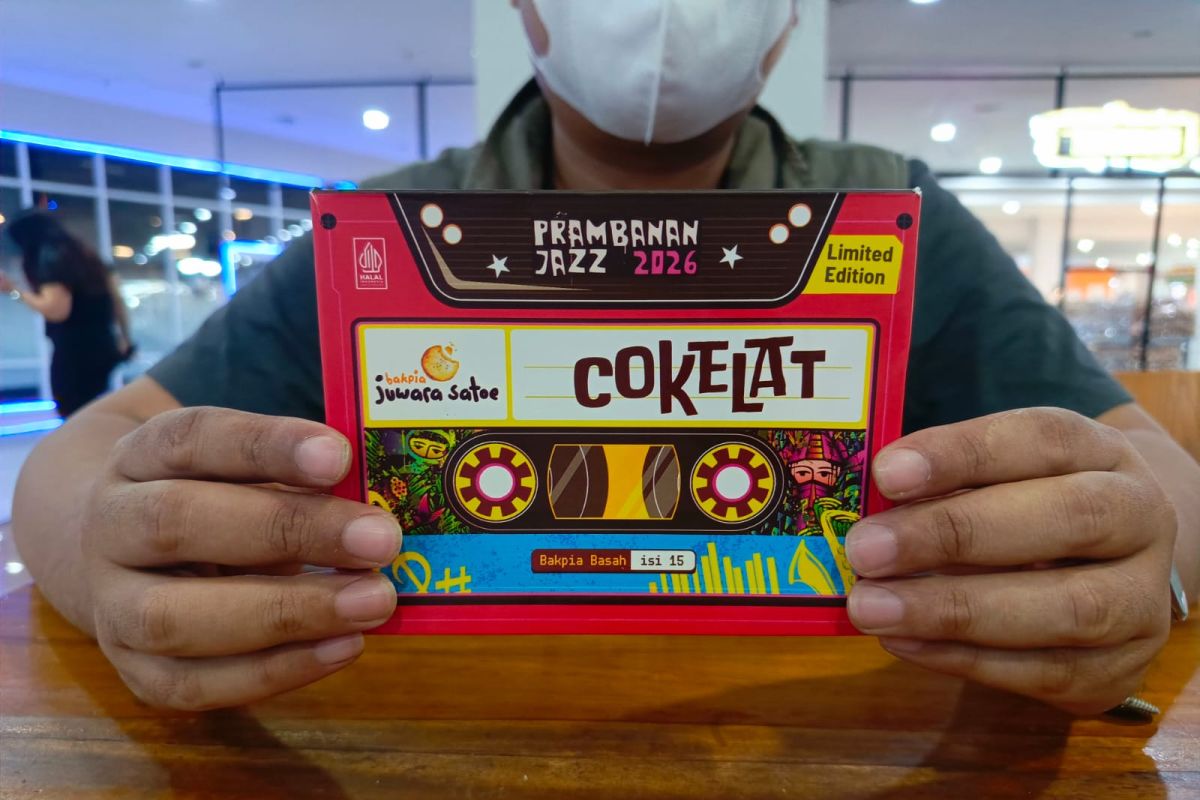
Jakarta (ANTARA) – A trip to Yogyakarta feels incomplete without bringing home at least one box of bakpia. This traditional cake has long been claimed as the signature souvenir of the city nicknamed the City of Students.
Behind its delicious taste, so familiar to the Indonesian palate, this simple snack actually holds a story of history and cultural acculturation.
Adi, a traveller who recently visited Yogyakarta, said he had received numerous orders for bakpia from family and friends in Jakarta.
While showing off a special edition box of bakpia he bought during the Prambanan Jazz 2026 concert held at the Prambanan Temple grounds, Adi said he never forgot to buy several boxes of bakpia as gifts. “My family loves this cake. We have always bought bakpia whenever we visit Yogyakarta. It feels incomplete to come to Yogyakarta without buying this souvenir,” the young man told Xinhua on Monday (6/7).
A study titled “Bakpia: The Journey of Chinese-Indonesian Acculturation in Yogyakarta’s Signature Food”, written by Martiana Noviopy Rae Rato and Rahadjeng Pulungsari Hadi, explained that the name bakpia comes from the Hokkien dialect, from the word “bak” meaning meat and “pia” meaning cake or bread.
The researchers in this study interviewed several pioneering bakpia sources in Yogyakarta. According to their accounts, bakpia was introduced to Yogyakarta around the 1940s by a man of Chinese descent named Kwik Sun Kok. After returning from a visit to China, Kwik made bakpia using the original recipe, which at the time still used lard to knead the pastry dough and pork as the main filling.
Because the majority of Yogyakarta’s population is Muslim, the pork-filled bakpia was initially unpopular. Kwik therefore modified his recipe, replacing the lard with coconut oil and the pork filling with mashed mung beans mixed with sugar. Thanks to this adjustment, the snack began to be accepted by the local community.
In the 1980s, bakpia grew popular in Yogyakarta alongside the development of Kampung Pathuk as a centre of home-based bakpia industry. The bakpia makers, who at the time were not yet familiar with modern trademark systems, used the house numbers where they produced their bakpia to distinguish their products from those of other producers.
The explosion of bakpia’s popularity among the local population was also inseparable from its unique marketing. At the time, bakpia was still relatively new and attracted public attention. The bakpia makers voluntarily shared their recipes with local residents, enabling the snack to gain widespread acceptance.
“The marketing approach used by the Chinese community differed from that of the indigenous community,” said Martiana, explaining her study’s findings. “Javanese people tend to be more accepting of circumstances, whereas the Chinese community was more active in promoting its products. One way was by sharing the recipe with others so that more people could make and sell bakpia. This made bakpia increasingly well known,” she told Xinhua on the same Monday.
In 2016, although bakpia is not originally a Javanese creation, it was designated as an Intangible Cultural Heritage of the Special Region of Yogyakarta (DIY).
“Bakpia is a product of acculturation of a Chinese snack that has survived for decades and even become an icon of Yogyakarta. Bakpia is a symbol of pluralism in the city. This snack, created by a minority known for using ingredients unacceptable to the majority, was able to compromise, and was not only accepted but also loved. The flexibility of Yogyakarta’s residents in embracing differences is truly evident in this case,” reads the statement on the official website of the DIY Culture Office.
Today, bakpia has transformed far beyond its traditional varieties and methods. From originally having just one flavour variant, mung bean, bakpia is now made in a variety of innovative flavours widely available on the market, such as chocolate, cheese, durian and matcha. Bakpia makers also no longer rely solely on traditional charcoal stoves; ovens have become a more modern production tool. Moreover, bakpia is no longer only baked — steamed bakpia has emerged as a variant that is equally popular.
The journey of bakpia shows how the collision of two cultures does not always give rise to conflict, but rather a harmony realised through culinary creation.
Source: jawawa.id (https://jawawa.id/newsitem/bakpia-a-product-of-acculturation-that-became-yogyakartas-culinary-icon-1784940693)
Originally published by Antara (Indonesian) (https://www.antaranews.com/berita/5665296/bakpia-produk-akulturasi-yang-jadi-ikon-kuliner-khas-yogyakarta), translated from Indonesian