
Bakom: Halal Mandate for MSMEs Requires a Sustained Approach
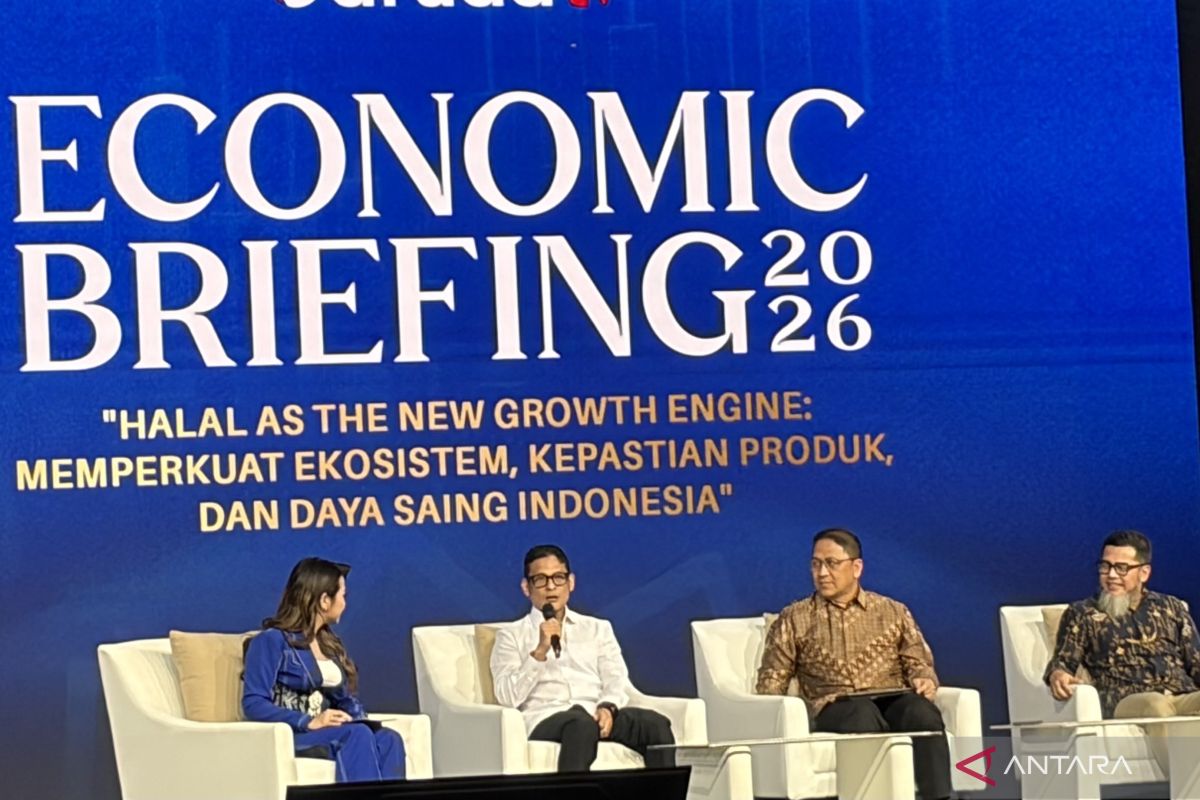
Jakarta (ANTARA) — Fithra Faisal Hastiadi, an expert at the Government Communications Agency (Bakom), said outreach and implementation of mandatory halal certification for micro, small and medium-sized enterprises (MSMEs) should take a sustained approach, from awareness-raising through to guidance.
“The approach must be sustained. When we talk about the 18 October deadline for mandatory halal certification, the process does not simply stop on that date. This is an ongoing process,” Fithra said at a public discussion in Jakarta on Thursday.
He said the issue was a particular focus for the Government because many MSMEs still do not understand the requirements or are reluctant to seek halal certification because of limited access to information and concerns about costs.
“We know that large businesses are already well aligned. In terms of their ecosystem, the way they do business and their business processes, they can simply proceed,” he said.
“To the best of my knowledge, many small businesses are initially reluctant to obtain this certification because they see it as an expense, while their cash flow is already very limited,” he added.
For that reason, support such as free halal certification quotas for 1.35 million MSMEs under the 2026 Free Halal Certification (Sehati) programme is an important Government measure to encourage participation, as halal values become increasingly relevant to businesses.
“The Government, through the Halal Product Assurance Agency (BPJPH), has guaranteed that certification is free for MSMEs that meet certain criteria. The quota could be in the millions — 1.3 to 1.5 million — which means our MSMEs will have a strong opportunity to go through the process,” Fithra said.
He also said MSMEs needed further guidance to help them move up the value chain and expand their market access.
“We should see this as a gradual process of guidance,” said the University of Indonesia economist.
Meanwhile, BPJPH stressed that implementation of mandatory halal certification, which is due to begin on 18 October 2026, has not been postponed.
Official information on halal product assurance policy and implementation is available on BPJPH’s website, bpjph.halal.go.id.