
Bakom Calls for Structural Economic Transformation in Prabowo’s Third Year
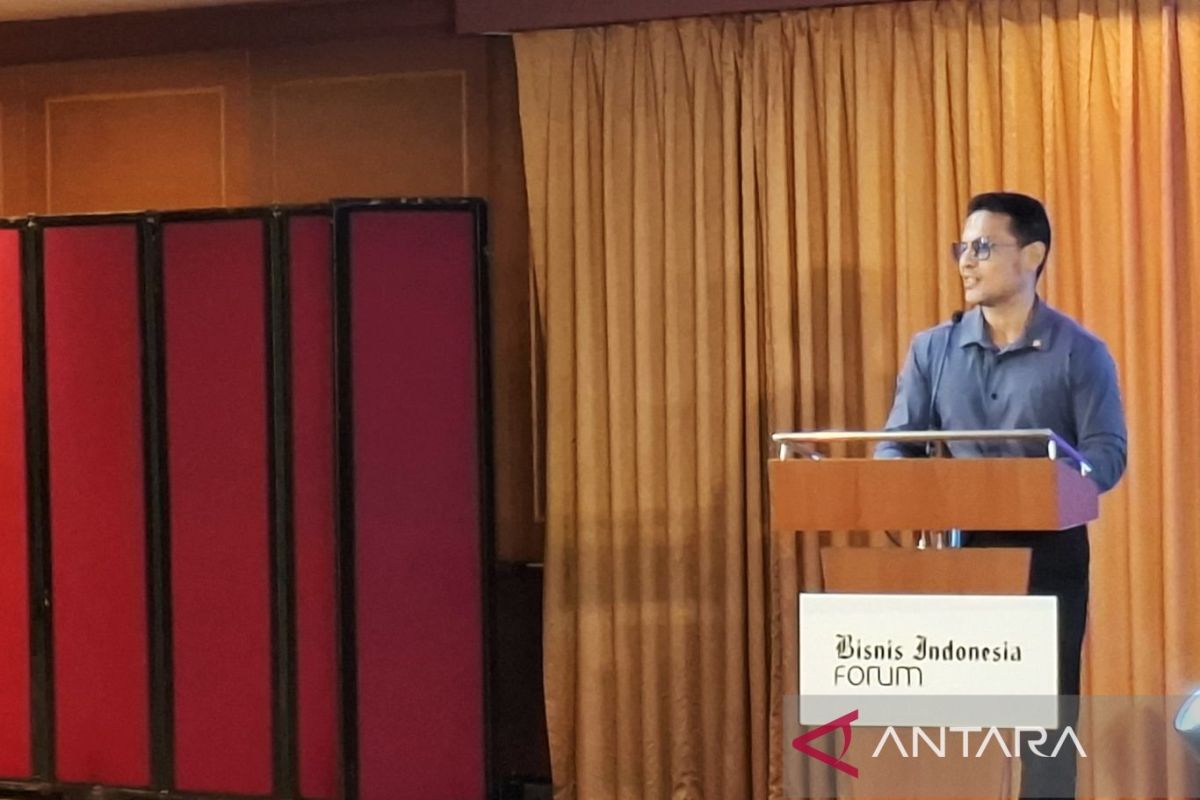
Jakarta (ANTARA) – Fithra Faisal Hastiadi, an expert at the Government Communications Agency (Bakom), said the challenge facing President Prabowo Subianto and Vice-President Gibran Rakabuming’s administration in its third year would be to turn growth momentum into a more productive and sustainable structural transformation.
He said the challenge was growing amid global economic uncertainty driven by geopolitical developments, energy price volatility, inflationary pressures and movements in international financial markets.
“If the first two years were a phase of laying the foundations, the third year must be a moment to strengthen the multiplier effects of that transformation,” Fithra told ANTARA in Jakarta on Tuesday.
The University of Indonesia economist said the government needed to ensure that growth was reflected not only in gross domestic product (GDP) figures, but also in higher national productivity, quality job creation and stronger public purchasing power.
Fithra said investment developments were one positive signal for Indonesia’s economy. In the first quarter of 2026, investment growth, measured by gross fixed capital formation (GFCF), reached 5.96 per cent, exceeding economic growth of 5.61 per cent.
The trend continued in the second quarter of 2026, when GFCF grew by 6.87 per cent, while Indonesia’s economy expanded by 5.29 per cent.
He said this indicated strengthening on the supply side of the economy. However, higher investment needed to be accompanied by productivity gains to generate broader economic benefits.
Fithra explained that productive growth in production capacity could generate income, create employment opportunities and establish new sources of demand in the economy.
The government therefore needed to ensure incoming investment deepened the industrial structure and increased economic value added, rather than merely expanding production capacity.
Fithra said this agenda needed to align with the development priorities in Asta Cita. Industrialisation, part of the fifth Asta Cita priority, should go hand in hand with human resource development under the fourth priority and the creation of quality jobs, which is part of the third.
He said policy coordination was important to ensure that investment in people and stronger production capacity reinforced one another.
At the macroeconomic level, the government needed to balance faster economic growth with the credibility of fiscal and monetary policy.
Fithra said economic transformation required the courage to take major steps, but the sustainability of the agenda would still depend on disciplined economic management.
He stressed that the administration’s success in its third year should be judged by the extent to which its policies strengthened the foundations for long-term development.
He hoped economic transformation would give Indonesia a stronger, more independent and productive economic structure, while delivering more widely shared prosperity.
“The measure of a government’s success is not how quickly the economy grows in one or two years, but how far its policies can change the nation’s development trajectory for the next one or two generations,” he said.