
Bahlil's Performance Under Scrutiny, Idrus Marham: Surveys Must Not Contradict Common Sense!
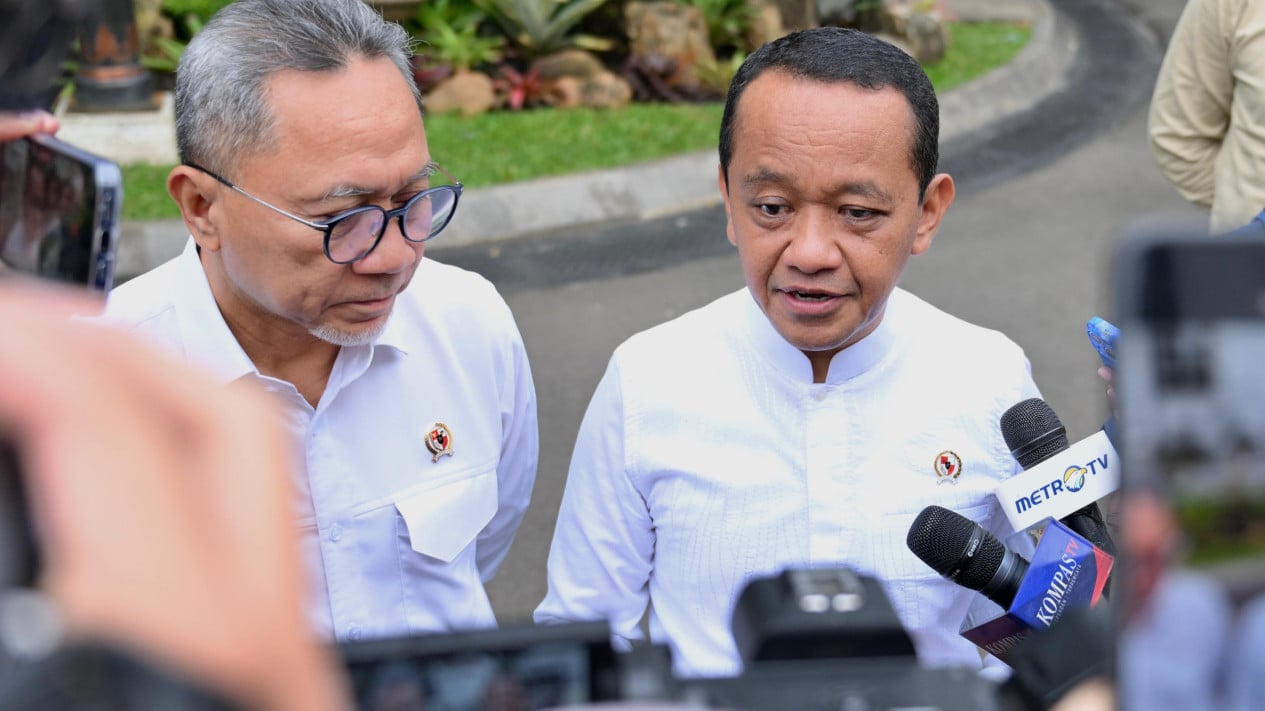
Jakarta, VIVA – Deputy Chairman of Golkar Party, Idrus Marham, has responded to the results of a survey by the LSSIR institute, which placed the Minister of Energy and Mineral Resources (ESDM) Bahlil Lahadalia in the problematic category.
Idrus emphasised that assessments of ministers’ performance must not be detached from objective facts and tangible achievements in the field.
“Surveys are fine, but they must not contradict common sense and facts. We must be objective in evaluating government performance,” Idrus stated on Monday, 13 April 2026.
The survey indicated that public satisfaction with President Prabowo Subianto remains high at 70.5 percent. However, it also raised critical notes on several ministers, including Bahlil, who has been scrutinised over policy consistency, transparency, and integrity issues.
In response, Idrus instead assessed Bahlil as one of the ministers at the forefront in implementing the President’s grand vision, particularly in building national energy resilience and self-sufficiency.
He stressed that, in line with President Prabowo’s development policy, the public must be positioned as subjects, not merely objects.
In this context, Bahlil is seen as implementing that strategy through public involvement in energy resource management, including the mining sector.
“Bahlil is at the forefront, ensuring that the public becomes active subjects in natural resource management, not just spectators or objects,” Idrus asserted.
Concrete and tangible steps include the legalisation and organisation of people’s oil wells, the eradication of mining mafia practices, and the revocation of unproductive or rule-violating mining business permits (IUP).
Based on the latest data from the Ministry of ESDM up to early 2026, the government has recorded a gradual increase in national oil lifting, while maintaining stable gas lifting to meet domestic needs.
In the downstream sector, investments continue to rise significantly, particularly in strategic commodities such as nickel, copper, and coal.
The value of downstream projects has reached hundreds of trillions of rupiah, including the development of smelter-based industrial zones that enhance domestic value added.
Meanwhile, the energy transition programme is also being accelerated. The implementation of B50 biodiesel serves as a breakthrough to reduce energy imports. The government is also expanding the mix of new renewable energy (EBT) with a target capacity of tens of gigawatts in the coming years.