
Bahlil Welcomes Proposal to Develop Nuclear Power Plants in Indonesia
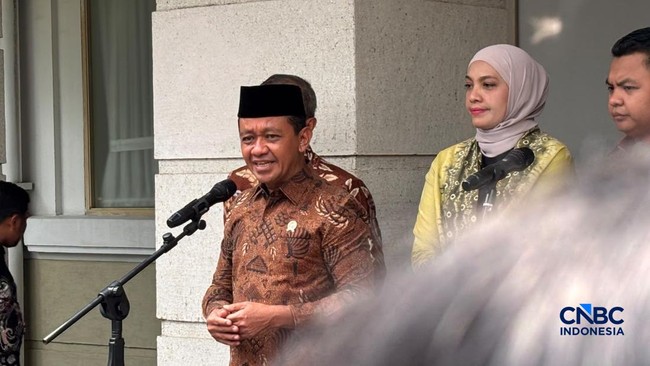
Jakarta, CNBC Indonesia – Coordinating Minister for Downstreaming and Energy Transition and Minister of Energy and Mineral Resources Bahlil Lahadalia has welcomed a proposal from the Indonesian Christian Intellectuals Association (PIKI) on the use of nuclear energy.
The proposal is in line with the government’s plan to include nuclear power plants in the 2025–2034 Electricity Supply Business Plan (RUPTL), as part of efforts to strengthen national energy security.
Bahlil praised the contributions of PIKI’s academics and intellectuals, saying their ideas align with the Energy and Mineral Resources Ministry’s efforts to bolster national energy security.
“Ladies and gentlemen, I am grateful for the recommendations put forward by PIKI following the discussions held some time ago,” Bahlil said, as quoted on Monday (19 October 2026).
The development of nuclear power plants is included in PLN’s 2025–2034 RUPTL, which was approved on 26 May 2025. Under the plan, the first nuclear power plant is targeted to begin operating in Sumatra in 2032, followed by further development in 2033. The plan is part of the government’s efforts to broaden the range of energy sources available to meet national electricity needs and support the transition to a low-emissions power system.
Indonesia has also received offers of cooperation from several countries to support the development of nuclear technology. Bahlil said one such offer was discussed when he accompanied President Prabowo Subianto at a bilateral meeting with Russian President Vladimir Putin.
“One of the topics discussed was Russia’s offer of nuclear technology to Indonesia. Germany has made the same offer, as have Japan, Korea and Canada,” he said.
In addition to developing nuclear energy, Bahlil stressed the importance of involving academics and intellectual organisations in formulating national development policy. The government has sought contributions from universities and the Indonesian Muslim Intellectuals Association (ICMI), and has invited PIKI to strengthen cooperation with the Coordinating Ministry for Downstreaming and Energy Transition.
“We have already engaged universities and ICMI, which I have also approached. Now I am asking PIKI to work with the Coordinating Ministry,” he said.
Bahlil also said PIKI could take part in developing 28 downstreaming programmes across various sectors, including minerals and coal, oil and gas, fisheries, forestry and agriculture.