
Bahlil Wants to Change Mining Revenue-Sharing Scheme, Business Owners: Don't Rush
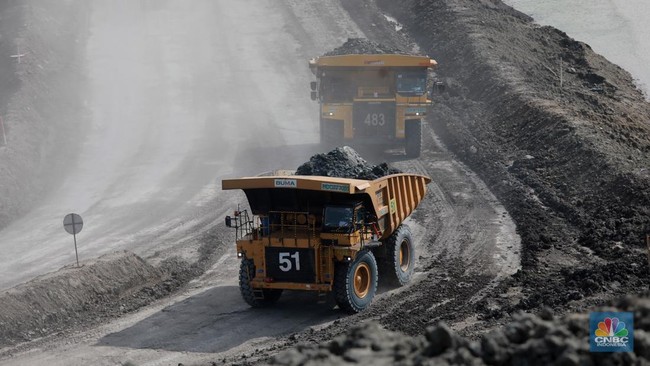
The Indonesian Mining & Energy Forum (IMEF) assesses that the plan by the Minister of Energy and Mineral Resources (ESDM), Bahlil Lahadalia, to apply the oil and gas (migas) revenue-sharing scheme to the mineral and coal mining (minerba) industry aims to increase state revenues.
IMEF Chairman Singgih Widagdo stated that the government is likely seeking ways to enlarge state income amid the current financial situation. However, he cautioned that the policy should not be implemented hastily.
“I see the government’s aim more as enlarging state income, amid the current financial conditions. But in the current global economic situation, it should not be rushed,” said Singgih to CNBC Indonesia on Thursday (7/5/2026).
According to him, the minerba sector has different characteristics from the migas industry, both in terms of commodities and business patterns. Therefore, applying a similar scheme is deemed necessary to be studied in depth to avoid impacting the investment climate.
He also highlighted the many mining business permits scattered from IPR to IUPK. This condition is seen as making supervision more complex if a scheme like cost recovery is applied in the minerba sector.
“Unlike oil players, in minerba permits are held from small levels even IPR to IUPK. If equated with oil, especially with cost recovery, how to supervise with 946 actors, this is just for coal, not yet minerals,” he said.
He then reminded that Indonesia is not the owner of the world’s largest minerba resources, so regulatory certainty becomes an important factor for new investors. According to him, business actors will still compare Indonesia’s investment attractiveness with other countries.
“We are not the owner of the world’s largest resources for minerba either, so for this kind of investor certainty (new) they need to compare with other countries. It could become a boomerang and not just look at the policy draft details first,” said Singgih.
Previously, Bahlil explained that the government wants to ensure that both old and new mines can provide maximum contribution to state income. One approach being considered is adopting the cooperation pattern like in the migas sector.
In the migas sector, there is at least a cost recovery and gross split scheme used in cooperation contracts between the government and private parties. This model is seen as a reference to be applied in the minerba sector.
“And we will use examples like the revenue sharing from our migas management. Our migas has cost recovery, gross split, perhaps those patterns that we will try to exercise to build cooperation with private parties,” he said.
Nevertheless, Bahlil emphasised that the concession scheme will not be eliminated. The government will still maintain that system, but with adjustments so that the state’s revenue portion can be larger and more balanced.
“Still concession, but we will optimise for income to be balanced with the state, and the state should get a larger portion,” said Bahlil.