
Bahlil Urges Development of Industries in Indonesia to Absorb Downstream Nickel Products
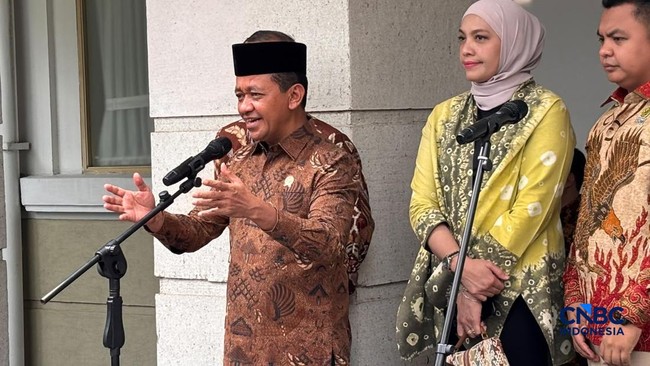
Jakarta, CNBC Indonesia – Coordinating Minister for Downstreaming and Energy Transition Bahlil Lahadalia is urging the development of domestic downstream industries to absorb semi-processed raw materials produced by nickel smelters.
The proposal aligns with the government’s goal of capturing 100% of added value domestically, while also responding to an oversupply of nickel in the global market.
Bahlil, who also serves as Energy and Mineral Resources Minister, said the government was studying whether to restrict the construction of new nickel refining and processing facilities (smelters) that produce only intermediate goods.
“What the government is considering is a policy. Our aim with downstreaming is to achieve 100% of the added value here. But currently, smelters still produce intermediate products, with only 50% or 60% of the value added,” Bahlil said at a press conference at the Energy and Mineral Resources Ministry in Jakarta on Friday (16 October 2026).
He said there was currently a 2.5 million-tonne gap between global nickel consumption and total production. The oversupply is behind the government’s plan to hold back the addition of new smelters that produce only semi-processed goods.
“Facilities producing products that are only 50% to 60% down the value chain may be subject to this, after we have conducted a study, if it is true that we are experiencing a nickel oversupply. The oversupply is 2.5 million tonnes between global consumption and production,” he said.
The government will therefore encourage the development of downstream industries that can turn semi-finished smelter output into finished goods. This would enable processed nickel products to be absorbed by domestic industries rather than exported.
“Going forward, we will encourage downstream industries so that not all these semi-processed raw materials are taken abroad. That is what we mean,” he said.
Nickel production from downstream processing
The Indonesian Nickel Industry Forum (FINI) recorded domestic production of 2.5 million tonnes of processed nickel in 2025. This made Indonesia a leading supplier, accounting for up to 60% of global nickel demand.
FINI chairman Arif Perdana Kusumah said the total production capacity of Indonesia’s nickel refining facilities reached 2.7 million tonnes of nickel in 2025. The output came from domestic pyrometallurgical and hydrometallurgical processing.
“In 2025, national nickel production reached 2.5 million tonnes of nickel in intermediate products, comprising 2.05 million tonnes of NPI, FeNi and matte products, and 450,000 tonnes of nickel in the form of MHP and nickel sulphate,” Arif told CNBC Indonesia on Wednesday (14 October 2026).
FINI estimates that Indonesia’s processed nickel output will fall by 3.5% to 4% in 2026 compared with 2025. However, production is projected to rise again in 2027 as new projects add capacity.
“2027 will see additional production capacity from HPAL-based hydrometallurgical projects whose construction is due to be completed, with commissioning and full operations expected to follow soon,” he said.
The additional capacity from HPAL projects will focus on processing nickel feedstock for electric vehicle batteries. Indonesia’s MHP production capacity, which stood at 450,000 tonnes in 2025, is expected to exceed 900,000 tonnes of nickel by the end of 2027.
“Production at that level has made Indonesia the world’s largest nickel supplier, at around 60%,” he said.
Source: jawawa.id (https://jawawa.id/newsitem/bahlil-urges-development-of-industries-in-indonesia-to-absorb-downstream-nickel-products-1792147877)
Originally published by CNBC Indonesia (https://www.cnbcindonesia.com/news/20261016155912-4-776956/bahlil-dorong-industri-penyerap-produk-hilirisasi-nikel-dibangun-di-ri), translated from Indonesian