
Bahlil to soon open first phase tender for 100 GW solar power plant development
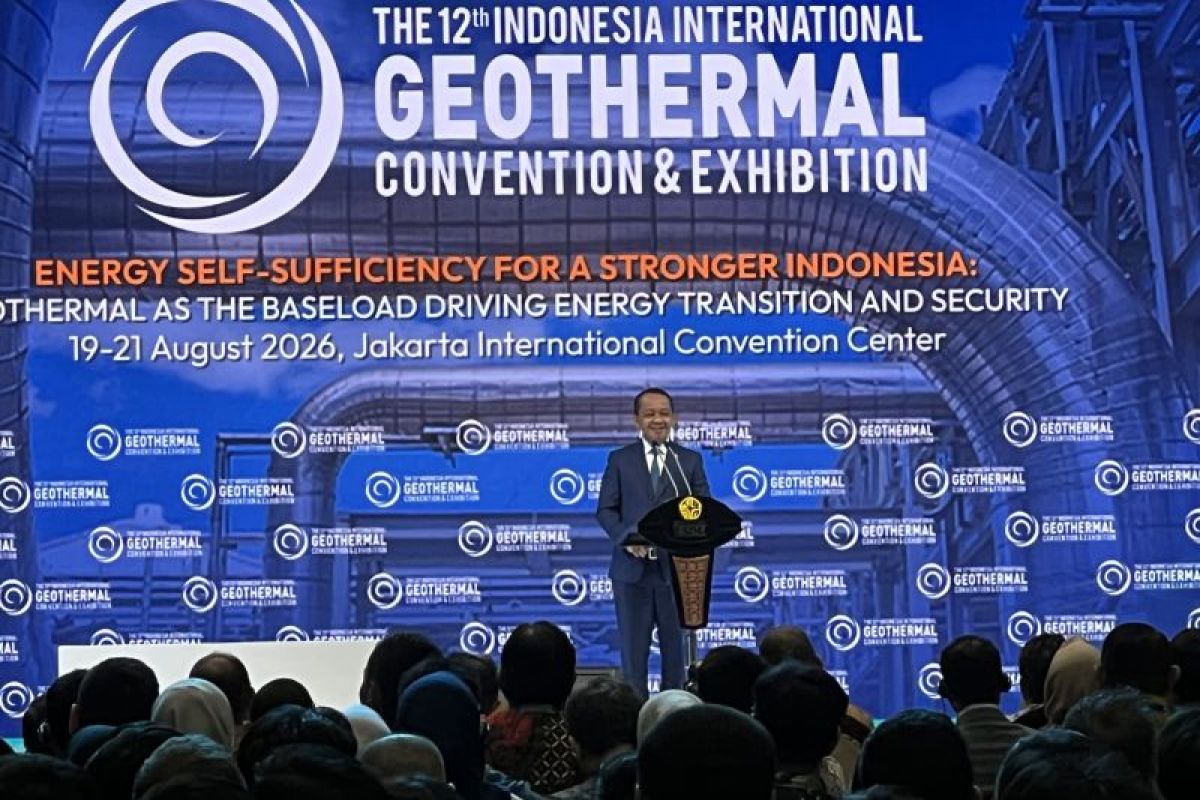
Energy and Mineral Resources (ESDM) Minister Bahlil Lahadalia has announced that the government will soon open tenders for the construction of solar power plants (PLTS) with a total capacity of 100 gigawatts (GW), with the first phase amounting to 30 GW.
“This year, we will begin the first phase of construction of 30 GW. With the President Director of PLN (Darmawan Prasodjo), we have discussed it. We will start the tender process,” Bahlil said at The 12th Indonesia International Geothermal Convention & Exhibition (IIGCE) 2026 held in Jakarta on Wednesday.
Bahlil stated that under the 2025–2034 Electricity Supply Business Plan (RUPTL), around 70–75 per cent of capacity will come from New and Renewable Energy (EBT) and energy storage systems such as batteries and pumped storage.
As a sign of the government’s seriousness, he continued, President Prabowo Subianto has said that the government will push for the construction of 100 GW of solar power plants over the coming years.
“We will continue to pursue the renewable energy mix,” Bahlil said.
President Prabowo Subianto has said the government will build solar power plants with a capacity of 30 gigawatts (GW) and retire 13 GW of diesel power plants (PLTD) in 2026.
The President said Indonesia has significant solar energy potential because it receives sunlight almost throughout the year. This is considered advantageous for providing electricity, especially in remote areas.
Prabowo said the use of solar power can also strengthen national energy independence by reducing the need for fuel oil for power generation.
The government is targeting the phased construction of solar power plants until reaching a capacity of 100 GW.
Based on calculations by the Coordinating Ministry for Economic Affairs, this capacity could potentially save up to Rp73.9 trillion per year in the basic cost of electricity production.
In addition, the large-scale use of solar energy is also expected to reduce the need for fuel imports and save foreign exchange.