
Bahlil to Investigate Cause of Rolling Blackouts
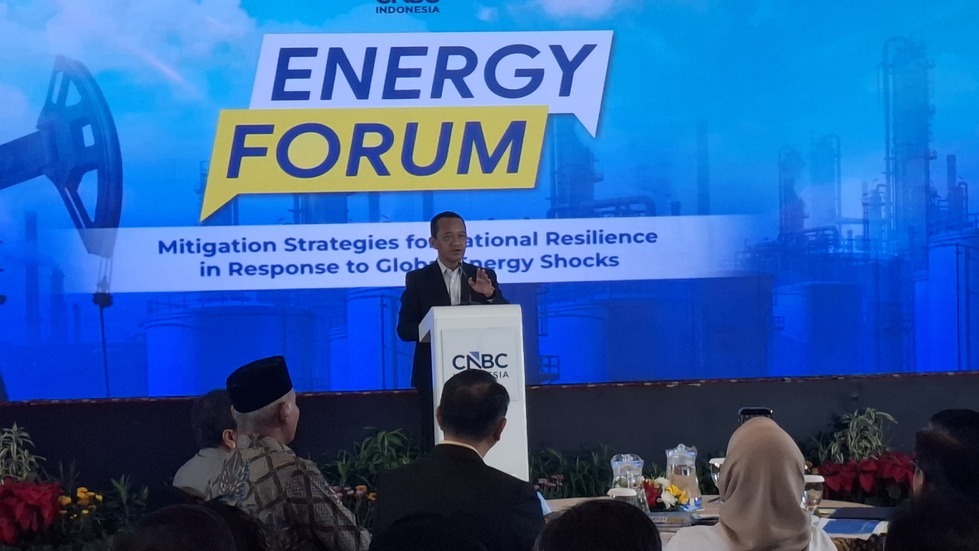
The Minister of Energy and Mineral Resources (ESDM), Bahlil Lahadalia, is investigating the causes of rolling blackouts that have occurred in several areas of Java since 8 June 2026. To delve into the issue, he has convened a coordination meeting involving various parties, including the Attorney General’s Office, the State Intelligence Agency (BIN), the Deputy Speaker of the House of Representatives (DPR RI) Sufmi Dasco Ahmad, the State Secretary Prasetyo Hadi, and the Cabinet Secretary Teddy Indra Wijgado.
“Yesterday, I met with the Attorney General, the Head of BIN, the DPR leadership, the State Secretary, and the Cabinet Secretary. We are dissecting this. What is actually the problem with PLN (the state electricity company)?” said Bahlil during the Energy Forum in Jakarta on Thursday (25/6).
According to him, PLN previously faced a coal supply crisis in 2022, which required decisive action, including a temporary ban on coal exports. Therefore, he wants to ensure the true cause of the problem resurfacing now is identified.
“In 2022, we temporarily banned coal exports. That is my view. I want to ask, what is actually the problem? Consequently, I have led meetings over the last 10 days,” said Bahlil.
He explained that PLN’s coal requirement for power plants reaches approximately 154 million tonnes per year. Meanwhile, through the Domestic Market Obligation (DMO) scheme, the government has tasked mining companies to supply approximately 180 million to 190 million tonnes of verified coal.
From that amount, about 160 million to 170 million tonnes have been declared ready for supply. Furthermore, coal contracts signed by PLN have reached 134 million tonnes and increased to 141 million tonnes as of three days ago.
“This means that from a requirement of 154 million tonnes, 141 million tonnes have already been contracted. There are only about 13 million tonnes left. How can coal run out in the sixth month?” said Bahlil.
He questioned the reasons behind the emerging issues regarding coal shortages for power plants.
“How can coal run out in the sixth month? This makes no sense. To be honest, it means there is something [wrong],” he asserted.
From preliminary findings, Bahlil discovered an issue regarding the availability of medium-grade coal with a calorific value above 5,000 kcal/kg, which is required for power plant fuel blends.
According to the Golkar politician, supplying companies should have anticipated this need from the start, given that the government has clearly assigned the DMO.
To prevent similar issues from recurring, the government, under presidential direction, is taking steps to secure domestic supply, including withholding some coal exports to ensure national power plant needs are met.
“The situation is now returning to normal. For those that were supposed to be exported, we are holding them back to meet domestic needs,” said Bahlil.
Additionally, the government will form a primary energy procurement team involving the Financial and Development Supervisory Agency (BPKP), the Inspectorate General, PLN, and other relevant parties. The team will be tasked with monitoring the coal procurement process to ensure it is transparent and accountable.
Bahlil emphasised that the electricity supply concerns the wider public interest and must be seriously maintained. He noted that besides primary energy supply issues, there are also technical and maintenance challenges that require attention.
“PLN must maintain and ensure that the public receives good service. There are indeed technical and maintenance issues,” said Bahlil.