
Bahlil Takes on the Abuleke
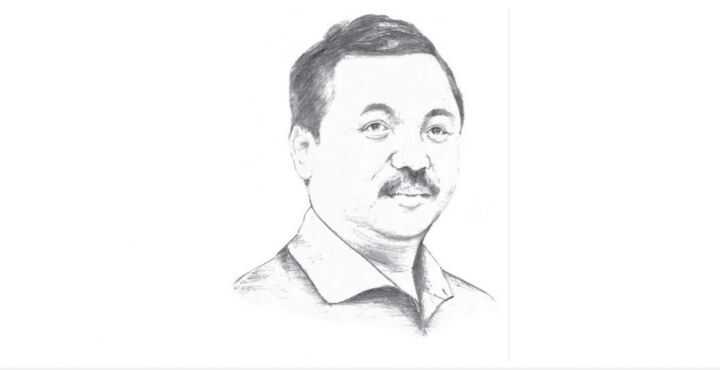
Five years ago (21 January 2021), in this Podium column, I wrote about Minister of Energy and Mineral Resources (ESDM) Bahlil Lahadalia. At that time, Bahlil was still Head of the Investment Coordinating Board (BKPM). My article was titled ‘Bahlil the Bihlul’.
The title referred to his name, which — according to a friend at a pesantren — derives from Arabic and shares a root with the word bihlul, meaning clever, intelligent, smart.
Consider how, as Head of BKPM, Bahlil the bihlul never seemed to run out of ways to achieve results. He even reached peak performance when he and the entire BKPM team delivered investment realisation that exceeded targets.
More impressively, this was achieved amid the most difficult of circumstances — during the Covid-19 pandemic. It further confirmed that Bahlil was indeed the bihlul — clever and resourceful. Now, as Minister of ESDM, Bahlil has made another breakthrough: for the first time in a decade, the ESDM ministry has met the 2025 state budget oil lifting target of 605,000 barrels per day.
How was this possible? What was the recipe? During a public lecture by the ESDM Minister marking Media Indonesia’s 56th anniversary at Hotel Borobudur, Jakarta, last week, Bahlil explained it candidly. Over nearly 75 minutes, he acknowledged that he initially did not fully understand the energy and mineral resources business. However, bearing the responsibility of ESDM Minister, he drew on his background as an activist, entrepreneur and investment minister as an initial guide to understanding the sector, including oil and gas.
His intuition proved sound. His experience as a practitioner gave him the insight to know where to begin. He then introduced a term he has frequently used since his time as BKPM Head: the abuleke. A word he uses to describe those who enjoy manipulating regulations, engaging in collusion, and operating comfortably in policy loopholes. These abuleke operate across all levels, quite possibly including within his own ministry. So he resolved to clean house first.
The term abuleke is certainly not mere jest. It is a declaration of war — war against the old permissive governance. War against the mentality of ‘produce as much as possible, worry about prices later’. War against tender practices that are sometimes ‘discussed’ before they are announced.
Bahlil started with coal, before addressing oil and gas. Global data shows world coal consumption at approximately 8.9 billion tonnes. However, only around 1.3 billion tonnes are actually traded on international markets. Of that figure, Indonesia supplies approximately 560 million tonnes, or nearly 44 per cent of the world’s export market. Ironically, prices remain controlled by foreign parties. This is where he identifies the machinations of the abuleke.
How is it possible that a supplier of nearly half the market has no pricing power? How can we be content merely adjusting the coal benchmark price (HBA) for tax purposes, while actual payments follow global prices over which we have no control?
Bahlil’s answer is simple, even classical: supply and demand. If production is abundant while demand stagnates, prices will inevitably be depressed. Accordingly, he has cut coal work plans and budget proposals (RKAB). He has reduced and adjusted the flood of coal onto global markets. This move is not intended to antagonise businesses, but to correct the old habit of massive production without calculating market equilibrium.
There is a moral message here. Natural resources do not belong solely to today’s generation. There are children and grandchildren who will one day demand their inheritance. If resources are sold cheaply and squandered recklessly today, history will record us as a profligate generation. That is the essence of the RKAB cuts.
However, the fight against the abuleke does not stop at coal. It extends to the oil and gas sector — a domain he considers rife with backroom dealings. A domain that, because so few truly understand the details, escapes broad public scrutiny.
Bahlil has insisted that tenders for oil and gas working areas must be open and transparent. There must be no ‘discussions before the tender’. The state must not be played. He even cited President Prabowo Subianto’s term deep state — groups comfortable with the old ways who seek to influence policy despite no longer holding formal control. His message is firm: the only party permitted to intervene in state affairs is the president, not shadow groups.
Indonesia has 110 new working areas for exploration. That is no small figure. Amid the need to maintain energy security and increase reserves, exploration is imperative. Without exploration, reserves dwindle. Without reserves, energy sovereignty is fragile.
Interestingly, Bahlil has not confined himself to a single contract scheme. He has opened options for both cost recovery and gross split arrangements, provided the internal rate of return (IRR) is economically viable. Investment has often adopted a ‘wait and see’ approach due to a lack of certainty. Bahlil is breaking through that. The state, he says, must not think only in terms of short-term profit and loss. The state must guarantee service, availability and energy security for the people.
At this juncture, we see two faces of policy: production control for the sake of long-term prices and reserves, and the opening of exploration for the future of energy. The two appear paradoxical, yet they converge at a single point — sovereignty.
Fighting the abuleke means reforming governance. It is not merely about raising the HBA or announcing open tenders, but also ensuring there are no longer grey areas that can be infiltrated by narrow interests.
Of course, this path is not easy. Cutting RKAB allocations may be interpreted as restricting business. Open tenders may disturb old comforts. Accusations of a deep state may provoke political resistance. Yet change is always noisy.
The question now is not whether Bahlil dares to fight the abuleke. He has already done so, both verbally and through initial policy measures. The question is whether the system will strengthen that resistance or gradually swallow it.
Fighting the abuleke is not the work of one minister alone. It is the work of a regime — indeed, the work of a nation.
If the state truly wishes to be sovereign over its coal and oil and gas, what must be built is not merely supply-demand equilibrium, but moral equilibrium in governance. Without that, the term abuleke will become merely a new entry in the political dictionary — loud at the outset, then lost to compromise.
History, as always, never forgets to record who truly fought and who merely talked. Bahlil the bihlul has already begun — with action, not mere bluster.