
Bahlil Says PLN's Coal Needs for This Year Still Short by 18-20 Million Tonnes
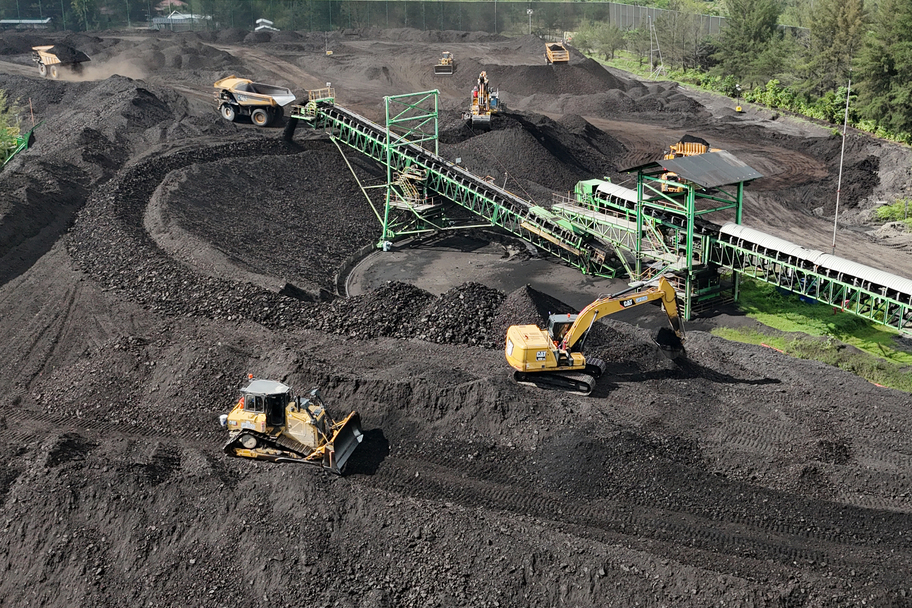
Energy and Mineral Resources (ESDM) Minister Bahlil Lahadalia has stated that PT PLN (Persero) has so far contracted 134 million tonnes of its coal requirements for 2026. The total coal requirement for PLN’s power plants this year reaches 154 million tonnes. “So there remains approximately 18 to 20 million tonnes that are not yet secured,” Bahlil said after a meeting at the Coordinating Ministry for Economic Affairs in Central Jakarta on Thursday (18/6). He assured, however, that efforts are being made to prevent blackouts like those that occurred recently. “God willing, there will be no blackouts,” he said. Bahlil acknowledged that the main obstacle in coal procurement lies in the supply of medium-calorie coal. “As of June, we have just held a meeting, and there are indeed some constraints regarding medium-calorie coal of 5,200 kcal/kg GAR. Currently, our coal’s calorific value is increasingly declining. This is what we are seeking a solution for,” he explained. Companies tend to be reluctant to supply PLN because the domestic market obligation (DMO) price is capped at US$70 per tonne, while the reference coal price (HBA) for the first period of June 2026 stands at US$121.83 per tonne. “So we must also be wise so that our businesspeople are not forced to sell at a very cheap price, causing them losses. We are calculating the trade-offs so that PLN is not disadvantaged and the producers are not disadvantaged either,” he said. To ensure coordination and certainty for PLN in obtaining coal, Bahlil said he has sought permission from President Prabowo Subianto to form a coal procurement team for PLN. The team involves cross-agency collaboration, namely PT PLN (Persero), the Directorate General of Minerals and Coal (Ditjen Minerba), and the Development Finance Comptroller (BPKP). Bahlil said the purpose of forming this team is so the government can ensure there are no technical problems. “The coal may already be available, and ESDM has given the assignment to PLN, but if it is not executed, it will not reach the power plant. This requires collaboration and transparency, including on pricing,” Bahlil stated. According to him, this is also a matter of moral accountability, as PLN has been subsidised from upstream to downstream. “In coal and gas, the gas is obtained at a certain natural gas price (HGBT). That is upstream. Then downstream, it receives compensation and subsidies. Now, if the state does not stand together with PLN to carry out precise supervision and management, it will generate higher costs,” Bahlil revealed. “If costs are higher, PLN’s operational expenditure (opex) will increase, which will further burden state finances. Therefore, in order to minimise opex, the state must be present with professional supervision,” he explained.