
Bahlil Says 100 GWp Solar Power Programme Saves State Budget Rp73 Trillion Per Year
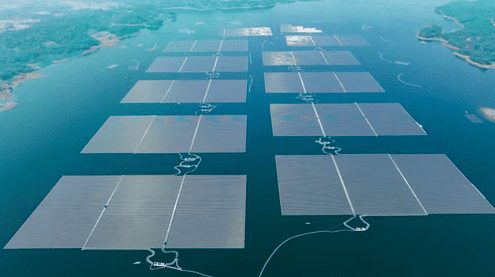
The government has officially commenced the 100 GWp Solar Power Plant (PLTS) Programme through a launch and groundbreaking in Gilimanuk, Bali, on Tuesday (25/8). The event was connected in a hybrid format with three other projects: the Gajah Mungkur Floating Solar Power Plant in Central Java, the Sembur Village Solar Power Plant in the Riau Islands, and the Rengit Island Solar Power Plant in Bangka Belitung.
Energy and Mineral Resources (ESDM) Minister Bahlil Lahadalia said the 100 GWp Solar Power Programme is a strategic step towards national energy independence and security. “Moreover, Indonesia already has a domestic solar panel industry and battery energy storage system (BESS) industry, so through the 100 GWp PLTS programme we will truly stand on our own feet,” Bahlil said, as quoted from an official statement.
According to Bahlil, as a tropical country with year-round sunlight exposure, Indonesia has great potential to develop solar energy. Strengthening the domestic solar panel and battery energy storage industries is one of the foundations for supporting the programme’s implementation.
The 100 GWp Solar Power Programme is also directed at delivering economic and environmental impacts. Based on the ESDM Minister’s report, the utilisation of solar energy through this programme has the potential to provide state budget savings of more than Rp73 trillion per year because solar power generation costs are lower than diesel or gas power plants.
The programme is also projected to save diesel usage of up to 6 million kilolitres per year nationally, including 500,000 kilolitres per year specifically in Bali.
“The 100 GWp PLTS project has the potential to create 5.52 million cumulative jobs (3.5 million in the solar panel and BESS industry, and 2 million in the construction sector) and is capable of reducing carbon emissions by 140.16 million tonnes of CO2 per year with a carbon economic value reaching Rp6.31 trillion,” Bahlil said.
As the initial phase of the programme’s implementation, the government launched 14 solar power projects in six provinces with a total capacity of approximately 5.3 GWp. These projects include the 300 MWp Gilimanuk Solar Power Plant, the 134 MWp Gajah Mungkur Floating Solar Power Plant, the 0.92 MWp Sembur Village Solar Power Plant, and the 0.078 MWp Rengit Island Solar Power Plant.
The utilisation of solar energy is also directed at supporting community activities. The Sembur Village Solar Power Plant is one example of solar energy application for fishermen’s economic activities through the provision of electricity for a 5-tonne cold storage facility and a 4-tonne ice-making machine.
Meanwhile, the Rengit Island Solar Power Plant increases community electricity availability from around 12 hours to 24 hours per day. The project also reduces the Cost of Supply (BPP) by around Rp4,400 per kWh, or 26 percent lower.